Thank you!
Your blog has been successfully shared.


Let's Talk !  954 342 5676
  +44 137 243 2466
Roland Burrell – Director of Sales | February 26, 2026
Online shopping and the manner in which consumers learn about products has shifted substantially. Previously perceived as the tool of branding and interaction, social media have come to be seen as a strong social commerce marketplace directly affecting the issues of purchasing decisions. The adoption of social commerce by businesses today is not just making them more visible but also earning them new and scalable revenue streams.
Social commerce is an integration of interaction and purchase, where customers are given an opportunity to scan, compare, and purchase products without going out of their favorite websites. Since the emergence of digital-first consumers, who appreciate convenience, authenticity, and personalization in greater numbers, the importance of social commerce has become a rapid pace in both retail and B2B categories.
Social commerce is the process of both selling and purchasing goods and services right in the social media platform, including Facebook, Instagram, TikTok and Pinterest. Rather than taking users to third-party websites, these platforms enable users to discover, engage, and checkout within the app, which means social commerce is the logical continuation of social life.
This social commerce application eliminates friction during the buyer experience. The customers are able to pass through inspiration to purchase with just a few taps, which greatly enhance the conversions. The key to the success of the social commerce business model is its capacity to make the experience of entertainment, trust, and convenience one unified shopping experience.
Social commerce ceases to be experimental, as it is among the most popular digital platforms of online retail in the world. According to recent statistics, the market is being estimated at USD 1.26 trillion in 2024, and projected to reach USD 1.66 trillion in 2025, and this is a clear indication of the consumer behavior change. Social commerce marketplace allows brands to sell in the place that people spend most of their time, social networks, and in particular mobile-first applications such as Instagram and WhatsApp that are exploding in places like India.
Rather than merely affecting purchasing behaviors, social platforms have become entire sales cycles where product discovery and engagement and checkout occur as a single continuous experience. Functionalities such as live shopping, creator-led storefronts, and in-app payments are hastening decision-making when buying items. It means that for a brand, conversions are quicker, people develop a sense of trust within the community, and the shopping experience becomes as easy as scrolling through a feed.
Social commerce is currently contributing a significant portion of the worldwide online transactions. Data on industry reveal that about 18.5 percent of digital purchases are social in nature. This underlines the level of integration of social commerce shopping in the larger retail environment.
In the U.S. alone, social commerce revenue keeps growing as platforms add checkout, logistics integrations and customer support features to their arsenal, which are major components of a full-fledged social commerce solution.
The adoption by consumers is a good indicator of success and a defining factor influencing the current social commerce trends. In 2023, more than 106 million American consumers completed purchases via social platforms and this figure is set to keep on increasing in the future.
Almost three quarters across the world (approximately 73 percent) of consumers have made at least one social media purchase. It is this trust which will be based on familiar interfaces, peer reviews, influencer endorsements, and secure payment systems all of which are vital parts of a positive social commerce experience.
Facebook and Instagram are also essential social media for retail stores with the features of Shops, shoppable posts, and in-app checkout. These platforms allow brands to present the products with the help of pictures, but also allow the buyers to have a continuous purchase process.
Their targeting and personalization types of social commerce are highly developed, helping to facilitate a wide range of social commerce, such as influencer sales, live shopping, and browsing by catalog.
TikTok has transformed social selling using short-form video and livestream commerce. Live visuals and interactive features are unique aspects of entertainment and shopping that are combined to provide a very entertaining experience of the shopping process.
These trends underscore new social commerce technology trends that give more emphasis on immediacy, authenticity, and community-driven buying.
Influencers are the essential element of the buying decision as they provide an initiative of real-life examples of social commerce. Their content generates credibility and reduces the decision cycle, which makes influencer relationships a significant component of a variety of social commerce strategies.
Social commerce simplifies the shopping process by eliminating the friction that is caused due to other types of e-commerce. The product tagging, customized feed, instant checkout, and recommendations powered by AI will make people purchase and buy again more quickly. This streamlined experience keeps the shoppers occupied throughout the touchpoints.
This leads to increased customer retention, more engagement and significantly higher conversion rates of brands. It is also capable of enabling the businesses to meet their customers at a point they already are spending their time. Shopping is also natural not coerced with real-time, flow and discovery. Social channels transform the daily scrolling into purposeful purchase experience.
To maximize ROI, businesses must implement thoughtful social commerce strategies:
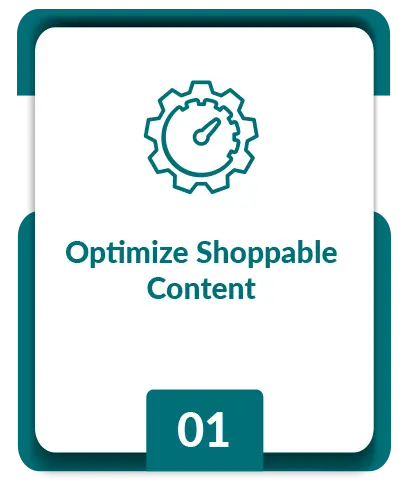
Clear product tagging, pricing transparency, and compelling visuals enhance discoverability.
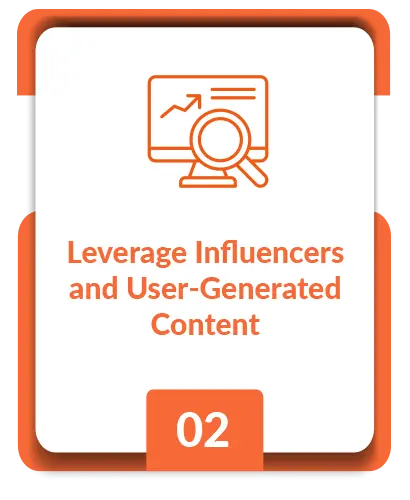
Authentic content drives credibility and highlights tangible social commerce benefits.
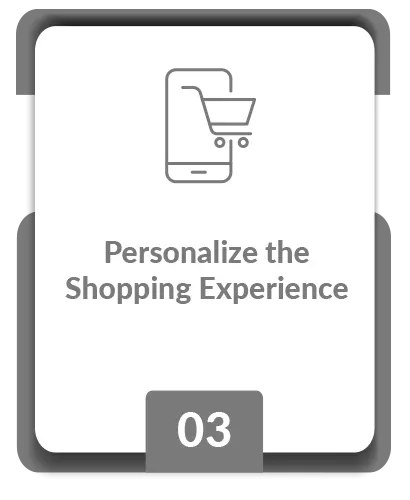
Data-driven insights allow brands to tailor offers and recommendations.
Effective social commerce integration with inventory, payments, and CRM systems ensures consistency.
Although social commerce has a high potential, it has operational obstacles as well. The issues that brands face regularly are synchronization of inventory, uniform branding, safe payment, and expansion of customer support facilities on various platforms. With the absence of the right systems, such gaps may affect the overall customer experience.
One of the ways through which businesses will overcome these challenges is by collaborating with established technology providers and investing in powerful and integrated platforms. What it yields is a smooth, safe, and trustworthy shopping process over all the social platforms. The strategy also helps in terms of the sustainable increase of revenues and customer confidence in the long run.
The future of social commerce is undergoing AI-driven personalization, immersive shopping, and increasing B2B usage as companies contrast e-commerce with social commerce and experience the effects of selling through community, trust. Through AI, brands are suggesting the correct product at the correct time so that shopping becomes less transactional and personal. Discovery is becoming immediate with live shopping, shoppable videos, and creator-led storefronts.
These trends are collectively making social platforms strong revenue-earning platforms. Reviews, influencers, and communities are promoting the use of trust in the purchase decision. With the dynamic of the social platforms, they are turning out to be can-not sales outlets and not marketing appendages.
Social commerce is transforming online shopping as it follows the consumer wherever they already use the internet, in social networks that result in discovery, influence and interaction. Its revenue potential cannot be doubted and its market values have exceeded USD 1.6 trillion and its use is gaining quite a fast pace in international markets.
Combining content, community and commerce, these platforms are making inspiration their immediate buying choices by adding capabilities such as live shopping or creator-led storefronts. The brands that are engaging in social commerce now are not merely doing the trendy thing, but are developing future-proof, scalable commerce systems that support long-term growth, build customer loyalty, and develop a sustainable competitive advantage.
Disclaimer:
This content has been made available for information purposes only. Views and opinions expressed in this content are those of the individual author only and do not necessarily represent the opinions and views of Chetu. Chetu, and its representatives, make no representation or warranty of any kind, express or implied, regarding the accuracy, adequacy, validity, reliability, availability, or completeness of any information of this content. Under no circumstances shall Chetu, or its representatives, have any liability to you or any loss or damage of any kind incurred as a result of the use of this content or reliance on any information provided in this content. Your use of this website and your reliance on any information on this content is solely at your own risk.
About Chetu:
Founded in 2000, Chetu empowers businesses with AI and digital transformation solutions, supporting startups, SMBs, and Fortune 5000 companies. We deliver end-to-end software solutions backed by global digital intelligence and industry expertise. Our customized software delivery model and one-stop-shop approach span the full technology spectrum. Headquartered in Sunrise, Florida, Chetu operates 13 locations across the U.S., Europe, and Asia.
See more at: Chetu Blogs
Share


Limited Time Offer for a Free E-Book
Privacy Policy | Legal Policy | Careers | Sitemap | Referral | Contact Us
Copyright © 2000- 2026 Chetu Inc. All Rights Reserved.