Thank you!
Your blog has been successfully shared.


Let's Talk !  954 342 5676
  +44 137 243 2466
Anshu Raj – Director of Operations | April 07, 2026
Healthcare systems generate a steady flow of data across departments, devices and digital platforms every day. Even with this volume, many organizations find it difficult to turn that information into timely actions to improve outcomes.
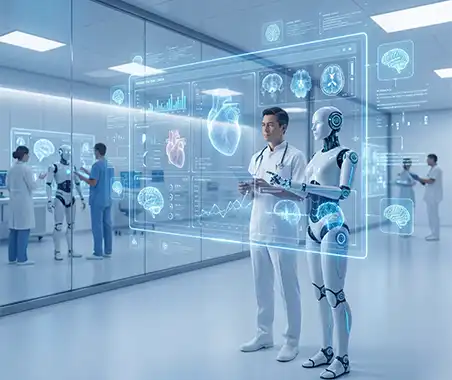
This gap has increased the need for healthcare AI solutions that go above and beyond routine automation tasks. In this context, agentic AI in healthcare is becoming an important step forward by supporting decisions and actions in real time.
Agentic artificial intelligence healthcare systems are built to act independently within set rules and clinical limits. These systems examine both structured and unstructured data, assess current changes, and take appropriate action without constant supervision.
Most healthcare automation solutions rely on fixed rules and processes, which are not reliable when there are many changing conditions. Healthcare activity is rarely predictable, which makes these systems less effective in dynamic scenarios.
Agentic systems address this by adapting to new inputs and improving through feedback. Instead of only sending alerts, they can arrange tasks, suggest next steps and start workflows when action is required.
There are many moving parts in healthcare, and many processes are still manually driven, which causes delays and errors.
Healthcare workflow automation with intelligent systems is a more reliable and efficient solution for healthcare processes, which are capable of adapting to changing needs.
With intelligent systems, healthcare organizations are experiencing faster and more efficient processes, which is a clear example of how AI is changing patient care. Agentic artificial intelligence healthcare systems continue to evolve across multiple healthcare environments.
The benefits of agentic AI in healthcare are many, especially when supported by modern healthcare AI solutions.
With healthcare data intelligence, professionals can analyze insights from patient data, tests and monitoring tools, which support faster and more accurate decisions in critical conditions.
Administrative work is still a significant time-consuming activity in healthcare facilities and these intelligent systems, such as AI hospital management systems, help in making these processes simpler, which enables healthcare professionals to focus on patient care.
With AI virtual health assistants, patients are now in a position to engage with healthcare facilities in a more efficient manner, as these intelligent systems are designed to keep pace with patient needs.
Intelligent healthcare systems can adapt to the growth in the number of patients and the fluctuations in the demand for services without the need to change the system frequently.
Staff management is a major challenge in healthcare due to constantly changing service demands. Healthcare staffing solutions AI can help in allocating the workforce in a more efficient manner.
Modern AI solutions for healthcare providers improve workflow visibility, decision-making and operational efficiency across departments.
The use cases of agentic AI in the healthcare sector describe the application of these systems in the real world.
Remote patient monitoring AI tracks patient health continuously and alerts providers when unusual patterns appear.
Personalized medicine AI involves the observation and analysis of the patient’s history, genetic data and lifestyle. It helps medical teams identify suitable treatment options more effectively.
Digital health monitoring systems involve the observation and analysis of the patient data in real time. It can help the medical teams to take the right steps to address the challenges.
Many healthcare automation solutions now use agentic systems to manage workflows across patient intake, treatment and discharge. These systems reduce waiting times and improve coordination.
AI wearable healthcare devices track health data continuously and send updates to connected systems. With support from healthcare IoT analytics, this data helps identify potential issues early.
AI in healthcare transformation is closely linked to the use of connected devices and data-sharing technologies that support real-time insights. This clearly shows how AI is transforming patient care across modern healthcare systems.
These devices support the shift from reactive care to a more preventive care approach. This is a clear demonstration of the need for reliable healthcare AI solutions that are geared toward improvement and better decision-making.
AI adoption in healthcare requires careful planning and proper integration with existing systems. Not all the solutions developed will be effective if they are not integrated into the current healthcare system.
When planning to build AI solutions for healthcare, several factors must be evaluated carefully. System compatibility is essential when planning custom healthcare AI development. It is important to work with experts in the development of custom healthcare AI solutions to ensure the solutions developed remain practical.
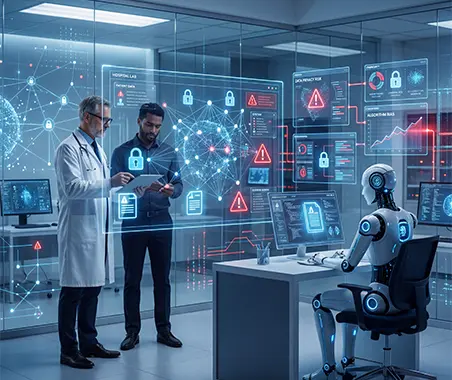
However, there are challenges associated with the introduction of the new technology in the healthcare sector. For instance, the introduction of the new technology might not work well with the current technology, which can pose challenges during the integration process.
Moreover, the introduction of the new technology into the healthcare sector might require the employees to be trained to work comfortably with the new technology. Data privacy is also a major challenge in the healthcare sector because of the nature of the data handled.
Every organization faces challenges in implementing new technology in a complex environment. AI consulting for the healthcare industry ensures that the technology is used correctly.
Consultants help minimize risks in implementing healthcare technology, including healthcare AI solutions.
The healthcare sector is no longer limited by the availability of information. Instead, it is limited by the use of the information available. Agentic AI in healthcare continues to play a critical role in improving how modern healthcare systems operate and deliver care.
Every organization looking to implement healthcare AI solutions should define clear objectives and measurable goals. These objectives should include clear applications that demonstrate the value of the technology. The technology should help in the creation of a system that can support the operations of the healthcare sector.
Disclaimer:
This content has been made available for information purposes only. Views and opinions expressed in this content are those of the individual author only and do not necessarily represent the opinions and views of Chetu. Chetu, and its representatives, make no representation or warranty of any kind, express or implied, regarding the accuracy, adequacy, validity, reliability, availability, or completeness of any information of this content. Under no circumstances shall Chetu, or its representatives, have any liability to you or any loss or damage of any kind incurred as a result of the use of this content or reliance on any information provided in this content. Your use of this website and your reliance on any information on this content is solely at your own risk.
About Chetu:
Founded in 2000, Chetu empowers businesses with AI and digital transformation solutions, supporting startups, SMBs, and Fortune 5000 companies. We deliver end-to-end software solutions backed by global digital intelligence and industry expertise. Our customized software delivery model and one-stop-shop approach span the full technology spectrum. Headquartered in Sunrise, Florida, Chetu operates 13 locations across the U.S., Europe, and Asia.
See more at: Chetu Blogs
Share


Limited Time Offer for a Free E-Book
Privacy Policy | Legal Policy | Careers | Sitemap | Referral | Contact Us
Copyright © 2000- 2026 Chetu Inc. All Rights Reserved.