Let's Talk !  954 342 5676
  +44 137 243 2466
Energy is the invisible thread of the present moment. It powers the products we use, the services we depend on and the industries that drive the global economy. Yet our dependence also leaves us truly vulnerable to higher carbon emissions, to aging infrastructure and fragility in our supply chains, and to greater costs. The truth is simple- the old system, built for a different era, is creaking under the demands of today.
The change is massive. Predicted to be worth $64 billion by 2027 with an 8.7% CAGR, it seems inevitable that the energy sector is changing. Digital energy lies at the heart of this transformation with a smarter, tech-driven approach that leverages IoT, AI (Artificial Intelligence), and cloud computing--and blockchain--to create agile, sustainable energy systems. It’s not just about clean energy — it’s about smart energy.
Digital energy is the digitizing of how energy is produced, delivered, stored, and consumed. It adds intelligent capability to the grid by:
Real-time energy flows monitoring
Real-time, automated control, reacting to grid state and users’ behavior
Customer-facing systems of engagement that facilitate customization and clarity
Predictive analytics to improve the predictability of supply and demand
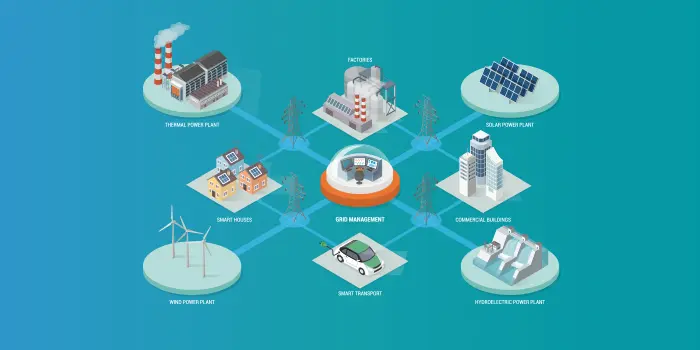
With digital power, the grid transitions from a static one-way system to a dynamic, digital network. It’s the intelligent layer that turns wires into a simple, efficient, sustainable backbone.
Inflexible, schedule-based operations and antiquated forecasting cannot cope with the variability of weather, economic cycles, and consumer behavior, leading to skyrocketing prices and shortages.
Most of the world’s grid is old and not built to accommodate real-time data, automation, or modern devices.
Wind and solar are variable. Scaling them requires control and smart predictions, without which, integrating them becomes difficult.
The attack surface expands as systems interlink and digitalize. Unauthorized commands and ransomware can bring critical operations to a standstill. You have to have security at all levels integrated.
People don’t just want a bill — they seek transparency, control, choices, and engagement that many utilities don’t offer.
EMS software is used in homes, commercial buildings, and industrial buildings to track consumption, automatically save, and make recommendations for improvement and orchestrate on-site resources. The upshot is cheaper bills for consumers and more support for the grid.
With blockchain development, direct exchange between peers allows producers to sell excess energy to customers, where the law permits. It helps make the process transparent, opens up the grid to cleaner power, and in some cases, can be cost-effective, challenging old-fashioned, top-down approaches.
Automation, sensors, and real-time analytics enable the grid to isolate and locate faults, reroute power, and accommodate renewables in a proactive manner. And by responding to demand as it occurs, smart grids reduce waste and increase reliability. Here are some recent investment levels to help you get an idea of the size of this change.
Numerous smaller, geographically disparate resources — such as rooftop solar, batteries, smart appliances, and electric vehicles can be digitally aggregated through VPPs into a single and dispatchable energy source.
Digital energy is the digitizing of how energy is produced, delivered, stored, and consumed. It adds intelligent capability to the grid by:
Reduced CO2 emissions through energy savings and renewable energy integration
Savings on energy bills for households and businesses
More reliable grids and fewer outages
Empowered consumers with real-time insights and control
Scalable model that supports global climate targets
Whether you’re a homeowner looking to save or a city planner aiming for net-zero, digital energy has real benefits.
Digital energy isn’t driven by one technology; it’s an ecosystem. The main components are:
AI for decision making and trend prediction.
Pattern recognition and performance optimization ML (Machine Learning)
IoT supports real-time monitoring and device control
Cloud data analysis for scalable resources to process and store it
Edge computing for fast response near the source
These technologies are connected to form a smart, flexible, and responsive system that reacts and adapts to operations and user needs.
The energy industry is at a crossroads. One road leads to more expenses, environmental degradation, and continued inefficiency. Powered by digital innovation, the other leads to sustainability, savings, and smarter systems.
It’s clear. From smart grid software and EMS integrations to data platforms and IoT-enabled orchestration, partners like Chetu can help businesses plan, integrate, and scale the digital energy capabilities that make this happen. Investing in digital energy sources and giving developers the freedom to build smart infrastructure will help us build a future where energy is not just plentiful but optimized, safe, and sustainable.
Disclaimer:
This content has been made available for information purposes only. Views and opinions expressed in this content are those of the individual author only and do not necessarily represent the opinions and views of Chetu. Chetu, and its representatives, make no representation or warranty of any kind, express or implied, regarding the accuracy, adequacy, validity, reliability, availability, or completeness of any information of this content. Under no circumstances shall Chetu, or its representatives, have any liability to you or any loss or damage of any kind incurred as a result of the use of this content or reliance on any information provided in this content. Your use of this website and your reliance on any information on this content is solely at your own risk.
About Chetu:
Founded in 2000, Chetu empowers businesses with AI and digital transformation solutions, supporting startups, SMBs, and Fortune 5000 companies. We deliver end-to-end software solutions backed by global digital intelligence and industry expertise. Our customized software delivery model and one-stop-shop approach span the full technology spectrum. Headquartered in Sunrise, Florida, Chetu operates 13 locations across the U.S., Europe, and Asia.
See more at: Chetu Blogs


Limited Time Offer for a Free E-Book
Privacy Policy | Legal Policy | Careers | Sitemap | Referral | Contact Us
Copyright © 2000- 2026 Chetu Inc. All Rights Reserved.



 By: Rick Heicksen