Let's Talk !  954 342 5676
  +44 137 243 2466
One of your most important functions as a business owner or manager is measuring how well your employees are doing. Are they on board with your goals and mission? You want to know they’re focusing on those objectives and meeting or exceeding your expectations.
Tracking employee performance is a critical aspect of achieving success for any organization. This process has a significant role in improving productivity and efficiency by identifying areas of strength and weakness. Setting clear performance goals and providing necessary support for development are also essential components of this process. Utilizing data-driven approaches enables businesses to align individual performance with organizational objectives. Recognizing top performers through the analysis of performance indicators such as sales figures, project completion rates, and customer feedback contributes to informed decision-making, ultimately leading to overall success.
Businesses often face significant challenges with traditional methods of monitoring performance. These challenges include:
Inefficiency of Manual Tracking: When businesses depend on paper-based systems or spreadsheets, they often encounter issues such as tedium and errors. This can lead to delays, incomplete records, and difficulties in maintaining accurate performance data.
Subjective Evaluations: Assessments influenced by personal biases or limited observations can result in inconsistent and unfair evaluations. This can negatively impact employee morale and trust within the organization.
Lack of Standardization When tracking methods vary across teams or departments, it can create confusion, misalignment, and difficulties in comparing performance metrics.
These limitations can hinder effective progress tracking, identification of growth opportunities, and maintenance of fairness. By transitioning to a streamlined, objective, and consistent performance-tracking system, businesses can effectively overcome these barriers and achieve their objectives.
What methods of monitoring employee performance are you currently using? Are you relying on subjective impressions of who is doing the most or best work? Your instincts are probably pretty sound, but they’re not enough. You also need facts and numbers that prove or disprove your impressions.
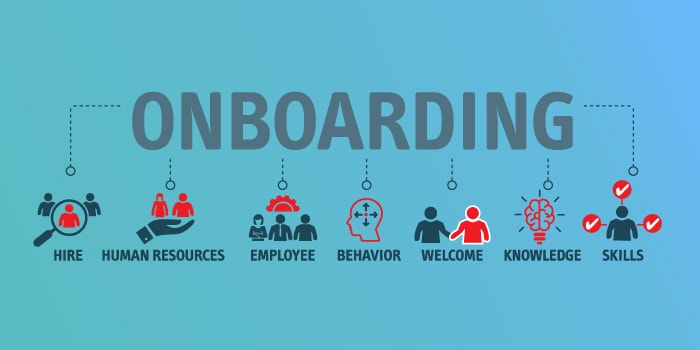
There are many reasons for companies to consider automating their onboarding processes. Here are four of the primary reasons companies should consider implementing an automated process.
Are you guilty of passive management? If your management style involves not saying anything until there’s a problem you need to connect, you are not taking a proactive approach to managing and tracking your employees.
If they don’t know what you expect, they won’t know what to focus on first. That’s why the first step in employee performance tracking is to make your expectations clear.
What are your top strategic goals for your company or department? Sometimes, the answer is obvious. It might be sales figures, customer retention or another measurable goal. In other cases, you will need to define it for your employees. How do you track the success of a new marketing initiative or ensure that your customer service employees are unfailingly polite?
Try to make your goals clear and, when possible, measurable in numbers. Remember the acronym SMART: Specific, measurable, achievable, relevant and timely. It helps your employees know what to strive for, and it gives you a baseline for measuring each worker’s performance.
Once you know what your goals and expectations are, use software to monitor how well your employees are meeting those goals. With employee monitoring software, you can evaluate their personal productivity and the quantity of work they produce.
You’ll also be able to spot what type of work they excel at and where their weaknesses are. You’ll have clear, objective numbers that show you which areas of performance are strong and which could use improvement.
Use self-monitoring along with regular performance reviews and meetings. They’ll give you employees a better sense of where they stand. Your performance reviews and other meetings will be quick and to the point, and that’s something everyone will appreciate.
When you track numbers, be sure you track the right ones. The quality of an employee’s work product is more important than the number of hours they work or even whether they have perfect attendance. Those factors are important, but don’t let them overshadow the value of specific achievements. Instead of tracking each employee’s schedule, track the tasks they finish and the projects they successfully complete.
Use 360-degree feedback to get information about intangible skills. So-called soft skills are critical to your success and growth as a company. Use the 360-degree method to collect feedback from an employee’s colleagues, subordinates, customers and managers in other departments. You’ll get a strong sense of the employee’s skills at problem solving, goal setting, character, leadership and teamwork.
Your oversight and management are important, but self-monitoring can keep employees engaged in their own growth. Self-monitoring lets them set their own goals and track their progress. That’s enormously helpful, especially if your company links good performance to specific rewards like bonuses and awards. Employees who have a stake in meeting your organization’s goals are more likely to be highly productive.
Your employees can measure how well they’re doing on certain projects using activity logs, task lists and project milestones. Self-monitoring tools help them develop ownership of their work.
What’s the best way to track performance? Most employee files contain performance reviews, awards, letters of commendation and other paperwork. This isn’t really sufficient, and it’s a time-consuming way to measure how well your workers are performing.
You can use software to track employee performance in the metrics that really matter, like time spent on tasks, deadlines met, application use and internet activity.
Of all the methods of monitoring employee performance, web-based solutions are the fastest, most thorough and most objective. Task management software integrates with the software your employees are already using to measure their work output, attendance, production and more. If you want the clearest, fairest employee performance tracking, task management software is the solution.
An effective performance tracking solution should include the following features to ensure accuracy and actionable insights:
Employee performance tracking systems should enable the ability to determine how much progress and employee has made by providing easy-to-understand success metrics.
A valuable performance tracker system provides a smooth and intuitive user experience, giving automatic prompts and reminders so no tasks is left incomplete.
360-degree feedback is a great tool to evaluate employees and let them know where they stand. A great performance software will allow to obtain feedback from people electronically and optimize this process, opposed to having to sit down with each person providing feedback.
A good performance system allows employees to perform self-evaluations periodically, letting them recognize areas to improve, take ownership of actions and growth, and having a more visual representation of their current state in the company.
The right software enables managers to keep regular logs of how employees are performing, allowing them to have easy to access information on the employee no reference when needed.
Get customized solutions with Chetu to enhance employee performance monitoring that aligns with your business objectives. Our software is designed to adapt to your specific key performance indicators (KPIs), providing scalability and flexibility to support your expanding teams.
Our platform includes features such as personalized performance evaluations, 360-degree feedback, engagement monitoring, review cycle management, and comprehensive bonus and compensation reports to streamline performance management processes. Additionally, advanced reporting functionalities empower decision-makers with the necessary data to make informed strategic decisions. Partner with Chetu for seamless integration of our solution into your existing HR systems, ensuring continuous evolution to meet the needs of your growing business. Contact us today to discover how we can assist you in optimizing performance management for sustained success.
Disclaimer:
This content has been made available for information purposes only. Views and opinions expressed in this content are those of the individual author only and do not necessarily represent the opinions and views of Chetu. Chetu, and its representatives, make no representation or warranty of any kind, express or implied, regarding the accuracy, adequacy, validity, reliability, availability, or completeness of any information of this content. Under no circumstances shall Chetu, or its representatives, have any liability to you or any loss or damage of any kind incurred as a result of the use of this content or reliance on any information provided in this content. Your use of this website and your reliance on any information on this content is solely at your own risk.
About Chetu:
Founded in 2000, Chetu empowers businesses with AI and digital transformation solutions, supporting startups, SMBs, and Fortune 5000 companies. We deliver end-to-end software solutions backed by global digital intelligence and industry expertise. Our customized software delivery model and one-stop-shop approach span the full technology spectrum. Headquartered in Sunrise, Florida, Chetu operates 13 locations across the U.S., Europe, and Asia.
See more at: Chetu Blogs


Limited Time Offer for a Free E-Book
Privacy Policy | Legal Policy | Careers | Sitemap | Referral | Contact Us
Copyright © 2000- 2026 Chetu Inc. All Rights Reserved.


 By: David Pridgen