Let's Talk !  954 342 5676
  +44 137 243 2466
While the name implies cleansing, its true purpose is to ensure the quality and integrity of data—to put it more appropriately—purifying and preparing it for proper inspection. Data clean rooms allow companies to share aggregated data instead of customer-level data with advertisers. This technology has been a game-changer for marketers, and they have taken notice, evidenced by Forrester's Q4 B2C Marketing CMO Pulse Survey, where 90% of respondents say they use a data clean room for marketing use cases.
While data clean rooms can be used in multiple industries, hospitality has many uses due to its overlapping nature with multiple services. Data clean rooms ensure that companies receive the best customer insights and that they maintain compliance with legal regulations.
A data clean room is a secure and anonymous private data exchange. First-party data from an advertiser is leveled with the aggregated data from other platforms, allowing advertisers to observe how different datasets match up, using the data-informed insights to shape a marketing strategy. Strong encryption protocols, secure file transfer mechanisms, and fortified APIs are employed to protect data at all points in the process.
Participating parties can maintain user privacy and compliance through customizable access controls, which prevent personally identifying data from leaving the environment. Data permissions and access restrictions help set a clear guideline for what is allowed. Comprehensive audit logging and activity tracking ensure data accountability for all authorized users and help enable secure access for everyone.
Data clean rooms play a critical role in supporting compliance by aligning with regulations like GDPR, HIPAA, and CCPA. These secure environments ensure that organizations meet regulatory adherence and uphold legal requirements during data handling and collaboration. By maintaining strict privacy regulations and adhering to industry standards, data clean rooms enable secure data collaboration without compromising sensitive information. They provide robust compliance support, allowing businesses to confidently share insights while safeguarding privacy and achieving legal and industry-specific adherence.
Stringent privacy regulations have created a demand for data clean rooms. This is especially important in industries that handle sensitive customer data, like hospitality. 64% of companies leveraging privacy-preserving technology are using data clean rooms as part of their overall strategy. Additionally, 67% of B2B marketers identified data compliance and accuracy as top priorities.
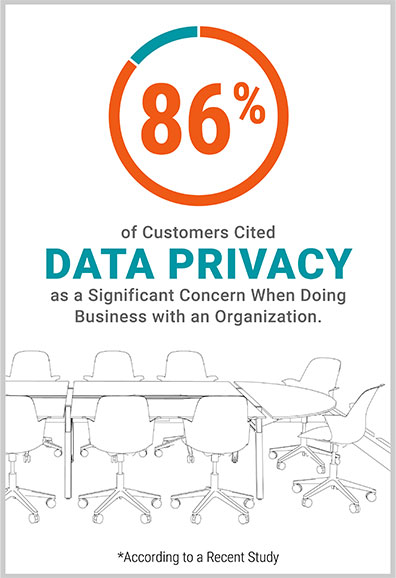
A recent report revealed that 86% of customers cited data privacy as a significant concern when doing business with an organization. Data clean rooms use data anonymization and de-identification techniques to safeguard sensitive data. Personally identifiable information (PII) protection is enabled through identity masking, ensuring that data privacy is maintained, all in the effort of privacy-focused analytics. These privacy safeguards ensure that secure analysis is conducted in these data-clean rooms.
For vacation rental providers, data clean rooms offer a secure, privacy-compliant way to collaborate with advertising platforms. Targeted advertising is one of the key advantages of data clean rooms. Marketers use aggregated and anonymized data to create precise audience segmentation, reaching travelers most likely to book vacation rentals. Providers can identify segments based on factors like preferred travel destinations, booking frequency, or price sensitivity, tailoring campaigns to maximize bookings.
For example, a travel company can share data with companies that provide room accommodations to determine which customers are likely to book a hotel compared to Airbnb. The hotel can work with these groups to provide lodging efforts for those varying demographics. 71% of brand managers have trouble maintaining a comprehensive customer profile over time, so prioritizing accurate and enriched profiles is crucial.
In addition, clean rooms enhance customer engagement strategies by offering insights into traveler preferences and behaviors. Providers can analyze data like website interactions or past booking trends to refine personalized marketing efforts, such as recommending properties or highlighting seasonal deals. With their ability to support marketing ROI analysis and improve collaboration while safeguarding privacy, data clean rooms empower vacation rental providers to optimize their marketing efforts and drive more bookings effectively.
Data clean rooms are also valuable for cross-platform analytics, allowing vacation rental businesses to measure campaign performance across multiple advertising channels. By centralizing data, clean rooms make it easier to access which platforms and strategies drive the most ROI, whether through search ads, social media campaigns, or email marketing.
Like all good things, there may be some obstacles to securing your own data clean room. Organizations must be prepared for the complexities of establishing secure and privacy-compliant environments.
Technical Complexity: Data clean room setups require expertise in data encryption, access control, and secure computational environments, which require significant resources and technical skills.
High Costs: Due to advanced technology and continuous data monitoring, the costs of setting up and maintaining a data clean room can be high.
Privacy Concerns: Even though it is a controlled environment, there are privacy risks if data anonymization is insufficient or access controls are breached.
To tackle common challenges in data clean rooms, being prepped with the best practices will increase the likelihood of success.
Define clear objectives and use cases
Organize data based on sensitivity and compliance requirements.
Apply advanced security protocols such as encryption, access controls, and secure authentication
Ensure sensitive data is anonymized or de-identified to maintain privacy
Stay up-to-date with protection regulations like GDPR, HIPAA, and CCPA.
Define data ownership and management processes.
Provide regular training to ensure users understand clean room functionalities, privacy standards, and best practices
Implement regular auditing and monitoring
Data clean rooms are revolutionizing data collaboration, enabling businesses to unlock insights while protecting privacy. Despite setup challenges, they offer immense value for industries like hospitality, driving targeted marketing, customer engagement, and ROI. As privacy concerns grow, adopting clean rooms is essential for staying competitive and building trust.
Disclaimer:
This content has been made available for information purposes only. Views and opinions expressed in this content are those of the individual author only and do not necessarily represent the opinions and views of Chetu. Chetu, and its representatives, make no representation or warranty of any kind, express or implied, regarding the accuracy, adequacy, validity, reliability, availability, or completeness of any information of this content. Under no circumstances shall Chetu, or its representatives, have any liability to you or any loss or damage of any kind incurred as a result of the use of this content or reliance on any information provided in this content. Your use of this website and your reliance on any information on this content is solely at your own risk.
About Chetu:
Founded in 2000, Chetu empowers businesses with AI and digital transformation solutions, supporting startups, SMBs, and Fortune 5000 companies. We deliver end-to-end software solutions backed by global digital intelligence and industry expertise. Our customized software delivery model and one-stop-shop approach span the full technology spectrum. Headquartered in Sunrise, Florida, Chetu operates 13 locations across the U.S., Europe, and Asia.
See more at: Chetu Blogs


Limited Time Offer for a Free E-Book
Privacy Policy | Legal Policy | Careers | Sitemap | Referral | Contact Us
Copyright © 2000- 2026 Chetu Inc. All Rights Reserved.


 By: Nick Swanson