Thank you!
Your blog has been successfully shared.
Let's Talk !  954 342 5676
  +44 137 243 2466
Parvin Basnyet - Director of Operations | Date -29th June 2026
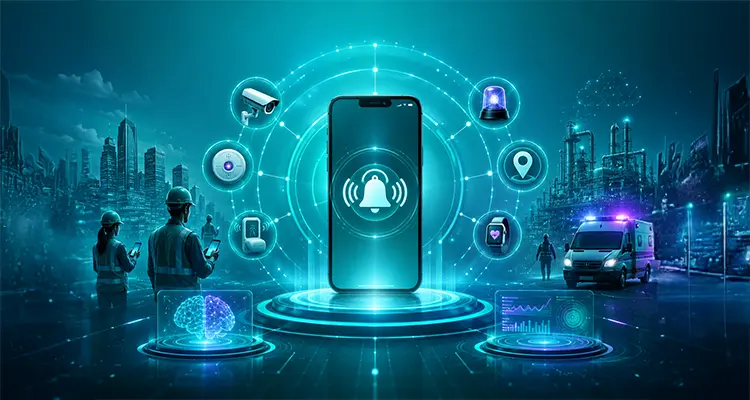
Emergency communications systems are being called upon to do more than ever. For years many of these systems, sometimes built into mass communications systems, have included emergency telephones and call buttons, also known as blue light boxes, enabling security or public safety personnel to receive alerts as well as send them. But some of today's systems take two-way communications to another level.
Security personnel are increasingly focused on layered responses to an emergency that offer multiple forms of communications; and that applies not only on the output side, where clients frequently use text messages, loudspeakers, and other alert methods, but also on the input side. Emergency communications have expanded to include smartphone apps that enable employees to quickly summon help, along with mass notification systems capable of interactive communication with mobile devices during emergencies.
Developers have gone one step further in emergency communications by integrating video and other capabilities into these solutions. Using telecommunication software development, they're creating smarter intercom systems that help secure businesses, schools, shopping centers, and movie theaters by locking out intruders, initiating emergency protocols, and triggering other security measures.
Fewer organizations are utilizing on-premises communications systems and opting for cloud-based emergency communications systems, which can offer more flexibility, scalability and reliability.
Modern day SaaS solutions provide administrators with the ability to manage alerts, track incidents and coordinate response efforts from virtually anywhere. Cloud-based public safety systems will enable organizations to improve operational continuity while eliminating the burden of maintaining complex onsite infrastructures.
In addition to moving towards the cloud, organizations are also focused on consolidating historically siloed communications systems into one, unified platform. Historically organizations would maintain separate fire alarm systems, intercoms, mass notification systems and access control systems each with their own interface, vendor and maintenance schedule. This type of system is increasingly viewed as a liability.
Today's unified platforms provide integrated alerts, intercoms, video surveillance equipment and automated notifications in one place, thus providing security personnel with the ability to readily and efficiently coordinate a response in real time. When all of the systems utilize the same communication protocols, the time it takes to respond to an emergency situation can be greatly improved and the risk that critical information is missed can be significantly decreased. This convergence also improves the ability to integrate with customer and employee communications, which provides for a more connected and responsive overall safety environment.
Innovators are leveraging innovations in AI emergency communication tools as well as intelligent emergency response technology to enhance the readiness for events and speed of reaction when they occur. To create a quicker and simpler method of notifying others in times of crisis, organizations now depend less on human input during an event through the automation of event trigger functions.
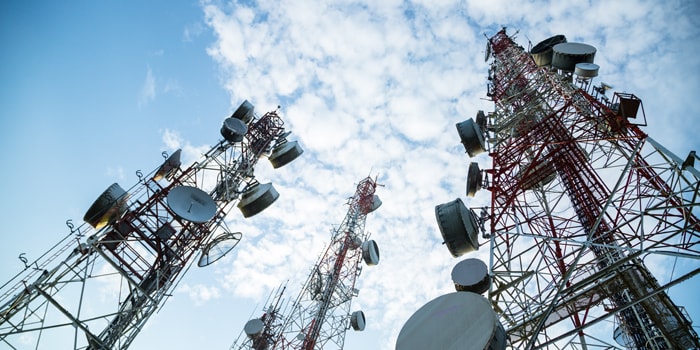
At the same time, next-generation technology including the new 5G emergency communication system, and a hybrid LMR-LTE public safety network, are capable of providing faster transmission speeds, increased bandwidth, and improved collaboration between public safety-related agencies.
Sending messages to smartphones is also becoming an increasingly important aspect of mass notification systems, and some of those systems are gaining interactive communications capability too.
Mobile alerting platforms such as AlertFind allow emergency management and security personnel to push a single button and use several different methods to alert those who could be impacted. One of the methods is via smartphone text messages, which also includes questions for recipients that they can answer via text.
In an emergency situation such as an active shooter, security personnel can send out a mass text stating that there is an active shooter incident reported in the vicinity of "Ferguson Hall" — if you are near, push (1); if not, push (2). This will assist first responders in getting a preliminary head count of how many people are in the area. The system is also great for disseminating real-time information during a natural disaster such as a hurricane. Companies can communicate with employees by giving them updates on the status of the building and whether operational activities have been suspended. This sort of capability can be very valuable because events can change and unfold quickly.
Intercom systems can be the first line of defense during an incident. Modern systems now include built-in cameras and remote access control capabilities. They can be integrated with existing security systems, allowing remote lockdown and alarm triggering. Some systems also allow for a specific prerecorded audio message to be played, acting as a further deterrent.
According to the U.S. Bureau of Justice Statistics, over 11.2% of crimes against people occur in garages, commercial parking lots, and residential parking spaces. These crimes include purse snatching, robbery, carjacking, and abductions.
With this in mind, many companies have had to review their current security and communication channel systems in the following ways:
Performed a comprehensive audit of all areas to identify vulnerable spots including stairwells, blind corners, entryways, and exits
Installed intercom systems with two-way audio and video capabilities at entry and exit points
Emergency towers that allow security personnel a high vantage point from which they are able to survey large areas and direct ground personnel to affected areas
Drone technology also provides security an "Eye in the Sky," allowing them to survey large areas
Emergency kiosks allow emergency broadcasts and also allow persons to contact security with two-way video
In the fire alarm world, there have been many innovations designed to get people out of harm's way and into safety. More stringent building codes and operational health and safety regulations have driven improvements in fire alarm system technology such as:
Voice Guidance Systems - Emergency voice and alarm communication systems now have the capability to broadcast live voice messages by paging individual zones or entire facilities on a selective and all-call basis, helping occupants receive clear instructions during critical situations.
LED Floor Strips - Provide a lit, guided escape route along the ground. Fire experts will tell you that the best way to get out of a "heated situation" is to get low, as the air quality is better closer to the ground (hot air rises).
Strobe Lights - In poor visibility areas and also for the hearing impaired, strobe lights serve as a beacon to guide persons to safety. These lights have an independent power supply so they are not affected if the building loses power.
Emergency communications systems have come a long way. From cloud-based public safety platforms and AI-powered automation to mobile alerting and smarter intercom integrations, the tools available today are more capable, and more connected, than ever before.
Has your company made strides in improving its communications capabilities? Remember, situations may arise and they seldom announce their arrival, so being prepared should always be option one, two, and three.
Disclaimer:
This content has been made available for information purposes only. Views and opinions expressed in this content are those of the individual author only and do not necessarily represent the opinions and views of Chetu. Chetu, and its representatives, make no representation or warranty of any kind, express or implied, regarding the accuracy, adequacy, validity, reliability, availability, or completeness of any information of this content. Under no circumstances shall Chetu, or its representatives, have any liability to you or any loss or damage of any kind incurred as a result of the use of this content or reliance on any information provided in this content. Your use of this website and your reliance on any information on this content is solely at your own risk.
About Chetu:
Founded in 2000, Chetu empowers businesses with AI and digital transformation solutions, supporting startups, SMBs, and Fortune 5000 companies. We deliver end-to-end software solutions backed by global digital intelligence and industry expertise. Our customized software delivery model and one-stop-shop approach span the full technology spectrum. Headquartered in Sunrise, Florida, Chetu operates 13 locations across the U.S., Europe, and Asia.
See more at: Chetu Blogs
Share


Limited Time Offer for a Free E-Book
Privacy Policy | Legal Policy | Careers | Sitemap | Referral | Contact Us
Copyright © 2000- 2026 Chetu Inc. All Rights Reserved.