Thank you!
Your blog has been successfully shared.


Let's Talk !  954 342 5676
  +44 137 243 2466
Rick Heicksen - Vice President of Sales | March 24, 2026
Late deliveries don’t just increase fuel costs. They affect trust, disrupt daily operations, and slowly impact long-term growth. If you manage logistics, you’ve likely seen how a single delay can ripple across the entire schedule. One missed turn, unexpected traffic, or a warehouse bottleneck can throw everything off track.
Route planning used to be straightforward. Find the shortest path and move on. But logistics today is far more demanding. You’re balancing delivery timelines, fuel efficiency, driver safety, customer expectations, and overall profitability.
That’s where AI route planning software comes in. Not as a future concept, but as a practical solution that helps teams make smarter decisions in real time.
AI route planning software helps teams move faster and make better decisions. It uses real-time traffic and historical delivery data to optimize the scheduling and minimize the fuel usage and maximize efficiency. Businesses stay predictable and responsive to changing conditions with the help of dynamic rerouting and predictive ETAs.
Traditional route planning depends on fixed schedules and static maps. The reality is, real-world conditions are rarely predictable. Traffic builds suddenly, the weather changes fast and delivery needs change throughout the day.
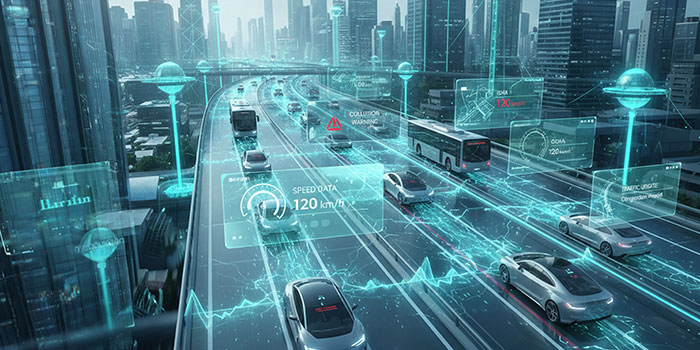
AI-powered route optimization solves this by analyzing real-time GPS data, traffic and delivery restrictions. Logistics teams can adjust routes as conditions change rather than responding to the occurrence of disruptions.
That leads to:
More efficient stop sequencing
Fewer unnecessary miles
Faster and more consistent deliveries
Better use of vehicles
AI systems learn from past deliveries to identify traffic patterns and peak periods to make better plans. If you rely on spreadsheets or manual routing, slight inefficiencies can creep in and would influence the cost and performance.
Time is a very big factor in logistical activities. It has a direct effect on customer satisfaction and operational efficiency. AI-powered scheduling systems based on AI are constantly tracking the real-time situation and automatically recalculate routes in the case of disruptions.
Changes are made automatically without manual effort, be it the closing of a road, traffic jam or weather problem.
Businesses typically see:
Improved on-time
delivery rates
Lower fuel
consumption
Reduced
driver overtime
More accurate delivery timelines
Better fleet
utilization
Predictive ETAs matter. Customers expect precise delivery times, not broad windows. AI uses real-time data and history to improve accuracy. While some fear losing control, it actually supports teams with better, consistent insights.
Fleet efficiency isn’t just about speed. It’s about managing fuel, driver behavior, maintenance and reliability together. AI tracks patterns like idling, speeding and harsh braking, helping teams improve safety without constant oversight. Smarter routing reduces fuel use, avoids congestion and lowers risk with safer alternatives.
It also supports predictive maintenance by spotting issues early, reducing breakdowns and downtime. The bigger question is whether decisions are based on real-time data or outdated reports—because delays in insight can slow everything down.
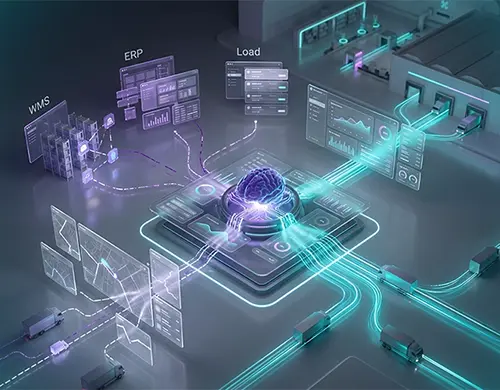
AI tools are widely available, but integration is where most challenges begin. Logistics operations often rely on multiple systems—transportation management platforms , warehouse tools, ERP systems and third-party software.
If these systems don’t connect properly, even advanced AI solutions may fall short.
That’s why experienced software development partners matter. Custom AI solutions can be built around your workflows, instead of forcing you to change how you operate.
Key advantages include
Seamless system integration
Scalable and flexible platforms
Custom dashboards and reporting
Ongoing optimization and support
Off-the-shelf tools may work for simpler needs. But complex logistics environments usually need something more aligned. When AI fits naturally into your processes, adoption becomes easier—and results follow.
AI route planning isn’t just about cutting miles. It builds more resilient logistics. With rising costs and expectations, businesses need to move faster and operate smarter. AI helps improve efficiency and decision-making. Start by evaluating
current performance, then identify where better visibility and smarter routing can make a real difference.
Disclaimer:
This content has been made available for information purposes only. Views and opinions expressed in this content are those of the individual author only and do not necessarily represent the opinions and views of Chetu. Chetu, and its representatives, make no representation or warranty of any kind, express or implied, regarding the accuracy, adequacy, validity, reliability, availability, or completeness of any information of this content. Under no circumstances shall Chetu, or its representatives, have any liability to you or any loss or damage of any kind incurred as a result of the use of this content or reliance on any information provided in this content. Your use of this website and your reliance on any information on this content is solely at your own risk.
About Chetu:
Founded in 2000, Chetu empowers businesses with AI and digital transformation solutions, supporting startups, SMBs, and Fortune 5000 companies. We deliver end-to-end software solutions backed by global digital intelligence and industry expertise. Our customized software delivery model and one-stop-shop approach span the full technology spectrum. Headquartered in Sunrise, Florida, Chetu operates 13 locations across the U.S., Europe, and Asia.
See more at: Chetu Blogs
Share


Limited Time Offer for a Free E-Book
Privacy Policy | Legal Policy | Careers | Sitemap | Referral | Contact Us
Copyright © 2000- 2026 Chetu Inc. All Rights Reserved.