Let's Talk !  954 342 5676
  +44 137 243 2466
Let's Talk ! 954 342 5676 +44 137 243 2466
A Case Study
Building an AI-Powered Route Optimization Platform That Automates Delivery Planning, Maximizes Fleet Utilization, Reduces Transportation Costs, and Improves Last-Mile Delivery Performance.
Transportation & Logistics
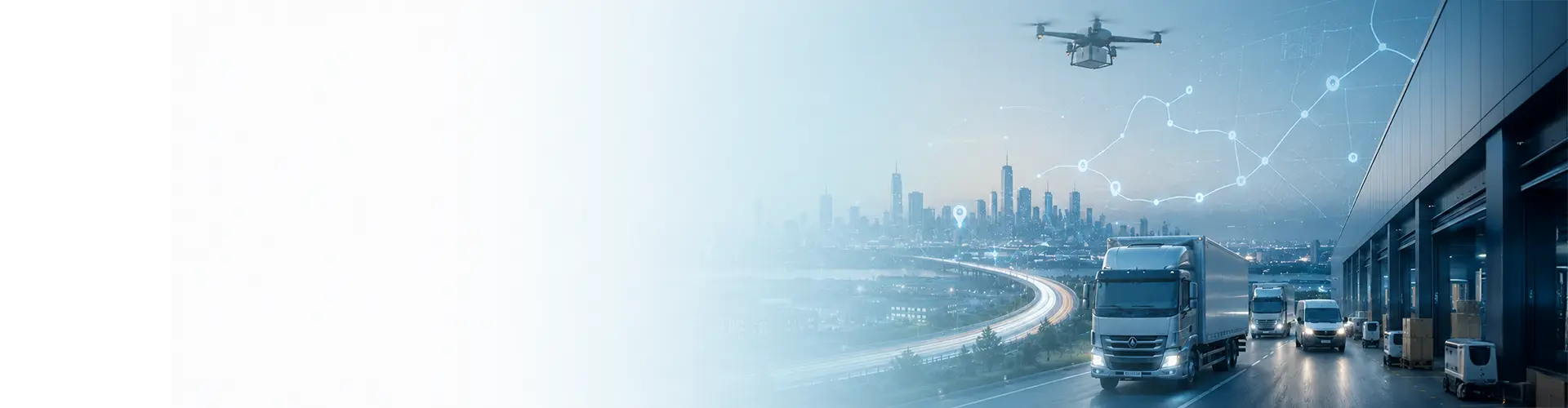
We developed an AI-based route optimization system, which automates delivery planning, intelligently packs orders, optimizes fleet routes, and allows dispatchers to create efficient delivery plans in minutes rather than hours. This solution integrates machine learning, geo clustering, retrieval-augmented intelligence (RAI), and sophisticated optimization algorithms to save fuel, boost driver productivity, enrich customer experiences, and optimize logistics operations all while keeping dispatchers in full control.
The client is a logistics and distribution business with multiple warehouses and delivery regions that handle large volume deliveries. Dispatch teams deal with hundreds of customer orders every day and juggle delivery commitments, vehicle capacities, operational limitations and ever-changing traffic conditions.
Ordering volume grew, and customer demands for speedy and consistent deliveries rose. Delivery planning using the manual method was becoming increasingly difficult to scale. The organization needed a platform that would enable them to optimize delivery planning without impacting the logistics in place.
The goal was to optimize last mile delivery routes, simplify planning, maximize fleet utilization, and develop a scalable AI base which can self-learn throughout its operation.
Traditional route planning relied heavily on dispatcher experience and manual decision-making. Teams were required to review delivery addresses, ZIP codes, delivery dates, truck capacities, and carrier availability before manually grouping orders into delivery trips.
This approach introduced several operational challenges:
Time-consuming delivery planning
Inefficient route planning and stop sequencing
High fuel consumption caused by unnecessary travel
Reduced driver productivity due to poor route organization
Limited visibility into route performance
Difficulty adapting to traffic congestion and operational constraints
Inconsistent last-mile delivery performance
Increasing operational costs as delivery volumes grew
Without an intelligent routing engine, dispatchers spent valuable time comparing route alternatives instead of focusing on delivery execution and customer service.
We created an AI-assisted delivery route planner that streamlines the delivery planning process and retains the control of dispatchers on all the routing decisions.
It starts with data readiness, which incorporates address validation, delivery dates, warehouse data, and carrier availability before optimization starts. After validation, Scikit-learn Agglomerative Clustering is used to cluster deliveries that are close together and form logical geographic segments to simplify the planning process and form optimized delivery batches.
Google OR-Tools then uses cutting-edge vehicle routing algorithms to calculate the most efficient assignments of vehicles and stops, factoring in truck capacity, delivery time windows, and operational restrictions, all while taking road distance into account. The Google Maps Distance Matrix API provides road-distance and travel-time estimates, with traffic-aware estimates configured.
The platform also includes Retrieval-Augmented Generation (RAG) to further enhance routing intelligence. Unstructured operational data such as driver notes, customer delivery preferences, gate restrictions, and more are pulled and transformed into optimization constraints to give the routing engine the opportunity to take business rules into consideration that the traditional optimization system might not have considered.
All dispatchers are always in control throughout the entire planning process. Dispatchers can accept, modify, or reject the recommended routes, establishing an iterative process where AI will learn from each user's decision and enhance its routing accuracy based on the feedback received.
The solution was implemented using a phased, low-risk rollout strategy designed to maximize operational adoption while minimizing disruption.
The project began by validating address quality, warehouse origins, delivery windows, carrier information, vehicle capacities, and operational rules to establish a reliable foundation for optimization.
Machine learning models automatically grouped delivery orders using geo clustering before capacity-aware trip creation assigned deliveries to the most appropriate vehicles.
Google OR-Tools generated optimized delivery sequences using:
Retrieval-Augmented Generation transformed historical driver notes and operational documentation into routing constraints, allowing AI recommendations to better reflect real-world delivery conditions.
AI-generated delivery plans were compared against manually created routes to validate optimization accuracy and establish baseline performance improvements.
The optimization engine was gradually deployed across dispatch operations, allowing continuous KPI monitoring, dispatcher feedback, and model refinement to improve recommendation quality over time.
The AI-powered fleet route optimization solution delivered measurable operational improvements across the client's logistics network.
Faster Delivery Planning : Automated delivery planning reduced manual route creation, enabling dispatchers to generate optimized delivery schedules significantly faster.
Lower Fuel Consumption : Optimized routing reduced unnecessary travel distance, delivering measurable fuel savings while lowering transportation costs.
Improved Driver Productivity : Better trip planning enabled drivers to complete more deliveries with fewer idle miles and less time spent navigating inefficient routes.
Enhanced Customer Experience : More accurate delivery sequencing and predictable arrival times improved on-time performance and strengthened customer satisfaction.
Increased Fleet Utilization : Capacity-aware trip planning maximized vehicle utilization while reducing unnecessary trips across the delivery network.
Better Operational Visibility : Real-time dashboards provide managers with comprehensive visibility in delivery status, route performance, planning efficiency, and operational KPIs.
Scalable AI Foundation : The platform established a flexible AI layer capable of supporting future enhancements, including predictive ETA modeling, dynamic traffic optimization, and advanced route optimization of APIs for logistics integrations.
Book a FREE 20-minute strategy call to explore how we helped a logistics business improve route planning, streamline deliveries, and build a smarter AI-powered solution.
Explore our successful projects and client outcomes.
Learn More > >

Learn More > >

Learn More > >
Drop us a line or give us a ring. We'd love to hear from you and would be happy to answer any questions.
Privacy Policy | Legal Policy | Careers | Sitemap | Referral | Contact Us
Copyright © 2000- 2026 Chetu Inc. All Rights Reserved.