Benefits of RETS Feeds in Real Estate
Akash Sinha - Director of Operations | October 12, 2026
- Powers MLS search and listings — Gives applications access to property data for feature-rich search and listing platforms.
- Simplifies integration — Standardized format reduces errors and integration overhead across MLS sources.
- Keeps data current — Real-time sync ensures agents and consumers always see up-to-date listings.
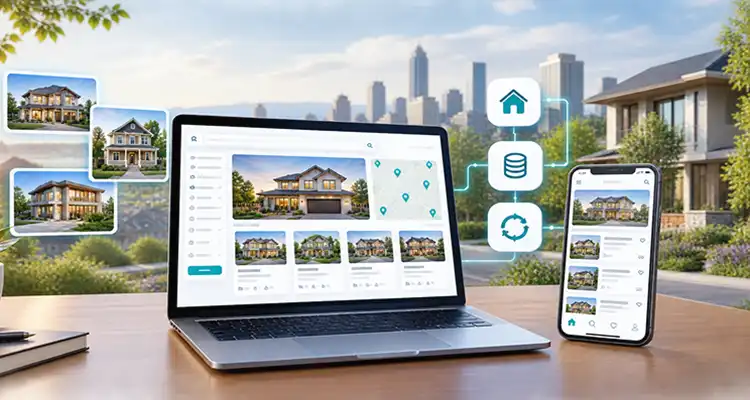
RETS stands for Real Estate Transaction Standard. It's an older technology that lets real estate platforms pull listing data from an MLS (multiple listing service) in one shared format, so every firm saw the same information.
RETS isn't the standard anymore. The organization behind it, RESO (Real Estate Standards Organization), retired RETS and replaced it with the RESO Web API. Most MLSs across the country have already made the switch, and it's now the required standard for REALTOR-operated MLSs. Some older systems still run on RETS, but that's on its way out.
Today, real estate management software is built around the RESO Web API, not RETS. It keeps listing data accurate, consistent, and synced in real time across every platform that uses it. That means agents and firms across North America see the same up-to-date listing information, whenever they check it.
The Major Impact of RETS Data Feeds on the Real Estate Industry
The major impact that RETS data feeds had on the MLS listing experience is that it was the first way to centralize lots of real estate listing data and make it instantly accessible to multiple people at once. Without a centralized solution like real estate MLS software, there would be no way to provide real-time updates to MLS listings that everyone viewing those affected properties could access simultaneously. This makes for a more complicated transactional process and often resulted in lots of wasted search and preparation time for real estate professionals.
Keep reading to learn more about the development and usefulness of RETS feeds in the real estate industry so that you and your real estate firm are taking advantage of the most cutting-edge technological developments right now in the industry.
The Differences between RETS and IDX
IDX stands for Internet Data Exchange and is the system and process by which all of the listings on the MLS end up on websites. It is sometimes also referred to as Broker Reciprocity. The public can view property listings through Real Estate MLS Software using IDX technology, while RETS helps real estate websites and applications access, exchange, and manage MLS listing data.
RETS technology is considered an alternative to previous versions of IDX technology. It allows a user to take information from their computer or mobile device and list it directly on the MLS. Firms that invest in IDX real estate software development often find that RETS feeds made accessible on their professional website make for an easier and faster user experience than working with IDX technology. In addition, RETS feeds are compatible with SEO strategies to enable more effective online marketing of particular real estate listings. The MLS RETS feed requires the use of separate software programs to transfer data from an individual's computer or mobile device to the public website for visitors to access.
The Overall Benefits of RETS
As for real estate sellers, a RETS feed for MLS listings means that their properties are exposed to more potential buyers in their target markets at once. This means that more buyers’ agents will actively view the listing on behalf of buyers who are actually interested in similar properties. As such, sellers’ listings will get more exposure to interested buyers in their specific markets, which will drive up demand for their property. Sellers are more likely to receive competitive offers at or above the list price thanks to the accessible platform to display their properties to more potential buyers all at once.
When it comes to real estate buyers, the use of an RETS feed for the MLS system provides updated access to current property listings that meet the specifications a buyer is looking for in a property. These capabilities also support solutions created through property management software development, allowing businesses to build platforms that leverage accurate property data for improved listing management and user experiences.
A buyer’s agent can rely on the updated data from an RETS feed to narrow down the potential properties that a buyer might be interested in according to their price range, location, square footage, amenities, and community characteristics. This allows buyers’ agents to be more responsive to their clients’ needs and present them with viable real estate options that fit their specific criteria. Buyers will certainly appreciate not having to waste their time viewing properties that are no longer available or do not meet their needs.
RETS for Real Estate Firms
Real estate firms can position themselves to increase efficiency and leave clients with a positive impression through the use of RETS feeds. They can capitalize on real-time access to updated information on properties that the firm is listing for clients as well as those available for purchase. Real estate firms that are interested in investment opportunities are also poised to benefit from RETS feeds because they can view the most important details on residential, commercial and mixed-use properties that are available for investment opportunities.
Another way real estate firms benefit from professional RETS Integration Services is by connecting MLS systems to improve collaboration between colleagues within the firm. They can instantly view the most significant details about real estate listings that are posted by the real estate firm or may be of interest to clients of the firm. Colleagues can communicate more efficiently because they are all viewing the most recent information available on real estate listings that are of interest to the firm and its clients. Along those same lines, real estate professionals within the firm will impress clients with the wealth of information that they are able to provide and how quickly they are able to respond to client requests.
Ready to build a smarter real estate platform? Connect with Chetu today to seamlessly integrate real-time property data into your platform and deliver better experiences for agents, brokers, and buyers.

Disclaimer:
This content has been made available for information purposes only. Views and opinions expressed in this content are those of the individual author only and do not necessarily represent the opinions and views of Chetu. Chetu, and its representatives, make no representation or warranty of any kind, express or implied, regarding the accuracy, adequacy, validity, reliability, availability, or completeness of any information of this content. Under no circumstances shall Chetu, or its representatives, have any liability to you or any loss or damage of any kind incurred as a result of the use of this content or reliance on any information provided in this content. Your use of this website and your reliance on any information on this content is solely at your own risk.
About Chetu:
Founded in 2000, Chetu empowers businesses with AI and digital transformation solutions, supporting startups, SMBs, and Fortune 5000 companies. We deliver end-to-end software solutions backed by global digital intelligence and industry expertise. Our customized software delivery model and one-stop-shop approach span the full technology spectrum. Headquartered in Sunrise, Florida, Chetu operates 13 locations across the U.S., Europe, and Asia.
See more at: Chetu Blogs
Share


Limited Time Offer for a Free E-Book

Suggested
Reading
Read our blogs on automation strategies, technology and business solutions.