Thank you!
Your blog has been successfully shared.


Let's Talk !  954 342 5676
  +44 137 243 2466
Roland Burrell – Director of Sales | February 03, 2026
Customer experience (CX) has turned out to be the ultimate differentiator in the current hyper-competitive retail market. Customers can no longer be loyal to the price and product alone. The consumers today want to receive the seamless, personalized, and uniform facets of the experiences at all touchpoints including online, in-store, mobile, and social. Retailers which fail to carry these expectations run the risk of losing customers to other competitors who are able to exploit technology better to their advantage.
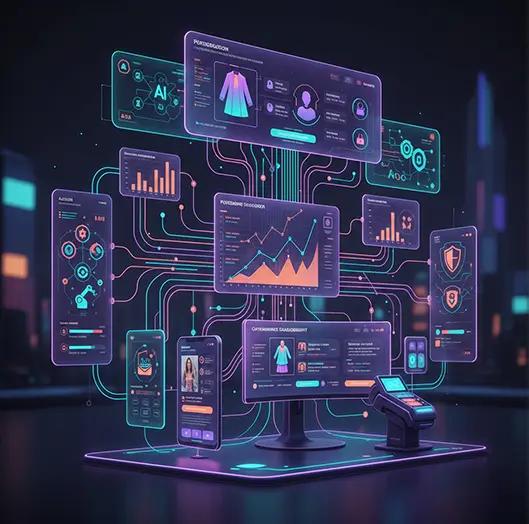
This change includes software innovation. The modern retail software is transforming the manner in which the brand meets the customer, automates their operations and expands in the long-term, where AI-enabled personalization and real-time analytics, cloud-based architecture, and immersive tech can all aid in transforming the customer experience.
The retailing sector has experienced a radical transformation in terms of changing transaction based interactions to experience-based interaction. Customers are now more informed, digitally connected and empowered than at any other point in time.
PwC reports that 73% of consumers believe that customer experience is a factor when making their buying decisions, but only 49% of consumers think that a brand provides a good CX on an ongoing basis. This is a significant opportunity to retailers who would invest in advanced software solutions.
The innovation in the software will help the retailers to know the customers more, faster and provide meaningful interactions. The combination of data, automation, and smartness between systems allows retailers to develop one experience that becomes personal, relevant, and effortless.
Some of the main aspects of software innovation that retail CX is changing are:
Data integration and analytics of customers.
Individualization and artificial intelligence.
Efficiency, agility in operations.
Security and trust
Personalization has ceased being a nice to have feature, and has become a fundamental expectation. The customers require that the brands should be aware of their likes and expectations, they should be able to anticipate their needs and provide unique experiences through the channels.
McKinsey estimates that personalization is able to yield 10-15 percent growth in revenues and 2030 percent growth in ROI in marketing. Nevertheless, to do the personalization at scale, it is necessary to use advanced software platforms that will combine customer data based on the various sources.
Customers do not make a linear purchase. They can find a product on social media, research it on a mobile phone, or buy it in the store or the other way around. The retailers are obligated to maintain the uniformity and continuity in all channels.
Salesforce claims that 78 percent of customers demand to have consistent interactions between departments and channels, but most retailers continue to have disconnected systems.
Artificial intelligence is increasingly becoming important in modifying retail CX. Chatbots and virtual assistants, predictive analytics, and other AI-based software can assist retailers in providing faster, smarter, and proactive service.
Gartner predicts that in the years to come, AI-driven customer service software will serve more than 70 percent of all customer interactions without a human being involved. These devices save time in responding, enhance precision, and leave the human agents to concentrate on complicated matters.
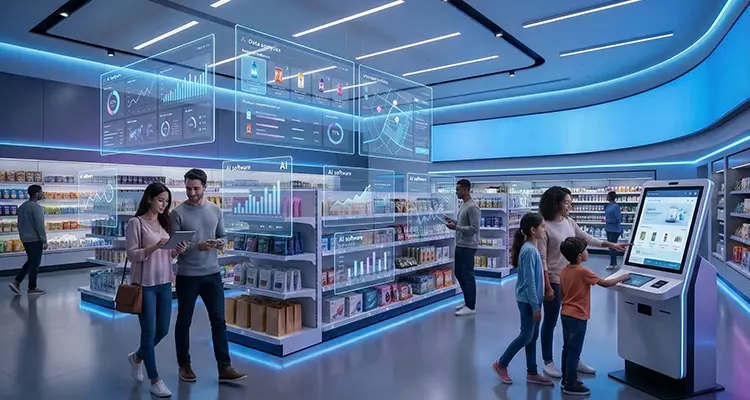
Although digital channels become more and more important, brick-and-mortar stores are still an essential component of the retail environment. The innovation of software is making the brick-and-mortar sites into a networked and experience-oriented space.
Software solutions are being used by retailers to facilitate:
Mobile point of sale and check-out without a card.
Customer intelligence in stores in real time.
Electronic display and interactive touch screens.
Individualized in-store promotions.
Deloitte claims that when retailers implement digital technology in physical stores, customers are able to engage more and spend more time in the stores, which results in better customer conversion rates.
The speed and performance expectations of the customer are ruthless. Trust and loyalty can be easily destroyed by slow-loading websites, system down time or delays in making checkout.
Google has claimed that 53 percent of mobile users will leave a site within 3 seconds when it takes longer to open. Cloud-based software architectures with high performance assist the retailers to satisfy these expectations since they are scalable, reliable, and responsive to high demand.
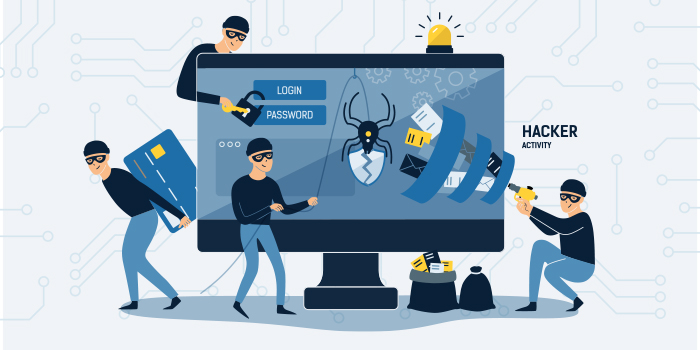
Customer experience is inseparable with trust. The security and compliance have to be embedded in software on a foundational basis as retailers accumulate and process data regarding customers in large volumes.
IBM estimates that retail data breach costs on average millions of dollars not to mention reputational damage. Secure software applications safeguard customer information, provide regulatory adherence and contributes to brand reputation a critical aspect of the relationship with customers in the long term.
Customer experience is not a short-term project. The consumer expectations are dynamic and are influenced by the change in behaviors and availability of technology. To keep up with the competition, retailers have to be consistent in optimizing their software ecosystems.
Accenture says that 91 percent of consumers tend to shop at the brands that know their tastes, recollect their needs, and offer them according to their interests. The rapid innovation of software helps the retailers to change with time, can test new functions, and act on the feedback of customers in real-time.
The customer-focused innovation of retailer software offers quantifiable benefits:
Forrester argues that customer-focused firms expand their revenues 2.5 times more rapidly in comparison to their rivals.
Customer expectations are greater than ever, and the transformation of the retail customer experiences into the use of software innovation is not an option anymore, but a strategy requirement. With the help of smart platforms, analytics-driven experiences, and scalable frameworks, retailers are able to provide their customers with personalized, seamless, and trustworthy experiences.
Disclaimer:
This content has been made available for information purposes only. Views and opinions expressed in this content are those of the individual author only and do not necessarily represent the opinions and views of Chetu. Chetu, and its representatives, make no representation or warranty of any kind, express or implied, regarding the accuracy, adequacy, validity, reliability, availability, or completeness of any information of this content. Under no circumstances shall Chetu, or its representatives, have any liability to you or any loss or damage of any kind incurred as a result of the use of this content or reliance on any information provided in this content. Your use of this website and your reliance on any information on this content is solely at your own risk.
About Chetu:
Founded in 2000, Chetu empowers businesses with AI and digital transformation solutions, supporting startups, SMBs, and Fortune 5000 companies. We deliver end-to-end software solutions backed by global digital intelligence and industry expertise. Our customized software delivery model and one-stop-shop approach span the full technology spectrum. Headquartered in Sunrise, Florida, Chetu operates 13 locations across the U.S., Europe, and Asia.
See more at: Chetu Blogs
Share


Limited Time Offer for a Free E-Book
Privacy Policy | Legal Policy | Careers | Sitemap | Referral | Contact Us
Copyright © 2000- 2026 Chetu Inc. All Rights Reserved.