Let's Talk ! 954 342 5676
  +44 137 243 2466
Let's Talk ! 954 342 5676 +44 137 243 2466
API is an acronym that stands for Application Programming Interface. An API is a code that gives instructions to disparate applications in order for them to interact and communicate bilaterally.
API integration platforms deliver sharable modules of code that unlocks program functionality and data while extending interconnectivity between two independent applications. An API communicates the expected behavior of one program to another.
API development makes apps ready to be integrated and easier for systems to break out of data silos by giving entities the code needed to access features of the API's source application.
Businesses need information-rich systems and the ability to have interconnectivity with partnered entities. API integration between apps provides extra value that are critical to delivering solutions that add value to an overall IT infrastructure.
Informed companies can make better decisions, which often result in increased productivity, streamlined workflows, and innovation. The data often results in businesses identifying opportunities to lower costs and increase revenue streams. API integration has become the foundation of today's digital transformation.

Cloud based API integration makes data sharable across software applications.
It is critical to develop the appropriate API integrations to fit a particular IT objective. The API may be needed to allow a proprietary software to be more compatible in a niche market or make for a stronger IT environment within an organization. Below are some of the more common messaging formats used to integrate applications:
SOAP (Simple Object Access Protocol): This is a protocol that uses XML as a format to transfer data. Its main function is to define the structure of the messages and methods of communication. It also uses WSDL, or Web Services Definition Language, in a machine-readable document to publish a definition of its interface.
XML: This is a protocol that uses a specific XML format to transfer data compared to SOAP that uses a proprietary XML format. It is also older than SOAP. XML-RPC uses minimum bandwidth and is much simpler than SOAP.
JSON: This protocol is similar to XML-RPC but instead of using XML format to transfer data it uses JSON.
REST (Representational State Transfer): REST is not a protocol like the other web services, instead, it is a set of architectural principles. The REST API service needs to have certain characteristics, including simple interfaces, which are resources identified easily within the request and manipulation of resources using the interface.
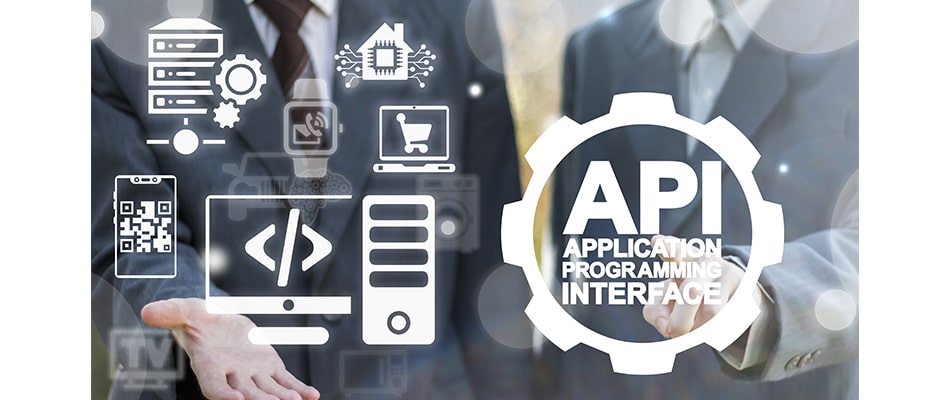
API development provides insight to data and UI/UX behaviors of the end-user.
APIs can significantly reduce administrative burdens that are time consuming. It simplifies the management, security and overall processes by serving as a catalyst to bring all three together.
Businesses typically have several tasks that operate on different platforms but ultimately have to be merged. While some tools that claim to do a good job at being an all-in-one solution, they usually end up being Jacks of all trades and masters of none. Many businesses are now creating their own “best-fit” API solutions to connect their tools and systems to streamline processes and workflows.
Disclaimer:
This content has been made available for information purposes only. Views and opinions expressed in this content are those of the individual author only and do not necessarily represent the opinions and views of Chetu. Chetu, and its representatives, make no representation or warranty of any kind, express or implied, regarding the accuracy, adequacy, validity, reliability, availability, or completeness of any information of this content. Under no circumstances shall Chetu, or its representatives, have any liability to you or any loss or damage of any kind incurred as a result of the use of this content or reliance on any information provided in this content. Your use of this website and your reliance on any information on this content is solely at your own risk.
About Chetu:
Founded in 2000, Chetu empowers businesses with AI and digital transformation solutions, supporting startups, SMBs, and Fortune 5000 companies. We deliver end-to-end software solutions backed by global digital intelligence and industry expertise. Our customized software delivery model and one-stop-shop approach span the full technology spectrum. Headquartered in Sunrise, Florida, Chetu operates 13 locations across the U.S., Europe, and Asia.
See more at: Chetu Blogs


Limited Time Offer for a Free E-Book
Privacy Policy | Legal Policy | Careers | Sitemap | Referral | Contact Us
Copyright © 2000- 2026 Chetu Inc. All Rights Reserved.

 By: Prem Khatri