Thank you!
Your blog has been successfully shared.
Let's Talk !  954 342 5676
  +44 137 243 2466
Roland Burrell - Director of Sales | July 20, 2026
Most HR teams don't set out to build a broken system. It happens gradually with a spreadsheet here, a standalone tool there, a manual approval process that made sense when the company had 30 people and doesn't anymore. By the time the cracks become visible, the symptoms are everywhere: payroll errors that take days to trace, employee records scattered across three platforms, compliance documentation that exists somewhere but nobody can find it quickly, and an HR team spending more time on data entry than on anything that actually moves the business forward.
Modern HR management system software exists to solve exactly this not by adding another tool to the stack, but by replacing the fragmented stack with a single, connected platform that handles everything from onboarding to offboarding, payroll to performance, and compliance to reporting. HRMS software has become the operational backbone of HR in growing organizations. The question isn't whether you need one; it's whether the one you have fits how your organization runs. HR automation software that doesn't map to your workflows doesn't save time. It creates new workarounds.
Off-the-shelf HRMS platforms will function until your workforce exceeds the number or complexity that the vendor designed it for. As organizations move to hybrid teams, multi-location operations, and jurisdiction-specific compliance needs, they are increasingly turning to HR processes that are performed and not covered by templates.
If your leave policy, performance cycles and onboarding workflows are not aligned with a generic platform, then you're left with little choice but to bend the operations over the software.
With custom HRMS software development, it is no longer. HR software development that focuses on your real workflows means increased uptake, fewer workaround solutions, and higher ROI. In fact, a custom HR management system is not a luxury for mid-market companies with complex operations, but it can sometimes be the more cost-effective option, considering the hidden cost of having a platform that you've outgrown.
A single, accurate source of truth for employee data is at the heart of any effective employee management software. An effective employee DBMS collects and stores all of the employee's personal records, employment history, payroll details, benefits enrollment, certifications, and document storage in one place, where they can be accessed by the right people, but not the wrong ones, and always up to date.
The value is immediately visible when it's a point of audit, compliance reporting, or when you need to retrieve the right info about the employee on a quick basis. HR teams spend a lot of hours tracking information through disjointed systems when time is lost as data is centralized.
First impressions are crucial, and onboarding is the first true interaction that a new employee has with your organization. Employee onboarding software automates the generation of documents, policy sign-off, benefits uptake, equipment requests, and training provision which alleviates HR's manual coordination burden without anything falling through the cracks.
HR onboarding automation also ensures consistency. All new hires go through a tested and proven progression that remains consistent each week regardless of who's handling it within the HR team. This consistency is the key difference between an onboarding process that can scale and one that will break under pressure for organizations that have a lot of hires.
An attendance management system that is seamlessly connected with your HRMS can resolve the reconciliation hassle associated with time tracking software on your own. Managers and HR have real-time visibility into employee hours, overtime exposure, and attendance patterns, as the employee time tracking data is transferred directly to payroll, leave balances and labor cost reporting, eliminating manual data transfers between systems.
It's especially beneficial for multi-location businesses or remote teams. With attendance data from several sites consolidated into one system, HR gets a centralized view of what's happening without having to manually add the data together.
HRM leave management software automates the whole leave lifecycle from request through approval, and it tracks how those leaves affect payroll, all in one, interconnected process. Automating HR leaves eliminates your email chains, calendar overlaps, and manual balance calculations that would normally occur with organizations that manage their leaves manually with spreadsheet-type tools.
Most leave tools reach a point of complexity when it comes to supporting your policy where you have different leave types, and you have different accrual rules based on the type of employment, and when it comes to complying with jurisdiction-specific regulations, these types of limitations are very common with many standalone leave tools. A custom built leave module will give you more flexibility in designing your policies and you will not be required to simplify your policies in order for them to conform to a vendor supplied template.
For HRMS accuracy, there is no greater financial impact than payroll management system integration. The manual reconciliation process and the potential for mistakes are eliminated as employee data, attendance, leave balances and pay adjustments are automatically transferred into payroll.
Problems with variable pay structures, calculating commissions, multi-state tax requirements, union rules, and benefits deductions that change mid-period are other types of complexity that are difficult to manage using payroll software that's not integrated with a custom HRMS. This is not simply a matter of HR efficiency; payroll errors can impact employee trust and retention.
The employee performance management software integrated into your Human Resource Management System connects personal goals to the overall business objectives, continuously measuring progress against these objectives, and providing documentation of all performance conversations, assessments and development plans. By moving employee performance management outside of email communication and annual performance review cycles, and into a structured performance management system, you are dramatically increasing the quality of data available to you as an HR professional, and the quality of the conversations that managers can have with their employees.
A Document Management System for HR can centralize the organization's contract, policy, certification, disciplinary, and compliance records with having version control, access permissions, and audit trails for those records. For instance, if you were to conduct a compliance audit and needed to produce a specific document regarding a specific employee that was issued three years ago, the difference in time spent by your staff between having a centralized document management system versus a shared drive with a large number of folders is measured in hours.
Employee self-service software gives employees direct access to their own records, pay stubs, leave balances, benefits information, and HR requests without routing everything through HR. HR portal development done well reduces the administrative volume that lands on HR teams daily while improving the employee experience by eliminating unnecessary wait times for routine information.
For HR teams managing hundreds or thousands of employees, self-service isn't just a convenience feature; it's a capacity multiplier.
AI-powered HRMS platforms are adding capabilities that fundamentally change what HR teams can do with their data. AI in HR software today goes well beyond chatbots though AI-powered virtual assistants that handle routine employee queries about leave balances, policy questions, and benefits details do free up meaningful HR capacity.
The more impactful applications are in intelligent HR automation at the workflow level:
Candidate evaluation utilizes automated resume screening that applies objective, bias-sensitive criteria to assess candidates in the same way to reveal qualified candidates more quickly, without manual review.
Smart onboarding assistance creates a tailored onboarding process, based on role, location, and identified skill gaps, rather than applying a one-size-fits-all approach to all new hires.
Predictive workforce insights use historical data to identify potential sources of employee attrition and how and when to address skill gap issues; they also identify patterns of employee engagement over time which traditional reporting methods would not identify.
HR workflow automation allows for the effective management of approval routing, notification triggers, escalation logic, and compliance checks without requiring additional manual coordination.
For organizations investing in custom HRMS software development, building AI capabilities into the architecture from the start rather than bolting them later is the approach that delivers the most durable value.
An HRMS that operates in isolation is a better filing system, not a better HR operation. HRMS integration with the systems your organization already runs is what turns HR data into operational intelligence.
The integrations that matter most in practice:
Payroll systems: real-time data sync eliminates manual reconciliation and reduces payroll errors
ERP systems: connects HR data to finance, operations, and planning functions for cross-functional reporting
Accounting software: labor cost data flows directly into financial reporting without manual export
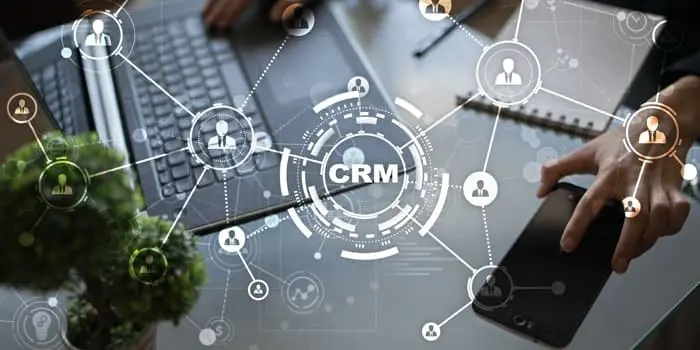
CRM systems: relevant for organizations where HR and sales operations intersect, particularly in commission-heavy environments
Identity management systems: single sign-on and access provisioning tied directly to employment status
Open APIs: future-proofing your HR software integration so new tools can connect without requiring a platform rebuild
The integration architecture question is worth resolving early in any HRMS evaluation or development engagement. A platform that connects well to your existing stack is worth significantly more than one that requires you to change your stack to accommodate it.
The custom HRMS vs SaaS decision comes up in almost every HR technology evaluation, and the honest answer depends on your specific situation, not a universal preference.
| Area | Custom HRMS | SaaS HRMS |
|---|---|---|
| Workflow customization | High — built to your process | Limited — adapt to vendor design |
| Multi-model architecture | Multi-model architecture | LLM orchestration and model selection — right model, right task |
| Integrations | Flexible — connect what you need | Predefined — limited to supported platforms |
| Scalability | Business-specific — grows with you | Vendor-dependent — subject to roadmap |
| Feature control | Complete — you own the roadmap | Limited — vendor decides priorities |
| Upfront cost | Higher | Lower |
| Long-term cost | Predictable | Scales with headcount |
It's not about the features that it's comparing, but rather it's about the software you're considering whether it's built for an organization like yours. In most cases, the build vs buy HR software decision leans toward custom development when you are looking to integrate with something that doesn't exist in a standardized manner, or when your workflows are truly unique and your company is growing and will outgrow a vendor's feature set.
The benefits of HRMS software built specifically for your organization compound over time in ways that generic platforms can't match:
Automated workflows handle the manual tasks that currently consume HR team capacity, from approval of routing to compliance documentation.
Processes that currently require multiple manual steps and system handoffs to run automatically, compressing timelines across recruiting, onboarding, payroll, and compliance. The HR automation benefits here are immediate and measurable.
Self-service access, faster response times, and personalized workflows create an HR experience that reflects well on the organization rather than frustrating the people it serves.
Automated audit trails, jurisdiction-specific rule enforcement, and centralized documentation to reduce compliance risk across every HR function.
A single source of truth eliminates the data inconsistencies that arise when HR information lives across multiple systems.
When all HR data lives in one system, reporting becomes a dashboard view rather than a manual data assembly exercise.
HRMS software development cost varies significantly based on scope, and most vendors who quote a single number without understanding your requirements are working from assumptions that may not apply to you. The factors that drive HR software development cost in practice:
Number of modules: A system covering core HR functions costs meaningfully less than one that includes payroll, performance, learning, and analytics
Integration complexity: The number of systems you need to connect, and the quality of their APIs affects development time substantially
AI features: Predictive analytics and intelligent automation require additional development investment but deliver long-term efficiency returns
Mobile applications: Native mobile apps for employee self-service and manager workflows add scope
Security requirements: Enterprise-grade security, role-based access controls, and compliance frameworks (GDPR, HIPAA, SOC 2) add development and testing overhead
The most reliable way to scope HRMS software development cost accurately is a detailed requirements analysis before any development engagement begins not a quote based on a high-level description.
Chetu's approach to custom HRMS software development starts where most vendors skip a thorough requirements analysis that maps your actual HR workflows, integration dependencies, compliance requirements, and growth plans before a line of code is written.
From there, the engagement covers:
Custom workflow development for every approval chain, notification trigger, and process step built around how your HR operation runs, not a generic template adapted to your requirements.
Integration expertise connecting your HRMS to payroll, ERP, accounting, identity management, and any other system your HR data needs to reach with clean, maintainable integration architecture rather than fragile point-to-point connections.
AI implementation embedded intelligent automation, predictive analytics, and AI-assisted workflows into the HRMS architecture from the start, so these capabilities are native to the platform rather than add-ons.
Enterprise scalability systems are designed to handle growing headcounts, additional locations, and expand functionality without requiring a platform to rebuild.
Security and compliance with role-based access controls, encryption, audit logging, and compliance frameworks built into the architecture, not applied as an afterthought.
The right HRMS should make HR operations run invisibly in the background does not create new workarounds. Off-the-shelf platforms work until your workflows, integrations, or compliance requirements outgrow what a vendor's template can handle. At that point, custom HRMS development stops being the expensive option and starts being the practical one. Built around how your organization operates, a purpose-built HR management system reduces administrative burden, eliminates payroll errors, centralizes employee data, and gives HR teams the time to focus on work that requires human judgment, not data entry.
Disclaimer:
This content has been made available for information purposes only. Views and opinions expressed in this content are those of the individual author only and do not necessarily represent the opinions and views of Chetu. Chetu, and its representatives, make no representation or warranty of any kind, express or implied, regarding the accuracy, adequacy, validity, reliability, availability, or completeness of any information of this content. Under no circumstances shall Chetu, or its representatives, have any liability to you or any loss or damage of any kind incurred as a result of the use of this content or reliance on any information provided in this content. Your use of this website and your reliance on any information on this content is solely at your own risk.
About Chetu:
Founded in 2000, Chetu empowers businesses with AI and digital transformation solutions, supporting startups, SMBs, and Fortune 5000 companies. We deliver end-to-end software solutions backed by global digital intelligence and industry expertise. Our customized software delivery model and one-stop-shop approach span the full technology spectrum. Headquartered in Sunrise, Florida, Chetu operates 13 locations across the U.S., Europe, and Asia.
See more at: Chetu Blogs
Share


Limited Time Offer for a Free E-Book
Privacy Policy | Legal Policy | Careers | Sitemap | Referral | Contact Us
Copyright © 2000- 2026 Chetu Inc. All Rights Reserved.