Thank you!
Your blog has been successfully shared.


Let's Talk !  954 342 5676
  +44 137 243 2466
Travis Few – Director of Sales | Date - 15 May 2026
Agriculture is changing at an alarming rate, with farmers embracing data-based farming, agriculture technology, and improved digital solutions to sustain the increasing global demand. The climate uncertainty, scarcity of resources, and rising cost of operations have rendered the conventional modes of farming inadequate.
Currently, agtech solutions, farm management software, precision ag platforms, and mobile farmer apps are making farmers make smarter, faster, and more efficient decisions. Indeed, research indicates that more than half of the farmers in the world have taken up at least one type of digital technology, which is a big breakthrough towards modern-day farming.
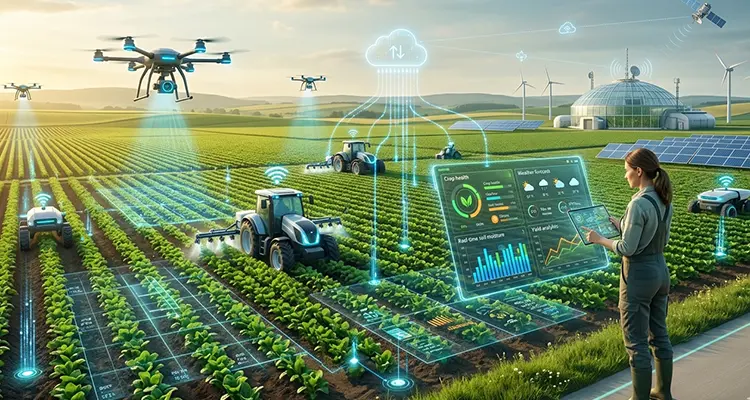
Digital farming refers to the combination of technology, data mining, IoT devices, and automation in agriculture. It also provides farmers with real-time data to increase production and use of resources. Agriculture technology is changing the agricultural sector in the sense that it enables more intelligent and data-driven decision-making and can optimize the overall productivity.
This includes:
Precision agriculture tools
GPS-enabled equipment
Smart irrigation systems
Data analytics platforms
Farm software solutions
With the use of these tools, farmers will be able to transition into proactive rather than reactive farm management, boosting productivity and inefficiencies.
Digital farming is more important due to the worldwide difficulties:
By 2050, the world population will be close to 10 billion, and the level of food demand will go up.
The agricultural sector is the largest contributor to the total greenhouse gases in the world, and sustainable agricultural practices are thus significant.
The agtech industry is expanding rapidly in the world, and it is estimated to evolve a lot in the future.
These problems can be addressed with digital farming that will enable farmers to work with less and do more, as well as decrease the impact on the environment.
Digital farming involves precision agriculture. Such technologies as GPS, drones, and sensors enable farmers to observe fields with great precision.
Studies have indicated that precision agriculture will help in boosting crop production by as much as 20 percent and enhancing efficiency in the use of inputs. GPS-controlled machinery also guarantees accurate planting and application of resources, eliminating wastage.
These precision ag platforms give farmers the opportunity to make informed decisions regarding irrigation, fertilization, and pest control.
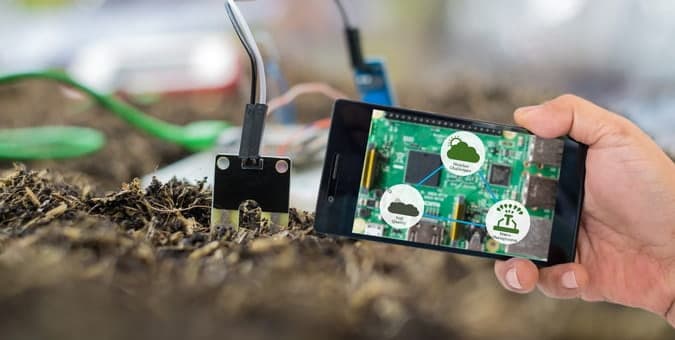
The IoT sensors used in modern agriculture are also useful since they provide real-time data about the most important parameters, such as moisture content of the soil, nutrient level, weather, and the overall health of the crops.
Such a stream of information gives the farmers information that can help them make decisions and respond to changing situations in a timely manner. Besides, smart irrigation systems can save as much as 30 percent of water and hence make agriculture more sustainable and cost-effective. All this information can easily be available with the use of mobile applications to farmers, and quick and effective decision-making can happen even in remote areas.
Unpredictability in planning crops is one of the largest problems that farmers have to encounter, yet big data analytics can resolve the issue because it offers predictive results. The digital tools have improved decision-making by approximately 70% of the farmers, and data-driven farming can cut back resource consumption by up to 25%. Such insights can help farmers to know the best time to plant, irrigate, and harvest, which eventually results in increased production and decreased risk.
Automation is changing the world of agriculture by eliminating manual labor, as well as increasing efficiency greatly. Farm software solutions and modern farm management software allow farmers to monitor activity on the farm in real time, utilize resources better, and automate repetitive processes. Consequently, research indicates that more than half of the farmers become more efficient following the use of digital tools (more than 58%). Besides time efficiency, automation also improves precision and offers uniformity in the agricultural processes.
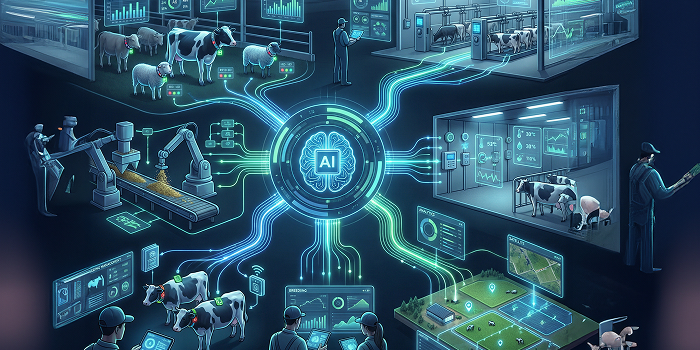
Digital farming is becoming more powerful with the emergence of new technologies like AI, drones, and satellite imaging. AI-driven systems can process large volumes of data to provide actionable information, which can be used to make smarter and quicker decisions.
| AI-Powered Insights | Drone Monitoring | Satellite Imaging |
|---|---|---|
| Analyze large datasets for better, data-driven decisions | Track crop health, detect diseases, and assess fields in real time | Enable large-scale monitoring and accurate forecasting |
Drones are useful to monitor crop health, diagnose diseases at the initial stages, and accurately estimate the situation in the fields, and satellite imaging is effective in large-scale monitoring and prediction.
Sustainability is one of the benefits of digital farming. Maximization of inputs and minimization of waste help farmers reduce the environmental impact.
Post-harvest losses can be minimized by 25 percent using digital tools.
Efficiency of resources can be increased by 30%.
Precision agriculture minimizes unnecessary consumption of water, fertilizers, and pesticides.
These advancements facilitate agricultural sustainability in the long term and sustain high productivity. The available agribusiness solutions can successfully make the most out of productivity, cut down on costs, and expand the scope of work.
Interoperability is a very important aspect in contemporary digital farming because it allows different systems to interact smoothly with each other, e.g. sensors, analytics software, and farm management software. With the interconnection of these systems, data would flow easily across platforms giving the farmers a cohesive view of their operations. This integration will remove the data silos, lessen the manual workload and improve efficiency in general.
The enhanced interoperability is not only simplifying the workflow but also enhancing the efficiency of resources which results in improved productivity, less expense, and more sustainable methods of farming in the current technology-driven world of agriculture.
Data standards are a crucial part of the contemporary digital farming business model because they remove data silos and facilitate the free flow of data between various platforms and instruments. When the systems are standardized, information sharing among farm management software, sensors and analytics applications can be done easily.
Consequently, the farmers will be in a better position to make informed decisions as they will have a better and holistic insight into their farm data. Finally, the data standards will become unified, which will contribute to the fact that the productivity will be improved, the resources will be managed more efficiently and sustainably, and the agricultural practice will be more efficient and sustainable.
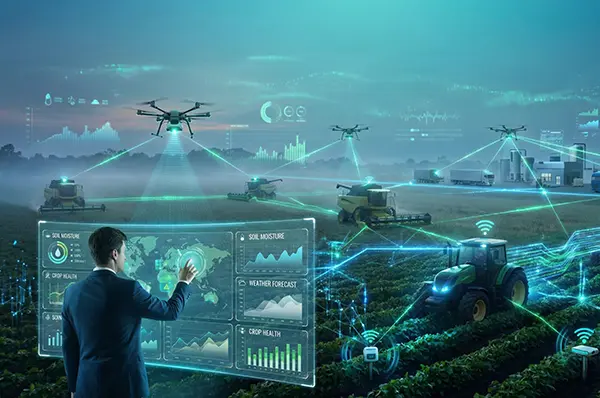
Yes, current precision ag systems combine several streams of data into centralized displays, with farmers being able to control work more effectively. These platforms bring together sensor, machinery, weather, and analytics tools information into a single platform. This integrated perception enables farmers to view the performance, track field activities and make real time decisions.
With all the vital information centralized, farmers are able to enhance productivity, reduce the use of resources and simplify the overall management of the farm with more precision and control.
Digital farming is not a luxury anymore; it is a necessity of contemporary farming. With the challenges facing the world moving ever higher, it is important to embrace data-driven farming, agriculture technology, and agtech solutions to become successful.
Using digital tools, farmers will be able to:
Enhance productivity and yields.
Reduce operational costs
Improve sustainability
Be smarter and more data-driven.
Innovation is the future of farming, and those who adopt digital change will be in a better position to succeed in an ever-complicated agricultural environment.
Disclaimer:
This content has been made available for information purposes only. Views and opinions expressed in this content are those of the individual author only and do not necessarily represent the opinions and views of Chetu. Chetu, and its representatives, make no representation or warranty of any kind, express or implied, regarding the accuracy, adequacy, validity, reliability, availability, or completeness of any information of this content. Under no circumstances shall Chetu, or its representatives, have any liability to you or any loss or damage of any kind incurred as a result of the use of this content or reliance on any information provided in this content. Your use of this website and your reliance on any information on this content is solely at your own risk.
About Chetu:
Founded in 2000, Chetu empowers businesses with AI and digital transformation solutions, supporting startups, SMBs, and Fortune 5000 companies. We deliver end-to-end software solutions backed by global digital intelligence and industry expertise. Our customized software delivery model and one-stop-shop approach span the full technology spectrum. Headquartered in Sunrise, Florida, Chetu operates 13 locations across the U.S., Europe, and Asia.
See more at: Chetu Blogs
Share


Limited Time Offer for a Free E-Book
Privacy Policy | Legal Policy | Careers | Sitemap | Referral | Contact Us
Copyright © 2000- 2026 Chetu Inc. All Rights Reserved.