Thank you!
Your blog has been successfully shared.


Let's Talk !  954 342 5676
  +44 137 243 2466
Deepak Borole - Director of Operations | April 10, 2026
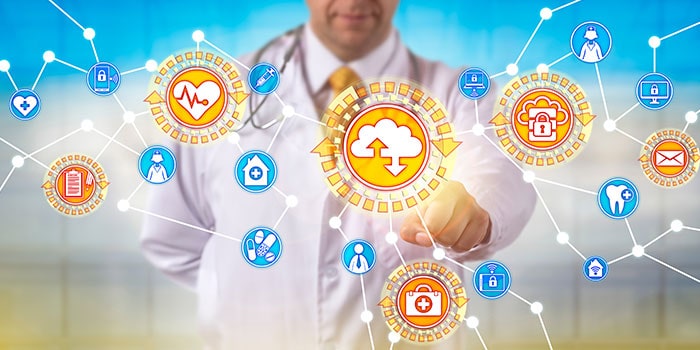
The rate of healthcare data is increasing faster than ever before due to the Electronic Medical Records (EMRs), wearables, telemedicine, and digital health systems. Although this data has tremendous potential, it is difficult to manage and use it in an effective manner.
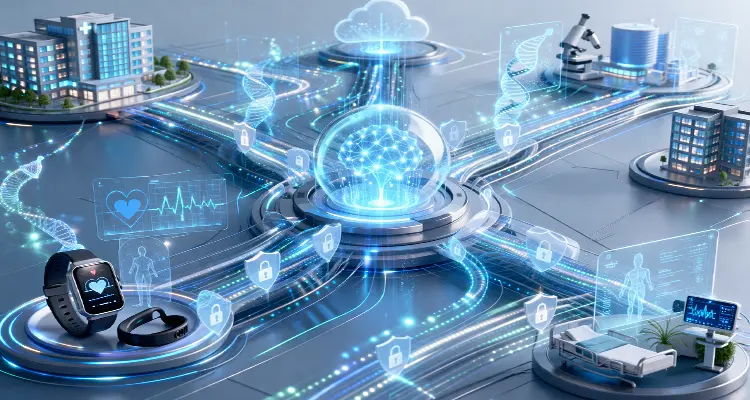
The data collection, processing, and analysis of this data require the modern healthcare data pipelines. Nowadays, AI in healthcare data pipelines is reshaping the way companies process complex datasets—they can now make faster insights, make better decisions, and achieve better patient outcomes.
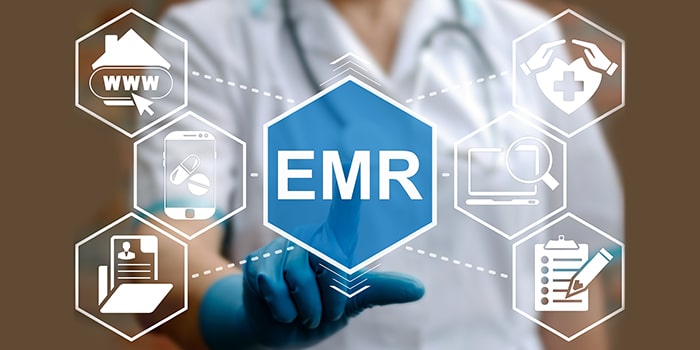
The sphere of healthcare has been developing fast, transforming the paper-based system into the more sophisticated digital one, but there are still certain challenges. Although the first EMR systems helped to enhance accessibility, they were usually not interoperable, which created data silos in individual departments and institutions. The current state of EMR/EHR use is about 88 percent, where there is still a minimal smooth flow of data because of the mismatch of technologies.
This growing fragmentation shows how essential it is to have potent clinical data integration and scalable architecture of healthcare data pipelines. With the amount of healthcare data expanding (estimated to grow approximately 36 percent annually), organizations must adopt modern systems that can potentially unify the numerous sources of information into a single, practical ecosystem.
Healthcare data pipelines in the modern world can facilitate real-time data consolidation, enhance interoperability across medical systems, and increase more accurate and data-driven decision-making. As the medical data interoperability market is currently growing with an annual rate of over 17% CAGR, the necessity to invest in integrated and AI-driven data designs to offer efficient, coordinated, and patient-centered healthcare becomes a pressing matter.
Healthcare generates massive volumes of structured and unstructured data. With exponential growth, organizations require advanced healthcare data engineering strategies to manage:
The ETL pipelines (Extract, Transform, Load) are vital in the modern healthcare sector to convert raw data into practical insights in order to guarantee the quality and consistency of data. They facilitate the smooth aggregation of data across various sources, enhance the integration of clinical data, and aid real-time decision-making by healthcare systems.
Also, the pipelines optimize the architecture of healthcare data pipelines through the automation of data workflows, minimization of manual errors, and scalable, secure, and efficient data processing.
As data becomes more accessible, maintaining privacy and compliance is critical. Regulations like HIPAA require secure handling of sensitive patient information.
HIPAA compliant healthcare data pipelines ensure:
Accessibility and security should be balanced to gain trust and open up innovation. To ensure that sensitive patient information is safeguarded, organizations need to establish strong encryption, access controls, and monitoring systems to ensure smooth use.
This solution helps to adhere to regulations and maintain secure and scalable healthcare pipelines that can be used to innovate without jeopardizing privacy.
Knowledge about the functionality of AI data pipelines in healthcare is the key to harnessing their potential. Pipelines powered by AI automatically and optimize all processes of data processing:
Data Ingestion & Integration
AI enables seamless clinical data integration from multiple sources like EMRs, IoT devices, and lab systems.
Data Cleansing & Standardization
Using machine learning in healthcare, systems identify inconsistencies, fill missing data, and standardize formats.
Real-Time Processing
Real-time healthcare data processing allows providers to access up-to-date insights for faster decision-making.
Advanced Analytics & Insights
AI models generate predictive insights to improve diagnosis, treatment, and operational efficiency.
Artificial intelligence (AI) in healthcare is redefining the use of data in the ecosystem. Together with AI solutions in healthcare, organizations will be able to:
Improve diagnostic accuracy
Streamline processes and work less
Improve patient interaction and care provision
Enable predictive and preventive healthcare
Artificial intelligence systems are transforming healthcare to be more active, data-driven, and efficient.
The AI-driven health data pipelines are making personalized medicine and advanced care delivery a reality. Key benefits include:
AI detects trends and anomalies before the conditions deteriorate.
Evidence-based knowledge customizes interventions to patients.
Earlier intervention reduces the treatment costs in the long run.
Enhanced diagnosis and treatment are made due to improved data.
Big data analysis speeds up innovation.
Although AI increases efficiency, human expertise is needed. The effectiveness of AI in healthcare pipelines relies on the following:
High-quality data inputs
Strong governance frameworks
Ethical AI implementation
Continuous human oversight
Healthcare institutions need to make sure that AI will not replace clinical decision-making; it will enhance it.
The future of healthcare is smart, secure and scalable data systems. Having progressive healthcare data pipeline architecture and AI solutions to healthcare, organizations are able to transform fragmented data into actionable insights.
With the investment in real-time healthcare data processing, clinical data integration, and HIPAA compliant healthcare data pipelines, healthcare providers can provide better results, enhance efficiency, and become innovative.
AI is not only improving healthcare, but is also reshaping the entire ecosystem with regard to the ways data is driving it.
Disclaimer:
This content has been made available for information purposes only. Views and opinions expressed in this content are those of the individual author only and do not necessarily represent the opinions and views of Chetu. Chetu, and its representatives, make no representation or warranty of any kind, express or implied, regarding the accuracy, adequacy, validity, reliability, availability, or completeness of any information of this content. Under no circumstances shall Chetu, or its representatives, have any liability to you or any loss or damage of any kind incurred as a result of the use of this content or reliance on any information provided in this content. Your use of this website and your reliance on any information on this content is solely at your own risk.
About Chetu:
Founded in 2000, Chetu empowers businesses with AI and digital transformation solutions, supporting startups, SMBs, and Fortune 5000 companies. We deliver end-to-end software solutions backed by global digital intelligence and industry expertise. Our customized software delivery model and one-stop-shop approach span the full technology spectrum. Headquartered in Sunrise, Florida, Chetu operates 13 locations across the U.S., Europe, and Asia.
See more at: Chetu Blogs
Share


Limited Time Offer for a Free E-Book
Privacy Policy | Legal Policy | Careers | Sitemap | Referral | Contact Us
Copyright © 2000- 2026 Chetu Inc. All Rights Reserved.