API-First Digital Asset Platforms: The New Standard for Financial Innovation
Jaideep Sharma - Director of Operations | August 26, 2026
- The institutional use of digital assets has moved from experimentation and into core financial infrastructure. Banks are launching custody products, and tokenization is turning real estate and bonds into instruments that move on-chain.
- "API-first" doesn't mean simply having an API. It means the platform's core functions, wallets, custody, payments, and compliance are built as modular services that any development team can integrate independently.
- Security is the foundation the entire model rests on. How a platform manages private keys and transaction governance determines whether everything built on top of it can actually be trusted.
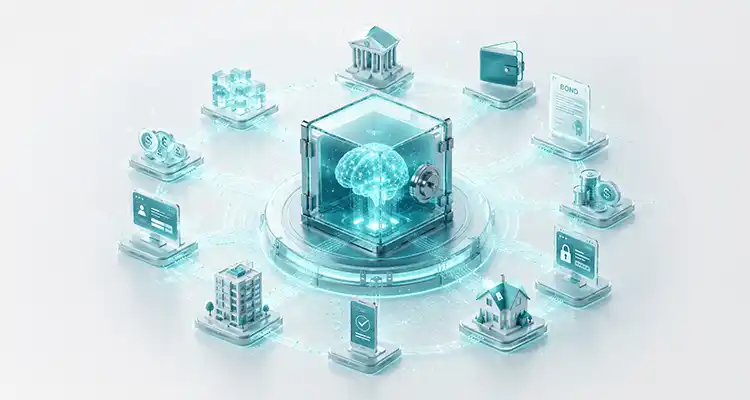
Digital assets have moved past the experimental phase. Banks are launching custody products, stablecoins are settling cross-border payments in minutes, and tokenization is turning real estate, private equity, and bonds into instruments that move on-chain.
None of this is happening at the edges of finance anymore. It's happening inside the infrastructure that banks, payment processors, and asset managers run every day, often built or extended with the help of a blockchain development company that understands the technical as well as regulatory sides of moving value on-chain.
What made this shift possible isn't a single breakthrough in blockchain technology. It's a change in how financial infrastructure gets built in the first place. Enterprises want infrastructure, custody, payments, compliance, settlement, delivered through APIs that a development team can integrate, test, and ship against in weeks. That's what "API-first" means in practice, and it's quickly becoming the baseline expectation rather than a competitive edge.
Why Financial Infrastructure Is Becoming API-First
The shift toward API-first infrastructure didn't happen because APIs are trendy. It happened because the systems institutions were running before couldn't keep up with how fast financial products now need to change, and rebuilding them from the ground up was rarely realistic.
Traditional infrastructure was built for a different era and legacy banking systems still reflect that assumption.

- Settlement often runs batch cycles instead of processing in real time, so a transaction initiated in the afternoon might not actually clear until an overnight run completes.
- Systems built decades apart, get connected through custom middleware that few people in the organization fully understand or document.
- As a result, adding a single new product can turn into a multi-quarter integration project.
Modern infrastructure works differently.
- It's built to be cloud-native rather than tied to on-premise hardware, which means it can scale up or down based on actual demand instead of fixed capacity.
- It's event-driven rather than batch-based, so a transaction triggers an immediate reaction.
- And it's built on microservices instead of a single monolith, meaning individual functions can be updated or scaled independently.
This architecture is what makes APIs a practical default for how systems communicate, rather than an add-on layered awkwardly over something rigid underneath.
This shift increases the importance of digital payment solutions built on API-first, event-driven infrastructure capable of processing transactions in real time. Capgemini's Financial Services Top Trends 2025 report, drawing on a survey of payment executives conducted for the World Payments Report 2025, found that instant account-to-account payments could offset 15 to 25 percent of future card transaction volume growth.
The practical result: Functions that used to be locked into one rigid system are now interchangeable services that can be sourced and swapped independently. Modern fintech stacks now integrate KYC, AML, wallets, payments, custody, trading, and compliance, each sourced independently and connected through an API.
The Rise of Digital Asset Platforms
This is already happening at scale, BNY Mellon and State Street now offer digital asset custody alongside traditional securities services, and Morgan Stanley has filed to charter a national trust entity for the same purpose.
A digital asset platform is the full operational layer that handles the lifecycle of holding and moving digital assets from end to end.
That operational layer typically covers several functions working together:
Wallet infrastructure and key management
Custody
Settlement
Treasury management
Payments
Tokenization
Compliance
Blockchain connectivity
Historically, an institution building this in-house had to solve all of it at once before it could safely process a single transaction in production, including the cryptography behind key management, the regulatory reporting, and the operational security to protect all of it.
That's changed. Enterprises are increasingly choosing to integrate with a platform that already handles this layer, rather than build it from scratch.
The reason comes down to cost: building and maintaining secure digital asset infrastructure in-house, across multiple blockchain networks, rarely justifies itself against integrating with a platform that maintains it as its core business. What used to be a multi-year infrastructure buildout becomes a scoped integration project, and the institution's own engineering effort can go toward the product experience layered on top, rather than the plumbing underneath it.
Core Capabilities of an API-First Digital Asset Platform
Not every platform calling itself "API-first" delivers the same depth. The list below is what separates a genuinely complete platform from one that only looks complete on a sales page.
Wallet Infrastructure: The ability to create and manage wallets across hot, warm, and cold configurations programmatically, so a development team can provision a wallet through code rather than submitting a manual request to a back-office team.
Custody: Secure storage of digital assets with a clear separation between day-to-day operational access and the underlying key material, so custody doesn't depend on trusting any single person or device.
Treasury Automation: Automated balance monitoring, fund sweeps, and rebalancing across wallets and accounts, replacing what used to be manual reconciliation work done by a treasury team.
Payment APIs: Programmatic transaction initiation that covers both crypto-native transfers and fiat-linked payment flows, since most institutions need to move value across both.
Multi-Chain Support: Connectivity across a wide range of blockchain networks through a single integration point, instead of a separate connection per chain.
Smart Contract Connectivity: Direct interaction with on-chain contracts, whether minting tokens, staking assets, or executing DeFi transactions, without a custom integration per protocol.
Security Controls: Layered protection against external attacks and internal misuse, built into the infrastructure rather than added later.
Compliance Automation: Screening, reporting, and audit trail generation built directly into the transaction flow. For an institutional platform, this covers more than KYC and AML, and securities rules for tokenized assets, depending on the market and asset type.
Developer APIs: Well-documented, versioned APIs and SDKs a team can build against without reverse-engineering undocumented behavior.
A platform missing any of these usually means the institution ends up building that piece internally anyway.
Why Security Is the Foundation of Digital Asset Innovation
Every capability above depends on one thing: how the platform manages private keys.
Unlike a bank account, a transaction signed with a compromised key can't be reversed by calling a fraud department. There's no chargeback built into the underlying network, which means the security model has to prevent the loss upfront rather than clean it up afterward.
Modern platforms have largely moved away from single-key security models toward multi-party computation, or MPC, where key material is split across multiple independent parties and no single device or person ever holds a complete key on its own. A transaction can only be signed when multiple parties participate together, reducing the risk that a stolen device or compromised employee can independently authorize a transfer.
Security doesn't stop key management, though. It also depends on how a platform governs who can authorize a transaction and under what conditions:
Governance - Configurable transaction policies, quorum-based approvals, spending limits, role-based access, so no individual can approve their own transaction unilaterally
Audit logs - A complete record of every action for regulatory review
Zero trust - No user, device, or system trusted by default; every action verified independently
Disaster recovery - Geographically distributed backups and tested failover, built in from the start
None of this is meant as a sales pitch for any particular vendor. It's a description of what a serious digital asset platform actually has to get right, because a gap at this layer puts everything built on top of it at risk.
Enterprise Use Cases Powered by API-First Platforms
The capabilities above aren't theoretical. They're already showing up in specific ways across financial services, each solving a distinct operational problem.
Cross-Border Payments
Correspondent banking can take days and multiple intermediaries, each taking a cut. Digital asset rails, accessed through APIs, let institutions settle cross-border transactions in minutes with clearer visibility into where funds are at any point.
Stablecoin Payments
Stablecoins combine near-instant settlement with price stability that volatile crypto assets don't offer. API access lets a payment platform add stablecoin rails alongside existing fiat rails without separate infrastructure.
Treasury Management
Corporate and institutional treasury teams use these platforms to monitor balances, automate transfers, and rebalance holdings across currencies and asset types, work that used to require manual oversight across disconnected systems.
Crypto Exchanges
Exchanges rely on API-first infrastructure for custody, wallet provisioning, and compliance screening at trading volume scale, without diverting engineering time away from the trading product itself.
Tokenized Assets
Real estate, private equity, and bonds are being issued as digital tokens. This requires infrastructure that handles issuance, transfer restrictions, and ongoing securities compliance together.
Institutional Custody
Asset managers holding digital assets on behalf of clients need custody infrastructure that meets institutional audit standards, with clear governance over who can authorize fund movement.
Embedded Finance
Non-financial companies are embedding financial services, including digital asset functionality, directly into their products through APIs, without becoming licensed financial institutions themselves.
Banking-as-a-Service
Banks are exposing their infrastructure, including digital asset capabilities, to fintech partners through APIs, letting smaller companies offer banking-adjacent products without building a bank from scratch.
Digital Securities
Traditional securities are being issued and settled on blockchain infrastructure, requiring platforms that handle securities compliance and on-chain settlement together.
Getting honest answers usually requires running a proof-of-concept integration against your own data and workflows, not just reading documentation or sitting through a demo.
Choosing the Right API-First Digital Asset Platform
With so many platforms claiming to be API-first, the real work is in checking specific, concrete criteria against how each platform actually operates, rather than taking marketing claims at face value.
| Criteria | What to Look For |
|---|---|
| Security | Modern key management, such as MPC, rather than legacy single-key storage |
| Scalability | Ability to handle transaction volume growth without requiring architectural rework |
| Compliance | KYC, AML, and reporting built into the platform, not stitched together through separate tools |
| Blockchain coverage | Breadth of supported networks, and how quickly new ones get added |
| SDKs | Available in the programming languages your engineering team actually uses |
| Developer experience | Clear, accurate documentation and a fast path from sandbox testing to production |
| Enterprise controls | Governance and approval workflows that fit what your specific risk and compliance teams require |
| Availability | A track record of uptime, and how the platform handles failures when they happen |
| Integrations | How easily it connects into systems you already run, instead of requiring you to rebuild around it |
| Support | How responsive and technically capable the vendor's support is, both during integration and once you're live |
Where Implementation Actually Happens
Choosing the right platform solves roughly half of the problem. The other half is implementation, and it's the part that tends to get underestimated when a project is first scoped.
An API-first platform doesn't arrive already wired into a bank's core banking system. Someone still has to do that connective work, and in practice it usually comes down to a few specific problems:
- Mapping internal account and user data into the platform's wallet structure
- Building the specific approval and reporting workflows a compliance team needs
- Making sure transaction and audit data reconciles with systems that predate digital assets entirely
- Closing the gap between an API existing and a transaction actually working correctly in production.
This is the work we focus on as a financial software development company: connecting digital asset infrastructure into a bank's, payment processor's, or fintech's existing stack, in a way that holds up once it's actually running in production. That includes wallet and custody integration, compliance workflow builds specific to how a given institution operates, and treasury automation, built around the operational reality of the institution.
Final Thoughts
Digital assets are no longer experimental. Financial institutions moving into this space need secure infrastructure, scalable APIs, enterprise-grade governance, and integrations that genuinely fit their existing systems, not just a platform that looks complete on paper.
Choosing a strong platform gets an institution about halfway there. Pairing it with an experienced blockchain development company as an implementation partner is usually what determines whether a project moves from pilot to production on schedule, or stalls somewhere in between.
Disclaimer:
This content has been made available for information purposes only. Views and opinions expressed in this content are those of the individual author only and do not necessarily represent the opinions and views of Chetu. Chetu, and its representatives, make no representation or warranty of any kind, express or implied, regarding the accuracy, adequacy, validity, reliability, availability, or completeness of any information of this content. Under no circumstances shall Chetu, or its representatives, have any liability to you or any loss or damage of any kind incurred as a result of the use of this content or reliance on any information provided in this content. Your use of this website and your reliance on any information on this content is solely at your own risk.
About Chetu:
Founded in 2000, Chetu empowers businesses with AI and digital transformation solutions, supporting startups, SMBs, and Fortune 5000 companies. We deliver end-to-end software solutions backed by global digital intelligence and industry expertise. Our customized software delivery model and one-stop-shop approach span the full technology spectrum. Headquartered in Sunrise, Florida, Chetu operates 13 locations across the U.S., Europe, and Asia.
See more at: Chetu Blogs
Share


Limited Time Offer for a Free E-Book

Suggested
Reading
Read our blogs on automation strategies, technology and business solutions.