Let's Talk !  954 342 5676
  +44 137 243 2466
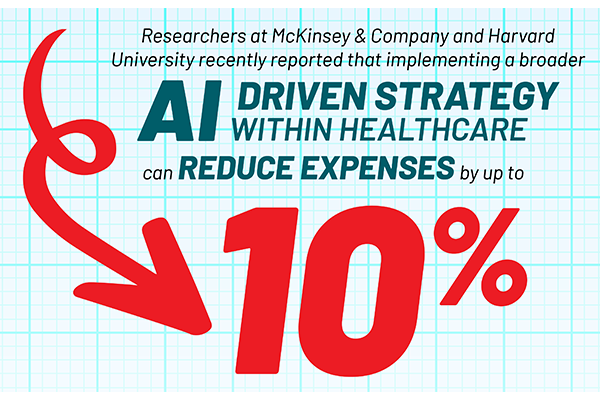
According to the U.S. Centers for Medicare and Medicaid Services, healthcare expenditures have risen 7.5% to $4.8 trillion. Steps to reduce this crippling statistic continue, including tech-driven innovations leveraging Artificial Intelligence and the latest developments within supercomputers to propel new cost-saving measures forward. Researchers at McKinsey & Company and Harvard University recently reported that implementing a broader AI-driven strategy within healthcare can reduce expenses by up to 10%.
Powerful supercomputers enhanced by pharmaceutical software and guided by software specialists offer the healthcare industry new paths toward reducing drug research and development costs, ensuring more accurate and individualized treatment plans, and creating long-term, sustainable value for pharmaceutical companies and patients. Supercomputers enhanced with AI-driven analytics enable a modernized approach to medicine that can propel individualized treatment plans and innovation while facilitating greater patient satisfaction and more successful and efficient treatment of chronic diseases.
The treatment of chronic diseases has cost the U.S. economy over $245 billion annually, with officials remaining critical of treatment plans and their effectiveness to provide patient satisfaction and create financial stability within an industry crippled by growing expenses.
Supercomputers have the potential to revolutionize how chronic diseases are diagnosed, managed, and treated. BMJ, a peer-reviewed medical journal, recently published findings indicating that an estimated 795,000 U.S. patients suffered permanent disability or died annually due to the misdiagnosis of dangerous diseases. Chronic disease management technology, such as supercomputers empowers healthcare providers to engage in the unprecedented study and monitoring of patient data to proactively diagnose and identify patients most vulnerable to chronic diseases, augmenting healthcare providers with expedited proactive identification and real-time patient data analysis of chronic, dangerous diseases, reducing the time of treatment when compared with traditional methodologies requiring extensive tests and additional physician referrals.
Genomics, the study of a patient’s genes and inherited traits, warrants further review as the U.S. National Human Genome Research Institute reports genomics play a role in 9 out of 10 leading causes of death in the U.S., with a focus on heart disease, cancer, and diabetes.
The American Cancer Society estimated that 609,820 cancer deaths occurred in the U.S. in 2023, but leveraging supercomputers enables proactive studies of a patient’s genomics, accurately alerting healthcare providers to the vulnerability. The tech’s unique ability to study multiple patient genomes accurately while eliminating data errors and the requirement for multiple testing makes it ideal for this purpose.
The Texas Advanced Computing Center recently deployed supercomputers within drug testing for new breast cancer treatments, resulting in accurate and efficient testing of over 1,400 FDA-approved medicines to determine their efficacy in cancer treatment, significantly reducing time spent on manual drug-testing processes and facilitating collaboration between oncology and drug clinicians. Chetu can enhance the AI-driven software required for accurate data capture and monitoring to ensure optimal supercomputer performance.
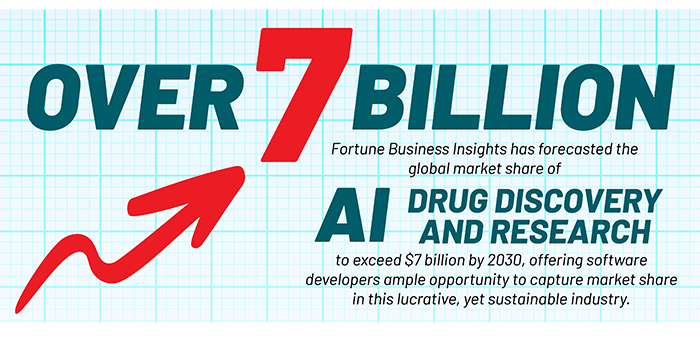
Supercomputers rely on highly advanced analytics to ensure accurate data capture for optimized insights, enabling healthcare providers to improve patient outcomes with better-informed decision-making for safer and more effective medicinal treatment plans. Fortune Business Insights has forecasted the global market share of AI in drug discovery and research to exceed $7 billion by 2030, offering software developers ample opportunity to capture market share in this lucrative, yet sustainable industry.
Clinical drug trials and their respective research and development are essential for facilitating new patient treatment plans, but the financial burden of successful clinical trials accounts for $2 billion in expenses, according to the U.S. Food and Drug Administration. Clinical trials incur significant expenses due to arduous trial-and-error processes, studies of molecular interactions, and long-term patient monitoring. Can supercomputers create a new avenue toward modernizing clinical drug trials and accelerating research and development?
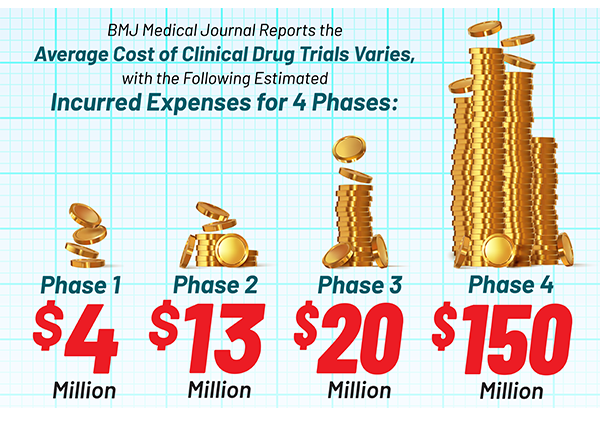
The Texas Advanced Computing Center successfully demonstrated how leveraging supercomputers can reduce time-to-market for medications and significantly reduce expenses associated with more traditional clinical trial processes. The U.S. Food and Drug Administration reports the average cost of clinical drug trials varies, with the following incurred expenses for four phases:
Supercomputers enhanced with customized analytics empower clinicians by deploying sophisticated algorithms during the critical research phase to simulate drug interactions within multiple patients. This eliminates costly miscalculations while providing clinicians with more treatment options. Additionally, supercomputers programmed by expert software developers to include predictive analytics offer physicians an invaluable tool to elevate patient care by engaging in advanced medical simulations and molecular interaction modeling to ensure drug effectiveness.
Leveraging predictive analytics provides unique insight into how a patient interacts with developmental medicine. It gives physicians unprecedented data-driven forecasts of future outcomes to enable real-time adjustments to individualized medicine-based treatment plans. Predictive analytics provides invaluable insights into how a drug performs, its interaction with a patient, and its effectiveness while reducing the costs and burdens associated with more traditional clinical drug trials.
Chetu’s adept software developers create cutting-edge solutions for optimizing clinical drug trial processes by leveraging powerful, customized predictive analytics that drive supercomputers. Data-driven decisions reduce time to market, eliminate the arduous trial-and-error of traditional clinical drug research, and facilitate greater accuracy of drug performances when products are matched to patients.
The National Institutes of Health and Alzheimer’s Association reported the harrowing disease was the 7th leading cause of death in the U.S. At the same time, the UK Alzheimer’s Society cited the disease as the country’s leading cause of death in 2022-2023, impacting over 900,000 still struggling with dementia. This alarming report has prompted leading U.K. healthcare officials to leverage supercomputers to confront the continued challenges associated with treating Alzheimer’s.
The U.K. relied on software specialists to seamlessly integrate Artificial Intelligence within supercomputer programming to accelerate drug discovery used specifically for Alzheimer’s treatment. This enabled more efficient healthcare responses to proactively confront the disease, as opposed to more traditional methods employed during the disease’s advanced stages.
AI-driven data studies conducted by supercomputers enhanced with algorithms have successfully identified which patients were more vulnerable to the disease, enabling healthcare providers to craft more individualized treatment strategies during much earlier stages of chronic diseases. In the U.S., 90% of the nation’s annual healthcare expenses are attributed to the treatment of chronic diseases, including Alzheimer’s, as reported by the Centers for Disease Control and Prevention. This chilling statistic reinforces the widespread impacts of chronic disease care and treatment,.
Leveraging analytics and supercomputing enhancements by software specialists enable a modernized response to these troubling statistics. Such innovations augment healthcare providers with more accurate, data-driven decisions that can expedite not only the implementation of treatment plans but also the initial diagnosis of chronic diseases.
Chetu’s healthcare technology experts can assist companies in designing more effective strategies to confront the challenges of effectively treating chronic diseases by providing powerful, cutting-edge innovations driven by AI and analytics to modernize medicine further, reduce expenses, and improve patient outcomes.
Examining the versatility of supercomputers, we believe their widespread application within healthcare can have a transformative impact not only on how healthcare leverages and monitors data but also on how treatment plans are customized and delivered to promote outcome-based healthcare measures.
The global market share for supercomputers is forecasted to exceed $23.7 billion by 2032, as reported by Grand View Research. The effectiveness of supercomputers is predicated on optimized functionality of all algorithms, AI, and error-free predictive analytics, and adept software developers skilled within these disciplines will stand to capture market share.
Chetu’s software specialists are available to collaborate and design individualized strategies leveraging supercomputers to help you modernize medicine and drive new innovations and strategies to mitigate the impacting burdens imposed by the diagnosis and treatment of chronic diseases. The future of healthcare technology continues to rely on enhanced, AI-driven innovations and innovative healthcare solutions can be achieved with software enhancements required for optimized supercomputer performance.
Disclaimer:
This content has been made available for information purposes only. Views and opinions expressed in this content are those of the individual author only and do not necessarily represent the opinions and views of Chetu. Chetu, and its representatives, make no representation or warranty of any kind, express or implied, regarding the accuracy, adequacy, validity, reliability, availability, or completeness of any information of this content. Under no circumstances shall Chetu, or its representatives, have any liability to you or any loss or damage of any kind incurred as a result of the use of this content or reliance on any information provided in this content. Your use of this website and your reliance on any information on this content is solely at your own risk.
About Chetu:
Founded in 2000, Chetu empowers businesses with AI and digital transformation solutions, supporting startups, SMBs, and Fortune 5000 companies. We deliver end-to-end software solutions backed by global digital intelligence and industry expertise. Our customized software delivery model and one-stop-shop approach span the full technology spectrum. Headquartered in Sunrise, Florida, Chetu operates 13 locations across the U.S., Europe, and Asia.
See more at: Chetu Blogs


Limited Time Offer for a Free E-Book
Privacy Policy | Legal Policy | Careers | Sitemap | Referral | Contact Us
Copyright © 2000- 2026 Chetu Inc. All Rights Reserved.


 By: John Bailey