Let's Talk !  954 342 5676
  +44 137 243 2466
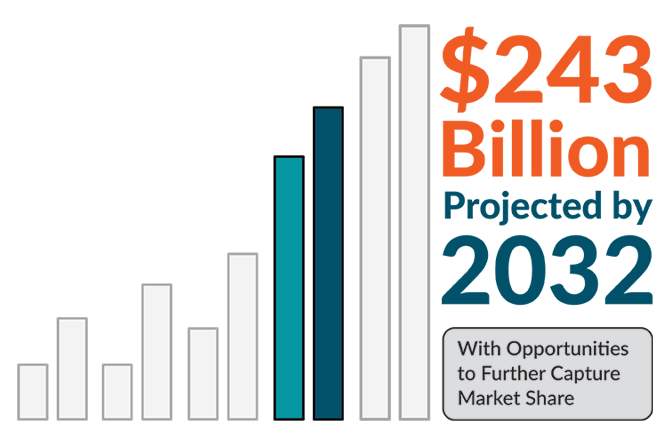
The Healthcare sector has enjoyed transformational success, attributed to the industry’s embracing of enhanced technology. We continue to see telehealth’s evolution, leading to Precedence Research reporting a current $57 billion market share and forecasted to reach $243.57 billion by 2032, reinforcing end-user demand and telehealth’s versatility within healthcare delivery of services. The advent and evolution of mobile health marks the next step in the modernization and personalization of healthcare.
Software specialists continue designing and implementing intuitive wearables driven by Artificial Intelligence and IoT to revolutionize how health data and patient care plans are disseminated. At the same time, customized mobile apps enable seamless access of robust features enhancing end-user experiences to facilitate new, impactful strategies bridging communication gaps between healthcare providers and patients which has led to the exponential global growth of mental health apps.
mHealth applications mark the culmination of personalizing healthcare treatment plans and bridging the communications gap between healthcare providers and patients. Customized mobile health applications designed by software specialists enable intuitive dashboards for seamless communication and end-user navigation. Its application within medication adherence may provide a cost-effective strategy to limit the chilling statistics reported by the Center for Disease Control, recently stating medication non-adherence results in $100 billion in annual preventable medical costs.
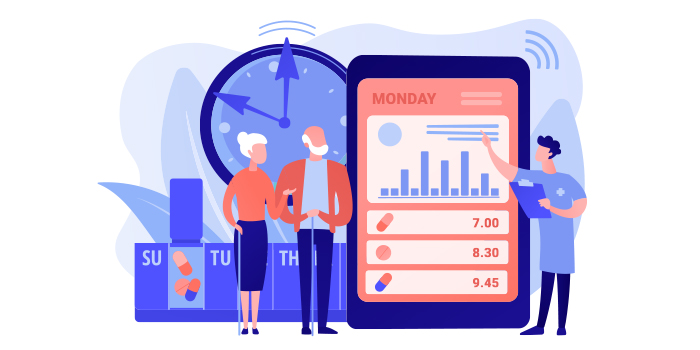
Intuitive mHealth apps can enable end-users to independently monitor their medication schedules, gain personalized insight into health performance, and reduce costly hospitalizations with proactive scheduling and reminders, as well as detailed risks of mixing medications and possible allergens.
Treating chronic diseases continues to vex the U.S. healthcare system. The National Health Center for Chronic Disease Prevention and Health Promotion (NCCDPHP) stating chronic diseases are primarily responsible for the nation’s $4.1 trillion in annual expenses. Patients with chronic diseases can be efficiently monitored by their chosen healthcare provider using customized wearable devices equipped with IoT-based sensors and cutting-edge software, enabling convenient data collection for remote monitoring to expand the scope of treatment strategies.
Remote monitoring of patient vitals allows healthcare providers to make critical assessments based on data-driven decisions that utilize analytics that provide real-time insights.
Software specialists and mobile app developers continue collaborating to design and deploy versatile resources to augment healthcare providers with goals of streamlining patient data collection and strategies to improve patient outcomes.
Remote patient monitoring (RPM) apps are designed to drive outcome-based care plans, enabling patients with mobility challenges to still gain access to their healthcare provider. Healthcare providers can leverage remote monitoring apps to deliver expedited recommendations to patients in real-time with greater efficiency and in larger volume, enabling a streamlined patient management process.
Diagnostic apps are utilized to efficiently gather patient data for evaluation but what makes this an invaluable resource is the ability to seamlessly share critical data across multiple departments, creating unprecedented workflow efficiency and mitigating delays in patient diagnosis, department referrals, and promoting more collaboration of healthcare professionals.
We continue to see exponential growth of mental health-based apps, with Grand View Research reporting a global market share of $6.25 billion and forecasting 15% additional growth from 2024-2030. Mental health-based apps garnered mainstream attention during the global pandemic, forcing healthcare providers to reevaluate the delivery of services during imposed lockdowns. Customized health-based apps provided a new, modern avenue for mental health services and end-users successfully navigated service options by leveraging connected devices for virtual consultations.
mHealth applications are versatile resources to augment healthcare providers to achieve goals of outcome-based health plans, drive efficiency, reduce expenses, and facilitate independent care management, but these applications share common features.
Common functions for effective mhealth applications include appointment reminders and scheduling, platforms to assist with checking symptoms, customized alerts and notifications, security features adhering to HIPPA and HL7, educational resources, and connectivity to enable seamless communication with a healthcare professional. Additionally, applications may feature payment gateways, video conferencing, and ePrescriptions. mHealth applications are versatile resources for providers and patients and can be customized with any feature designed to achieve the goals of provider and end-user.
Evolving technology will always have its respective challenges and mHealth is not averse to questions being raised about HIPPA compliance and the protection of end-user data.
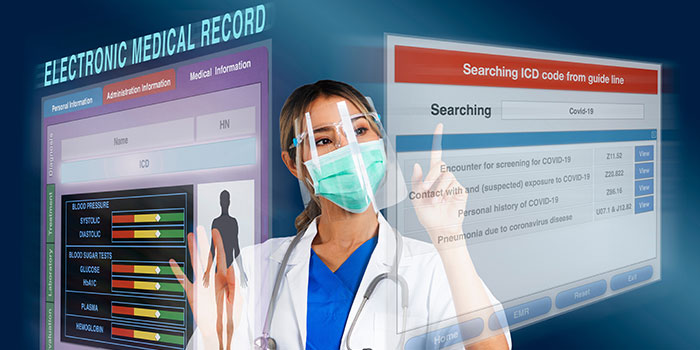
Cybersecurity specialists offer services to enhance data security and integration strategies ensure seamless adoption of mHealth processes within healthcare EHRs, unifying data collection and processing protocols. Interoperability can pose a challenge but software developers have created new strategies for seamless adoption of mHealth tech within existing healthcare platforms, providing end-users with enhanced resources to propel treatment plans forward.
The future of mHealth remains promising due to sustained demands for services even post-pandemic. As Artificial Intelligence continues its transformative impacts across multiple industries, we predict additional adoption of this modern resource within new patient care strategies as its versatility has augmented healthcare providers with error-free, data-driven decisions to modernize medicine and elevate the quality of patient care to further drive outcome-based healthcare models.
Leveraging analytics within the treatment of dementia and Alzheimer’s disease has yielded impressive results within University of Cambridge’s clinical tests, reporting AI-driven algorithms was three times more accurate in predicting Alzheimer’s progression than current testing methods. Reporting these critical findings within intuitive mHealth apps may further streamline communication and data monitoring within treatment teams, facilitating a fully optimized patient care plan.
We see the sustained success of telehealth attributed to intuitive, mHealth apps and wearables driven by AI and IoT, critical resources for the lucrative global telehealth market to continue its upward trajectory. ResearchAndMarkets has forecasted the global telehealth market to exceed $455 billion by 2030, offering software specialists opportunities to capitalize on this lucrative market by designing and customizing mHealth apps and wearables that are critical for this sustainability.
Disclaimer:
This content has been made available for information purposes only. Views and opinions expressed in this content are those of the individual author only and do not necessarily represent the opinions and views of Chetu. Chetu, and its representatives, make no representation or warranty of any kind, express or implied, regarding the accuracy, adequacy, validity, reliability, availability, or completeness of any information of this content. Under no circumstances shall Chetu, or its representatives, have any liability to you or any loss or damage of any kind incurred as a result of the use of this content or reliance on any information provided in this content. Your use of this website and your reliance on any information on this content is solely at your own risk.
About Chetu:
Founded in 2000, Chetu empowers businesses with AI and digital transformation solutions, supporting startups, SMBs, and Fortune 5000 companies. We deliver end-to-end software solutions backed by global digital intelligence and industry expertise. Our customized software delivery model and one-stop-shop approach span the full technology spectrum. Headquartered in Sunrise, Florida, Chetu operates 13 locations across the U.S., Europe, and Asia.
See more at: Chetu Blogs


Limited Time Offer for a Free E-Book
Privacy Policy | Legal Policy | Careers | Sitemap | Referral | Contact Us
Copyright © 2000- 2026 Chetu Inc. All Rights Reserved.


 By: Jeff Parcheta