Thank you!
Your blog has been successfully shared.
Let's Talk !  954 342 5676
  +44 137 243 2466
Anshu Raj – Director of Operations | December 12, 2025
Software development isn’t what it used to be.
And that’s honestly not a cliché — it’s a measurable, structural reality.
The shift happening right now is bigger than the cloud boom, bigger than the mobile revolution, and bigger than the SaaS explosion of the 2010s. AI has moved from “feature” to foundation, and it’s redefining what modern software can do, how fast it can be built, and how much business value it can produce.
Digital transformation used to mean upgrading systems, modernizing workflows, or migrating to the cloud.
But today?
Digital transformation means building intelligent systems that think, adapt, and evolve — systems where AI isn’t an add-on but the operating core.
And the companies who embrace this shift early are becoming the category leaders in every industry.
Let’s explore why this is happening.
AI didn’t become the heart of digital transformation just because it’s hyped — it became essential because the world changed in ways traditional software can’t keep up with.
Here are the forces reshaping everything:
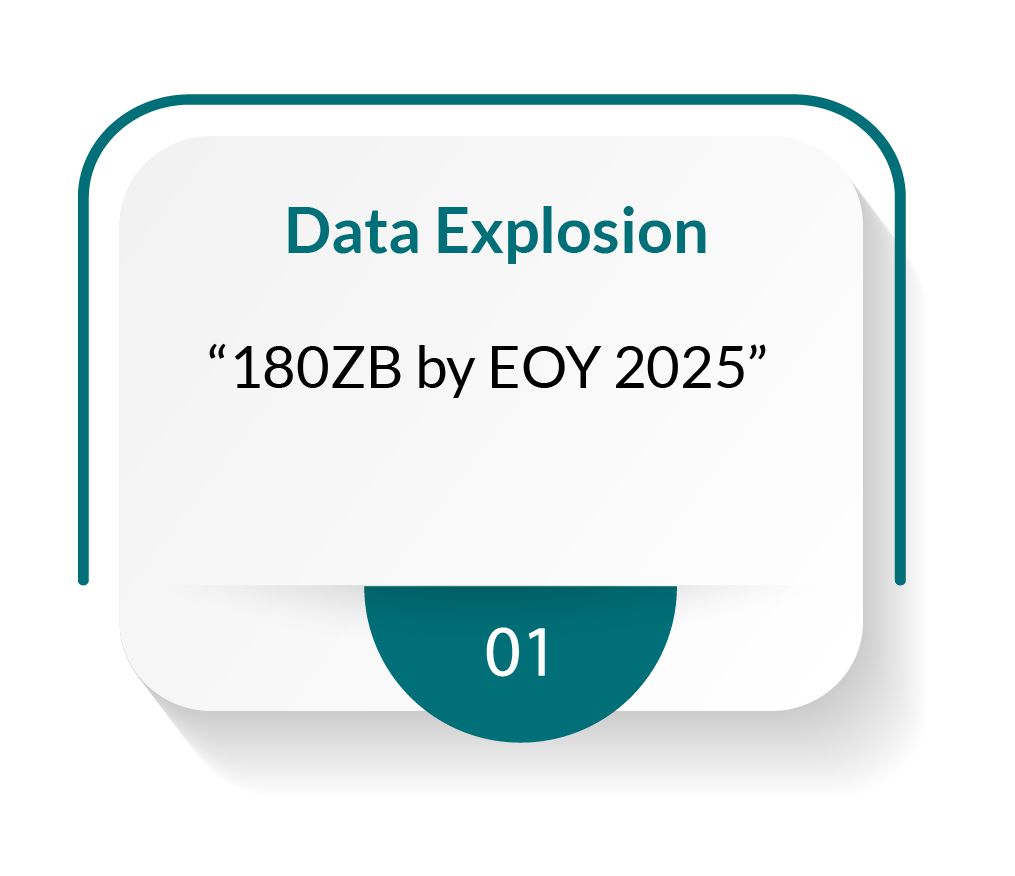
By the end of 2025, global data volume will hit 180 zettabytes (IDC). That’s not just “a lot of data.” It’s a tidal wave.
The old approach — collecting data, storing it, and reviewing it later — doesn’t work anymore. Businesses need real-time interpretation, instant signal detection, and adaptive decision-making.
AI is the only engine realistically capable of turning this flood of information into meaningful action.
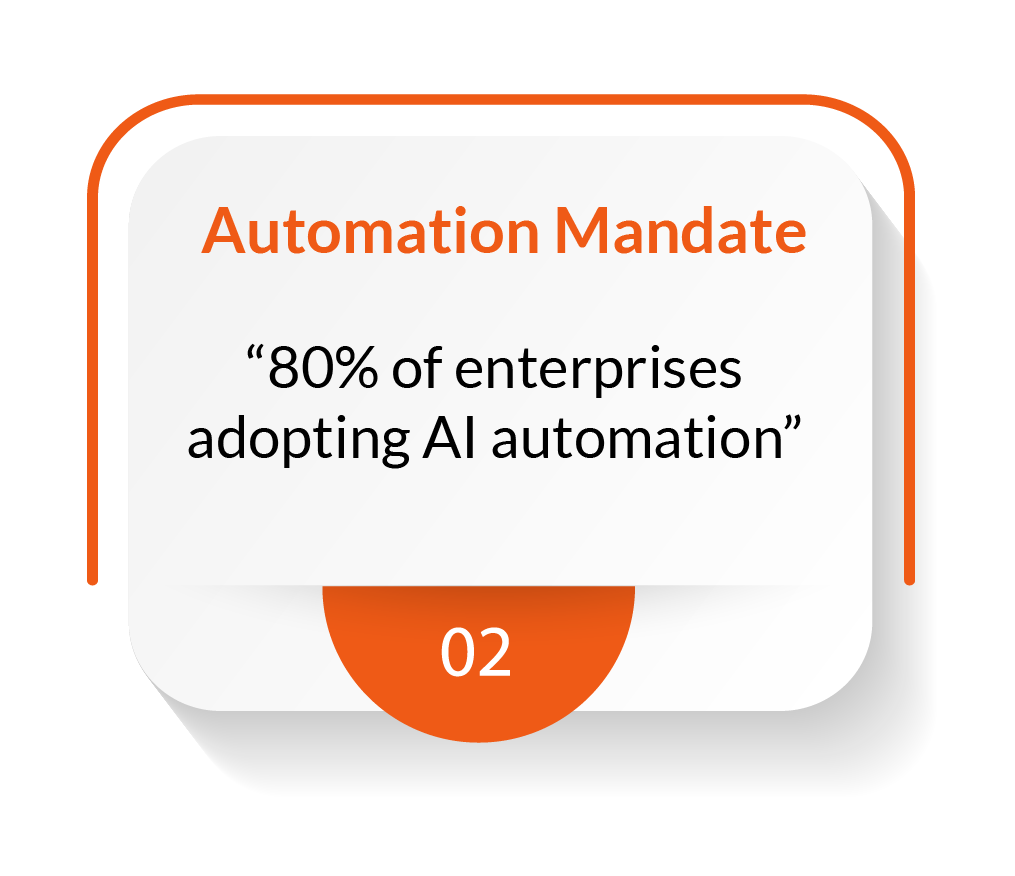
Gartner reports that 70% of enterprises will adopt AI-driven automation by 2026, not to get ahead — but just to stay competitive.
Manual workflows are too slow to adapt to the ever-changing market. Even rule-based automation can’t adjust quickly enough when market conditions shift overnight.
AI delivers what businesses now require:
Autonomous optimization
End-to-end efficiency
Speed that compounds over time
Automation is no longer a cost-saver.
It’s a competitive moat.
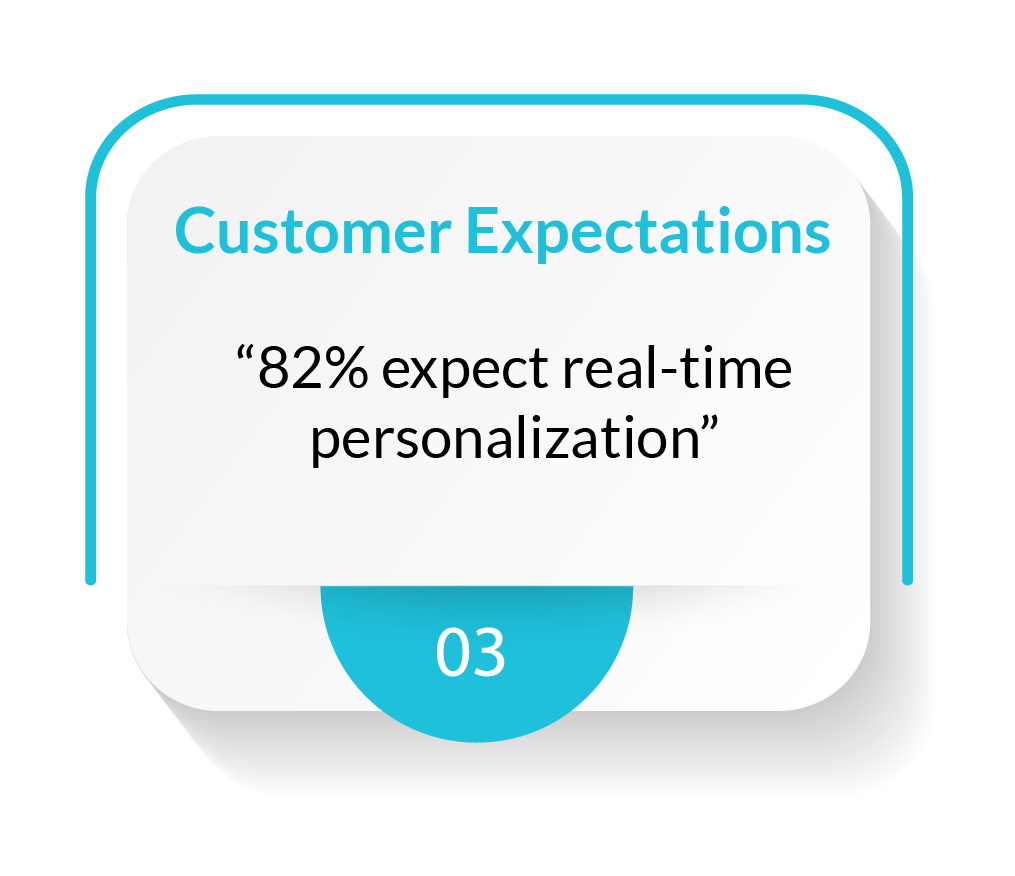
A recent Salesforce survey found 82% of consumers expect real-time interactions, personalized content, and predictive digital experiences.
Static software can’t deliver that. AI-enabled systems can — and do.
They learn from every click, predict customer needs, and adapt automatically. The experience becomes fluid, personal, and fast — the new baseline for every industry.
“The future isn’t automated. It’s intelligent.”
For years, development followed a predictable rhythm — gather requirements, build, test, refine, deploy. It worked well when markets moved slowly.
In today’s world, though, speed alone isn’t enough.
Software has to be smarter, more adaptive, and capable of supporting decisions in real time. AI transforms every phase of the software development lifecycle (SDLC) into something significantly faster and far more intelligent.
Requirements used to rely heavily on interviews, surveys, and historical reports. But these snapshots often miss what users actually do in the real world.
AI changes the picture:
It analyzes live user behavior
Identifies friction across journeys
Predicts which features will have the most impact
Clusters users into behavior-based cohorts
Teams have stopped guessing and started building with precision.
Architecting a system requires anticipating constraints, performance needs, and scalability issues. In the old model, this meant dozens of planning sessions and manual capacity estimates.
AI can now:
Flag integration risks early
Recommend optimal architecture patterns
Predict load and usage behavior
Model scalability needs before code exists
Optimize cloud cost from day one
Architects get clarity — and far fewer surprises.
Developers aren’t being replaced — they’re being amplified.
AI coding assistants help:
Generate secure boilerplate code
Suggest patterns and optimizations
Catch logic gaps
Speed up refactoring
Improve overall code quality
GitHub reports teams using AI-assisted development ship up to 55% faster with fewer defects.
AI isn’t just accelerating delivery. It’s raising the ceiling.
QA has always been a bottleneck — necessary, but slow.
AI makes testing:
Faster (auto-generated test cases)
Smarter (predictive defect detection)
Broader (24/7 autonomous test coverage)
More reliable (edge-case simulation)
Instead of finding defects at the end, teams prevent them at the start.
Ops used to be all about reacting quickly. AI shifts it toward preventing issues altogether.
With AI-driven observability, teams can:
Predict outages
Auto-scale infrastructure
Detect anomalies instantly
Optimize performance
Govern cloud costs in real time
Your digital ecosystem becomes something that learns and self-improves — the hallmark of a modern transformation.
Build Software That Thinks, Adapts & Scales
We design intelligent systems for 40+ industries — modernizing legacy platforms, building AI-powered applications, and delivering digital transformation end-to-end.
Whether you need automation, predictive intelligence, or AI-driven product innovation…
We’re the team that builds it.
AI isn’t a trend.
It’s the new baseline.
Software built without AI will feel slow, rigid, and outdated compared to intelligent systems competitors are already deploying today.
Companies moving early are building:
Faster innovation cycles
Lower total cost of development
Improved customer retention
Smarter operations
Stronger competitive moats
This is no longer an efficiency game.
Now, it’s all about survival — and category leadership is the only way to the finish line.
This moment looks a lot like the early days of cloud adoption… except it’s happening 10× faster, with 10× the impact.
The companies embracing AI today aren’t just keeping up. They’re pulling ahead and shaping the next decade of digital transformation.
If you want systems that adapt on their own, unlock new revenue, reduce complexity, and accelerate everything you do…
AI has to be the core, not the add-on.
And if you’re ready to move?
We’re already building the future with teams like yours.
We help organizations architect, build, and scale intelligent systems that redefine what’s possible.
If you want to accelerate development cycles, reduce failures, or build a next-generation engineering ecosystem, we’re here for it.
Disclaimer:
This content has been made available for information purposes only. Views and opinions expressed in this content are those of the individual author only and do not necessarily represent the opinions and views of Chetu. Chetu, and its representatives, make no representation or warranty of any kind, express or implied, regarding the accuracy, adequacy, validity, reliability, availability, or completeness of any information of this content. Under no circumstances shall Chetu, or its representatives, have any liability to you or any loss or damage of any kind incurred as a result of the use of this content or reliance on any information provided in this content. Your use of this website and your reliance on any information on this content is solely at your own risk.
About Chetu:
Founded in 2000, Chetu empowers businesses with AI and digital transformation solutions, supporting startups, SMBs, and Fortune 5000 companies. We deliver end-to-end software solutions backed by global digital intelligence and industry expertise. Our customized software delivery model and one-stop-shop approach span the full technology spectrum. Headquartered in Sunrise, Florida, Chetu operates 13 locations across the U.S., Europe, and Asia.
See more at: Chetu Blogs
Share


Limited Time Offer for a Free E-Book
Privacy Policy | Legal Policy | Careers | Sitemap | Referral | Contact Us
Copyright © 2000- 2026 Chetu Inc. All Rights Reserved.