Let's Talk !  954 342 5676
  +44 137 243 2466
Let's Talk ! 954 342 5676 +44 137 243 2466
The aviation and travel industries have enjoyed significant financial success in the post-pandemic business landscape. However, the challenges of reducing Maintenance, Repair, and Overhaul (MRO) expenses while ensuring passenger safety and equipment longevity continue vexing decision-makers. Global research and risk mitigation firm Oliver Wyman reports MRO labor expenses and attrition trends have challenged the aviation industry, with costs increasing over 7% globally, with global spending forecasted to exceed $124 billion by 2034.
Software specialists continue introducing tech-based solutions to mitigate costs, increase efficiency, and drive innovation. Are the global aviation industry and MRO markets ready to embrace AI-driven enhancements to launch new strategies?
World War II marked a critical, watershed time for the aircraft maintenance industry as production quotas set new benchmarks and more stringent production protocols were implemented to match the demands. Scheduled maintenance, standardized checklists, standardized parts, and more focused safety inspections began propelling the industry forward.
The advent of commercial aviation post-WWII and evolving demands for consumer travel required MRO expansion for properly servicing Boeing and Douglas aircraft. To ensure efficiency and safety, the U.S. created the Federal Aviation Administration (FAA) and Federal Aviation Regulations to create and implement stringent safety and maintenance protocols. This turning point in MRO’s evolution marked the advent of rigid, standardized maintenance and safety practices requiring uniform industry adherence. Today, the FAA reported recent goals of reducing commercial air carrier fatality rates to below 4.4 per 100 million persons on board while reducing general aviation fatal accidents to below 0.92 per 100,000 flight hours.
Artificial Intelligence has made transformative impacts on several industries and its application within aviation and MRO enables a future-ready strategy, today. Enhanced by software specialists, AI plays a critical role by leveraging data to create actionable insights to empower end-users with a modernized, proactive approach to maintenance and safety. Industry trade publication Aviation Week reported AI’s role within MRO is significantly growing and forecasts the global market for predictive maintenance to exceed $2.9 billion by 2032.
Artificial Intelligence and Machine Learning algorithms customized by software developers are monitoring data from embedded sensors within aircraft systems to forecast asset performance and proactively alert decision-makers of specific parts that are most vulnerable to breakdowns. Driven by IoT, the sensors help revolutionize asset management with data-driven analytics that real-time reports of asset health, efficiency, and performance, delivering unprecedented insights into crucial components. Predictive maintenance driven by analytics and IoT continues to be a lucrative, global market and with Fortune Business Insights forecasting a valuation of over $70 billion by 2032, Chetu’s world class software developers provide ample knowledge to help businesses capture market share.
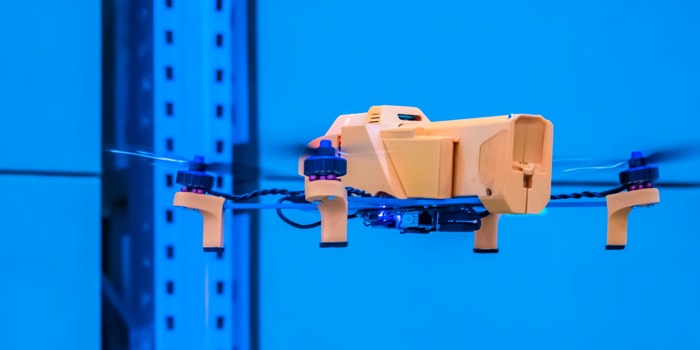
Computer vision and image recognition have been refined with AI and automation. Leveraged within aviation and MRO, computer vision via drones enables highly nuanced inspections of engines, wings, and fuselage to quickly detect cracks or any unforeseen damage in real-time. Maintenance personnel are empowered with modernized resources to automate processes, enable greater efficiency, and gain deeper insights into asset performance and how to proactively mitigate issues without compromising safety and longevity of parts. MRO company Pratt & Whitney reports their AI-based engine inspection tool reduces engine inspection times by nearly 90%. AI specialists such as Chetu are instrumental in working to empower MRO companies and the aviation industry adopt modern technology by designing individualized strategies to leverage AI within daily workflows.
Streamlining workflows is paramount for facilitating efficiency and promoting strategies to reduce expenses. With MRO expenses forecasted to increase 7% globally, we see AI-based strategies as modern solutions to proper innovation forward.
Artificial Intelligence streamlines MRO workflows with powerful, customized algorithms to empower decision-making with accurate data collection and processing. Technicians are augmented by AI to draw accurate conclusions on best practices for determining retirement of an aircraft, proactive replacement of critical parts, and actionable insights to create repair workorders with forecasted completion times, reducing scheduling conflicts and other bottlenecks. Another critical component for streamlining workflows is mastering supply chain processes. Customized AI implemented within supply chain management enables accurate demand forecasting for parts, proactively alerting decision-makers to what parts are needed how to adjust accordingly during demand spikes, ensuring no shortages and costly workflow interruptions. AI also creates reports monitoring supply chains in real-time, providing end-users with unprecedented inventory mastery and visibility. Statista reports adopting AI-driven strategies within supply chain markets will yield over $157 billion in market valuation by 2033, offering AI specialists and software developers ample opportunities to capture market share and drive innovation.
The successful advent of smart MRO strategies is entirely reliant on the versatile expertise of well-versed software developers. Chetu offers proven development expertise to seamlessly implement an AI-driven strategy to innovate MRO processes.
A recent innovative leap reliant on AI has been the adoption of digital twin technology. The automotive industry leverages predictive analytics within pioneering digital twin technology that simulates vehicle components' real-time performance over time to identify design and component weaknesses accurately. The application of predictive analytics and digital twin technologies enhanced by software specialists within aviation may provide a cost-saving strategy for asset management and optimize the monitoring and enforcement of critical safety protocols.
Embracing digital twin technology enables forward-thinking strategies to facilitate innovative manufacturing, efficiency, more stringent safety protocols, and even create sustainability benchmarks as the aviation industry can study data-driven simulations revealing alternative flight routes and how assets perform under new guidelines, before even sending aircraft into flight.
Chetu remains committed to driving innovation and modernizing industries with the latest technology enhancements, designed to reduce expenses and facilitate unprecedented efficiency.
Produced & Edited by: Jeffrey Alexander
Disclaimer:
This content has been made available for information purposes only. Views and opinions expressed in this content are those of the individual author only and do not necessarily represent the opinions and views of Chetu. Chetu, and its representatives, make no representation or warranty of any kind, express or implied, regarding the accuracy, adequacy, validity, reliability, availability, or completeness of any information of this content. Under no circumstances shall Chetu, or its representatives, have any liability to you or any loss or damage of any kind incurred as a result of the use of this content or reliance on any information provided in this content. Your use of this website and your reliance on any information on this content is solely at your own risk.
About Chetu:
Founded in 2000, Chetu empowers businesses with AI and digital transformation solutions, supporting startups, SMBs, and Fortune 5000 companies. We deliver end-to-end software solutions backed by global digital intelligence and industry expertise. Our customized software delivery model and one-stop-shop approach span the full technology spectrum. Headquartered in Sunrise, Florida, Chetu operates 13 locations across the U.S., Europe, and Asia.
See more at: Chetu Blogs


Limited Time Offer for a Free E-Book
Privacy Policy | Legal Policy | Careers | Sitemap | Referral | Contact Us
Copyright © 2000- 2026 Chetu Inc. All Rights Reserved.

 By: Rick Heicksen