Let's Talk !  954 342 5676
  +44 137 243 2466
Let's Talk ! 954 342 5676 +44 137 243 2466
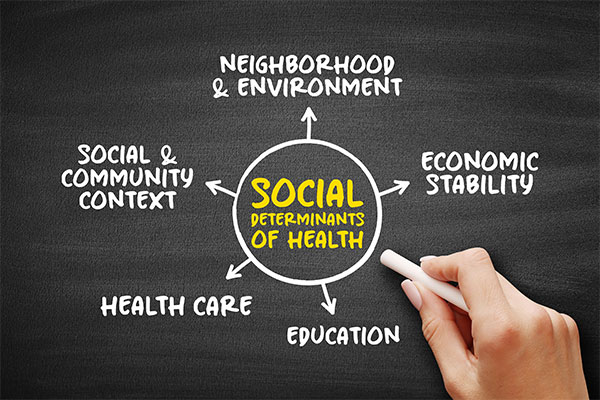
Good health is one of the most critical aspects of a person’s life, and its unpredictable nature can be stressful for those focused on life’s other obstacles. While medical care is responsible for approximately 20 percent of healthcare, the impact of social determinants on health fills in that remaining 80 percent. Social determinants of health are the conditions in the environments where people live, work, and exist, and they can affect a range of health, functioning, and quality-of-life outcomes and risks. There are five apparent factors: Economic stability, quality and access to education, quality and access to healthcare, and the neighborhood and social/community context.
While it can be hard to decipher and predict how current conditions will affect someone, with the help of automation, patients can gain agency over their health. Integrating the social determinants of health (SDOH) into an EHR platform will increase patient and provider control, mainly when used with intelligent automation. Essential SDOH information such as housing, transportation, and diet captured in real-time can aid health providers in making more informed, targeted medical decisions. It streamlines data collection and analysis, leading to more targeted care plans and improved patient outcomes while reducing administrative burden on providers.
Intelligent automation consists of Artificial intelligence, Machine Learning, and robotic process automation to analyze data, learn from patterns, and automate complex business processes. It allows systems to make data-driven decisions without human intervention.
Intelligent automation gathers SDOH data from different sources, such as electronic health records, patient-provider interactions, and external databases, and analyzes it to identify trends within the population. Based on the analysis, intelligent automation can identify high-risk patients who lack key needs. The automation generates tailored referrals and recommendations to community resources that can supplement areas where people are struggling.
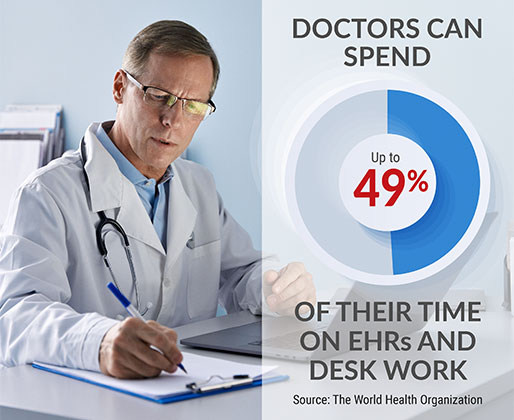
The power of automation greatly benefits patients who do not have the social or monetary power to advocate for themselves. Additionally, this addresses a more significant issue within the healthcare landscape: workforce shortages. The World Health Organization estimates a global shortfall of 10 million health workers by 2030. Increased documentation and admin requirements worsen this scarcity, further diminishing the time available for patient care.
Automation can suggest appointment times based on the patient’s address or monitor digital health data to identify interventions. Intelligent and AI-driven automation leveraging SDOH can address inequities while optimizing the healthcare process for providers. Reducing the stress levels of medical staff is crucial for appropriate and attentive care.
The key is to activate SDOH data, meaning it must incorporate unstructured, non-traditional health data into the patient record. The issue is that often this data is stuck in systems that limit its access, flow, and value. Patient data must flow freely between payers, providers, patients, and community resources for adequate SDOH usage. Natural language processing (NLP) is the core technology that extracts SDOH information from clinical text and expands its use in the patient care process. A study conducted by investigators from Mass General Brigham found that a type of generative AI can be trained to automatically extract information on social determinants of health from clinicians’ notes, supporting efforts to identify patients who may need support. Digital Medicine uncovered that finely tuned models could identify 93.8 percent of patients with detrimental SDOH, contrasted with diagnostic codes that included this information in only 2 percent of cases.
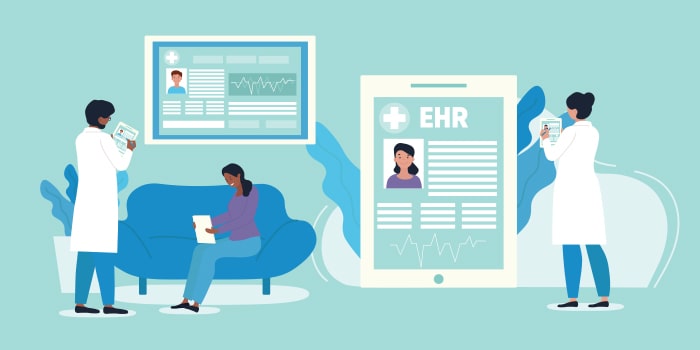
SDOH integration into electronic health records will revolutionize the way patients and providers approach health. It provides a comprehensive perspective on a patient’s health by considering external factors that can affect health. A doctor’s office can be an anxiety-inducing experience for some patients, but with SDOH integration in EHRs, much of the preliminary information can be established before they even step into the office. A journal from the Royal College of General Practitioners uncovered that many patients who participated in SDOH screening avoid talking about SDOH with their doctors because of the stigma associated with admitting struggle.
Some EHRs have lifestyle domains, such as preferred languages, smoking, and alcohol use, but many fail to account for the rest of the variables. Integrating SDOH solutions and tools into electronic health records can help decrease the disconnect that many patients feel with their providers. To create an effective SDOH strategy, patients and providers must leverage AI to
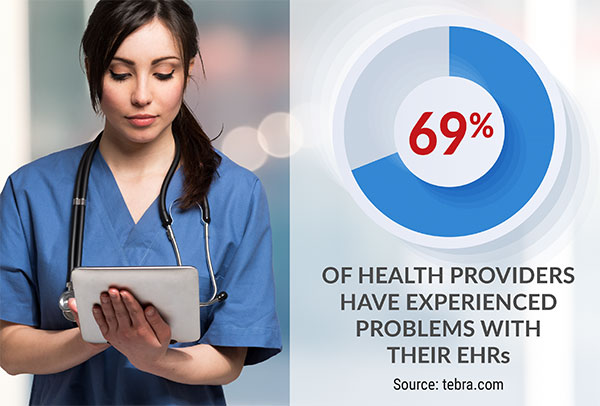
integrate data from public and private sources. Collecting community SDOH information from public databases and combining it with claims data and patient surveys helps create tailored patient profiles. It is important to remember that AI-powered predictive models only produce quality information based on the data it has received. Therefore, robust interoperability is vital for an effective SDOH strategy. Interoperability is the backbone of successful data exchange, the data that will be used to train AI algorithms that predict a certain health outcome. 69% of health providers experience problems with their EHRs, citing poor interoperability as a prominent issue. Additionally, the most critical EHR integration is patient scheduling. With intelligent automation augmented with SDOH tools, EHR platforms can be tailored to each patient, assisting with repetitive occurrences like patient scheduling.
Integrating SDOH into electronic health records signals a key advancement in improving patient outcomes and addressing health disparities. Through SDOH data integration into EHR, healthcare providers can better understand the external factors influencing a patient’s well-being. This synergy not only empowers patients but also alleviates the administrative burden on healthcare professionals.
EHR digital health platforms must differentiate themselves from other competitors. Intelligent automation equipped with SODH solutions will give these vendors an edge. There is quantifiable data that demonstrates improvement within patient care, which is the ultimate goal for both patients and providers. Contracting an experienced software development provider is crucial to achieving SODH integration, effective interoperability, and ongoing support.
Disclaimer:
This content has been made available for information purposes only. Views and opinions expressed in this content are those of the individual author only and do not necessarily represent the opinions and views of Chetu. Chetu, and its representatives, make no representation or warranty of any kind, express or implied, regarding the accuracy, adequacy, validity, reliability, availability, or completeness of any information of this content. Under no circumstances shall Chetu, or its representatives, have any liability to you or any loss or damage of any kind incurred as a result of the use of this content or reliance on any information provided in this content. Your use of this website and your reliance on any information on this content is solely at your own risk.
About Chetu:
Founded in 2000, Chetu empowers businesses with AI and digital transformation solutions, supporting startups, SMBs, and Fortune 5000 companies. We deliver end-to-end software solutions backed by global digital intelligence and industry expertise. Our customized software delivery model and one-stop-shop approach span the full technology spectrum. Headquartered in Sunrise, Florida, Chetu operates 13 locations across the U.S., Europe, and Asia.
See more at: Chetu Blogs


Limited Time Offer for a Free E-Book
Privacy Policy | Legal Policy | Careers | Sitemap | Referral | Contact Us
Copyright © 2000- 2026 Chetu Inc. All Rights Reserved.


 By: Rick Heicksen