Thank you!
Your blog has been successfully shared.
Let's Talk !  954 342 5676
  +44 137 243 2466
Nick Swanson - Director of Sales | February 10, 2026
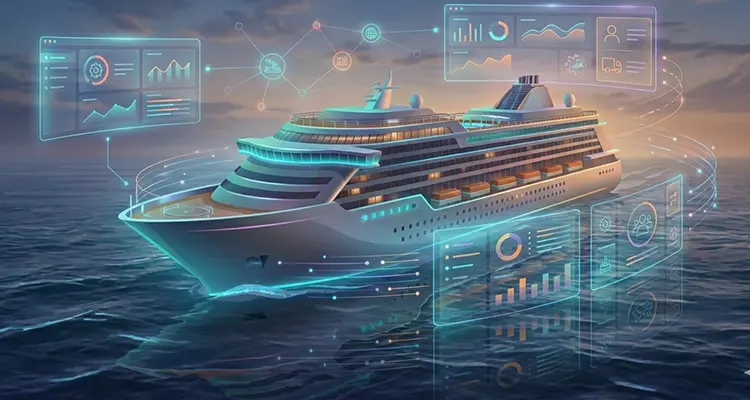
On the outside, running a cruise line seems like a stellar job. But it's not true. In reality, single cruise calls for several kinds of systems like reservations, guests, crew schedules, onboard services, compliance and real-time ship operations to all work together right. If these systems are not in sync then you know first hand how things can come to a grinding halt. Or worse, the ship may break, synonymously.
This is where PMS software designed for maritime environments matters. Cruise-focused Ship Property Management Systems (SPMS) are built to handle the complexity of operating floating cities. Not just hotel rooms at sea. By unifying operational, commercial, and safety functions, SPMS platforms help you reduce manual effort, improve coordination, and keep experiences consistent across vessels and sailings. So yes, it’s software. But it’s also operational insurance.
A modern SPMS platform brings together a multitude of shipboard and shoreside systems through a single operational architecture. Each module has a specific role to play, but it works efficiently with the data that roams between them.
Most cruise-ready platforms include:
Central Reservation Systems (CRS) for booking management
Integration with Global Distribution Systems (GDS) to expand sales reach
Crew scheduling and Human Capital Management (HCM) tools
Fleet Management Systems (FMS) for vessel operations
Inventory, procurement, and onboard sales modules
When these systems operate in sync, cruise operators gain visibility across the entire voyage lifecycle. Fewer silos. Fewer surprises.
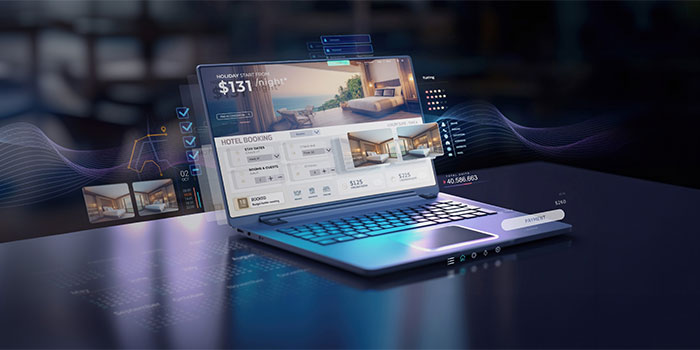
Reservations are where everything starts. Cabin availability. Pricing. Itineraries. Passenger details. A strong SPMS-supported reservation layer keeps all of this aligned. The Central Reservation Systems (CRS) enables cruise groups to coordinate cabin inventory, sail schedules, price schemes and guest data all through one system.
And when CRS is integrated with Global Distribution Systems (GDS), then inventory can be pushed out to travel agents, online portals, last-minute booking channels etc, without duplication. What does that mean? Live updates. Fewer overbookings. And a real way to rationalize the reservation process for all of your channels.
Most cruise-ready platforms include:
After reservations, the focus shifts to people. Guests don’t want generic experiences anymore. They expect recognition. Personalization. Continuity. SPMS-integrated CRM systems collect 360 degree profiles: information from reservations, onboard activity, loyalty programs, and post-cruise interactions. One profile. One source of truth.
With this visibility, cruise operators can:
Support loyalty programs and repeat traveler incentives
Run targeted marketing campaigns based on passenger segments
Track feedback, service requests, and complaints centrally
Improve passenger retention with informed engagement strategies
Cruise-specific CRM platforms improve personalization by aligning operational and marketing data in real time, without adding complexity. And honestly, when engagement feels effortless to the guest, satisfaction tends to follow.
Guest experiences are linked directly to vessel reliability and crew performance. There’s no avoiding that. Human Capital Management (HCM) based integrated crew management software helps cruise companies manage all phases of the employment, certifications, scheduling, and compliance with maritime labor regulations. Everything stays documented. Everything stays current.
Fleet Management Systems (FMS) provide operational control across the fleet of vessels. Operators have the ability to monitor routes, fuel use and maintenance demand with support from Global Positioning Systems (GPS) and real-time telemetry.
Together, these systems support:
Optimized crew deployment
Proactive maintenance planning
Improved fleet operational efficiency
Less downtime. More predictability.
Inventory on a cruise ship isn’t forgiving. Overstock wastes space and capital. Understock impacts service quality. SPMS inventory modules help cruise operators manage stock levels across food, beverage, retail, and technical supplies. Demand forecasting and procurement workflows are built directly into the platform.
Inventory planning models like Economic Order Quantities (EOQ) help balance demand with storage constraints. And F&B specific modules allow culinary teams to track consumption, reduce spoilage, and maintain consistent service across sailings. This is where operational discipline meets profitability.
Onboard revenue plays a major role in cruise profitability. Dining. Retail. Spa services. Entertainment. SPMS-enabled POS systems capture guest purchases across all outlets and automatically post charges to passenger folios. No manual reconciliation. No disconnected systems.
Modern maritime POS platforms support centralized sales reporting, multi-outlet management, and tight integration with financial systems. With accurate sales data, cruise operators can refine pricing, promote high-performing services, and maximize onboard revenue without disrupting the guest experience.
After covering the core operational modules, it’s important to remember that modern SPMS platforms also support something non-negotiable.
Safety and compliance aren’t optional at sea. They’re foundational. Modern SPMS platforms replace paper-based safety processes with digital workflows. Features like digital e-mustering and safety drill tracking provide real-time attendance data and improve compliance with maritime regulations.
Industry SPMS documentation highlights integrated modules for gangway security, ISPS compliance, and real-time counts of passengers, crew, and visitors. MXP PMS platforms also emphasize visitor management and clearance workflows tied directly to onboard security procedures. When safety is embedded into daily operations, response times improve. And confidence follows.
Cruise operations are only getting more complex. More ships. More data. More expectations. A powerful SPMS platform serves as the digital backbone of modern cruise management, connecting maritime software, reservations, crew, inventory, revenue, and safety into one operational ecosystem.
Whether you’re modernizing legacy systems or planning future growth, the right platform helps you scale without losing control. And when systems work together, operations feel… steadier. That’s the goal.
Disclaimer:
This content has been made available for information purposes only. Views and opinions expressed in this content are those of the individual author only and do not necessarily represent the opinions and views of Chetu. Chetu, and its representatives, make no representation or warranty of any kind, express or implied, regarding the accuracy, adequacy, validity, reliability, availability, or completeness of any information of this content. Under no circumstances shall Chetu, or its representatives, have any liability to you or any loss or damage of any kind incurred as a result of the use of this content or reliance on any information provided in this content. Your use of this website and your reliance on any information on this content is solely at your own risk.
About Chetu:
Founded in 2000, Chetu empowers businesses with AI and digital transformation solutions, supporting startups, SMBs, and Fortune 5000 companies. We deliver end-to-end software solutions backed by global digital intelligence and industry expertise. Our customized software delivery model and one-stop-shop approach span the full technology spectrum. Headquartered in Sunrise, Florida, Chetu operates 13 locations across the U.S., Europe, and Asia.
See more at: Chetu Blogs
Share


Limited Time Offer for a Free E-Book
Privacy Policy | Legal Policy | Careers | Sitemap | Referral | Contact Us
Copyright © 2000- 2026 Chetu Inc. All Rights Reserved.