Thank you!
Your blog has been successfully shared.
Let's Talk !  954 342 5676
  +44 137 243 2466
Rick Heicksen – Director of Sales | January 29, 2026
Grocer retail business is one of the competitive and challenging retail businesses in the world of retail. Grocery stores handle thousands of products on a daily basis with most of them being perishable and having short shelf life. Having poor control over this stock can easily undermine the profitability, cause stock wastage and poor customer satisfaction. The grocery retailers have to be smarter in their methods of inventory control, not only by counting stock, but by predicting the demand at the point of sale, automating inventory renewal, minimizing shrinkage, and ensuring the best quality products are in stock.
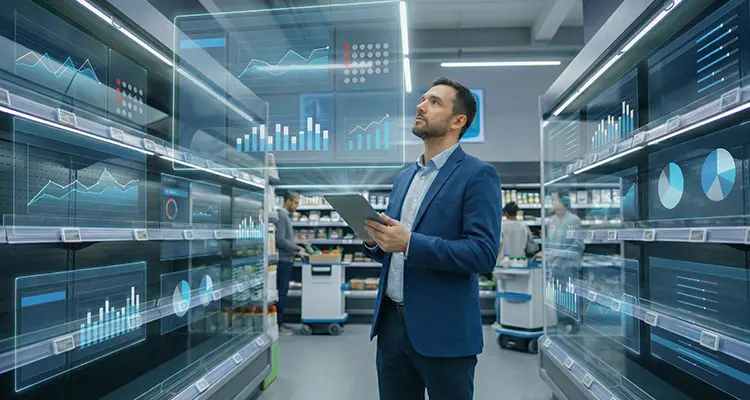
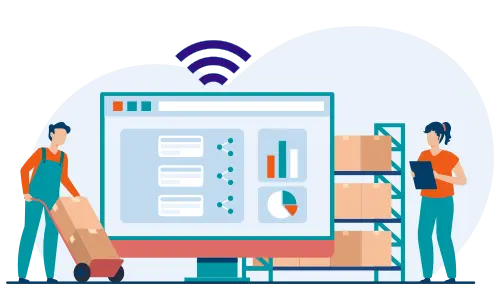
Retail inventory management software comes in as a strategic advantage at this point. The grocery stores can reduce stock loss, improve quality of products and overall operational efficiency, by substituting traditional spreadsheet tracking and manual stock take with automated solutions providing real-time visibility, analytics, and integration with the point-of-sale systems. The use of technology in grocery operations is optional no more, it is imperative since the operation has become more complex.
Losses on inventory in grocery retail have a financial effect of high impact and it is commonly known as the shrinkage which encompasses losses through theft, administrative errors, spoilage and inaccuracies in the systems. These problems are further exacerbated by their high bulk and perishability due to the nature of the grocery product.
Investopedia reports that the shrinkage amounted to an estimated 62 billion in the year 2019 to U.S. retailers and constituted an average of 1.6% of overall sales, indicating the direct impact of inaccurate inventory on profitability.
A different study specifically targeting the grocery retail sector determined that 8 percent of revenue could be lost merely by having poor inventory availability and mismanagement with 5.9 percent of the sales being lost by out of stock circumstances only. These values show the scale of the issue to grocery retailers with low margins.
Stockouts and spoilt products destroy customer loyalty, in addition to financial losses. In a 2024 NielsenIQ survey, 34 percent of grocery shoppers had shifted to other stores because of the frequent out of stock condition of required items, making the chains lose an average of 2 million dollars annually in revenue.
Modern inventory management software is designed to eliminate the root causes of stock loss and poor product availability by leveraging automation, real-time data, and predictive analytics.
Inventory systems that are directly linked to point-of-sale (POS) systems give real-time updates of the stock levels. Each sale will cause an automatic change that will make sure that records reflect actual stock levels and minimize differences between physical and recorded inventory.
ZipDo Education Reports state that inventory management software can help decrease the stock discrepancies by as much as 40 percent.
Through this real-time visibility, the grocery managers are able to identify low inventory levels promptly, get reorder notifications, and refuel stock in real-time instead of getting an alert only to undertake the task of refueling the stock.
Demand forecasting is one of the strongest elements of the modern solutions as it uses previous sales data to forecast future needs of a product. Under proper demand forecasting, the grocers will be able to minimize unnecessary inventory and to escape the cases of under-stocking and oversupply.
As MoldStud states, predictive analytics can also improve inventory turnover rates by 50 percent or more, making sure that popular items are on stock, but not excess inventory on slow-moving products.
This feature is especially valuable in the control of perishable items. Stocking of perishable goods such as produce or dairy does not only tie up capital but also creates wastages and compromises on the quality of the products.
Theft, counting errors, and operational inefficiencies may contribute to the occurrence of inventory loss because of shrinkage. Barcode scanning or RFID-based automated systems significantly decreases the human error and enhances accurate inventory.
The research conducted in the industry indicates that by integrating technology, such as barcode or RFID, there is a 50 percent reduction in counting errors as compared to manual methods, which are easily subject to errors.
More so, as ZipDo Education Reports claim, excess inventory in retailers having sophisticated inventory analytics reduces by 15-20 percent, which directly resolves the loss due to obsolescence and waste.
The automated replenishment systems allow purchase orders to be generated in accordance with the preset limits and past demand trends, eradicating delays during reordering and lowering the workload of the personnel. This does not only reduce the incidence of stockouts but also makes the replenishment decisions to be data-oriented and timely.
Replenishment automation can reduce inventory management time by staff by up to 30 per cent, allowing the staff to spend their time on other value-added activities, such as customer service.
Smart inventory software is best in grocery stores where the freshness is voluminous. It enhances the use of the stock by monitoring the expiration dates and shelf life in real-time, allowing the stores to focus on stock rotation and minimize waste.
Due to the tools used in forecasting, there is an assurance that products are sold when they are still fresh, thus improving the quality of the products and minimizing the markdowns or the cost of disposing the product.
With accurate stock levels and availability, grocery stores better meet customer expectations. Customers are less likely to encounter out-of-stock items, which is a major driver of loyalty.
The NielsenIQ report shows that frequent stockouts lead to 34% of customers switching stores—a dramatic reminder of the cost of inventory mismanagement.
Inventory management software fundamentally transforms grocery operations by standardizing processes and enabling data-driven decisions across the supply chain.
Inventory Accuracy and Reporting
Systems that integrate tracking, forecasting, and reporting provide deep insights into inventory performance. Grocery managers can identify fast-moving SKUs, slow sellers, and seasonal trends that inform buying and promotions.
A critical advantage here is visibility. Without accurate data, managers are left to rely on guesswork, leading to stockouts, excess inventory, and avoidable losses. Software solutions transform this into actionable intelligence.
Shelf Management and Space Optimization
With accurate data on hand, stores can optimize shelf layout and placement, putting popular and high-margin items in prime locations. This not only improves sales but also reduces the likelihood of stock sitting too long on shelves and expiring.
Compliance and Traceability
For products with safety and regulatory considerations, inventory management software also supports traceability. It can track items from supplier to store shelf, beneficial not only for compliance but also for quick recall actions if required.
While cutting stock loss and improving quality are the most immediate benefits, inventory management software also supports broader business goals:
According to MoldStud, retailers that leverage automated stock tracking experience up to a 20% reduction in carrying costs and improved forecasting accuracy.
Smart retail inventory management software is not a luxury thing, it is a game changer that can directly affect profitability, product quality, and customer satisfaction of grocery retail. Groceries can reduce inventory stock loss, improve quality of the offered goods and gain customer trust by introducing real-time visibility, predictive analytics, and automation in their inventory practice. With more and more complexity in grocery operations, not only in multi-channel requirements but also in perishable provisions, the retailer with the most sophisticated inventory system will be ahead of the pack, less waste, and will have what customers want and when they want it. An investment in such technologies nowadays preconditions further sustainability and further development in a changing retail environment.
Disclaimer:
This content has been made available for information purposes only. Views and opinions expressed in this content are those of the individual author only and do not necessarily represent the opinions and views of Chetu. Chetu, and its representatives, make no representation or warranty of any kind, express or implied, regarding the accuracy, adequacy, validity, reliability, availability, or completeness of any information of this content. Under no circumstances shall Chetu, or its representatives, have any liability to you or any loss or damage of any kind incurred as a result of the use of this content or reliance on any information provided in this content. Your use of this website and your reliance on any information on this content is solely at your own risk.
About Chetu:
Founded in 2000, Chetu empowers businesses with AI and digital transformation solutions, supporting startups, SMBs, and Fortune 5000 companies. We deliver end-to-end software solutions backed by global digital intelligence and industry expertise. Our customized software delivery model and one-stop-shop approach span the full technology spectrum. Headquartered in Sunrise, Florida, Chetu operates 13 locations across the U.S., Europe, and Asia.
See more at: Chetu Blogs
Share


Limited Time Offer for a Free E-Book
Privacy Policy | Legal Policy | Careers | Sitemap | Referral | Contact Us
Copyright © 2000- 2026 Chetu Inc. All Rights Reserved.