


Modern Supply Chain Software Development for Intelligent Logistics, Manufacturing & Distribution Platforms
Atit Shah - Director of Operations | October 15, 2026
- Custom supply chain software improves visibility, automates workflows, and enhances efficiency across logistics, warehousing, and distribution.
- Legacy systems create operational silos, slow processes, and limit scalability, making modernization essential for growth.
- AI, IoT, and cloud-native technologies enable predictive insights, real-time tracking, and smarter supply chain decision-making.

Supply chains are a whole lot more complicated than they were even several years ago. Gone are the days of managing just inventory and transportation schedules; multi-vendor sourcing, global sourcing, omnichannel fulfillment, regulatory compliance, and growing customer expectations are now part of the equation. In logistics, manufacturing and distribution businesses, speed and visibility are no longer a choice, but a business requirement.
However, many organizations still rely on legacy systems that cannot meet the requirements of modern operations.
Legacy warehouse systems have isolated transportation platforms, while siloed inventory tools can cause inefficiencies which result in delays, increased operating expenses, and suboptimal decision-making. That's the reason businesses resort to custom supply chain software development services to build smarter, scalable and better connected supply chain ecosystems.
Delivery fleets, manufacturers, warehouses, and distributors can leverage custom built supply chain platforms to have real-time visibility, automated workflows, better forecasting, and faster responses to disruptions. From warehouse management and improved logistics to inventory synchronization across various locations, modern supply chain software has played a crucial role in enhancing efficiency and growth.
Supply Chain Software Solutions We Develop
No two supply chains operate the same way. A food distributor managing shelf-life inventory has very different needs than a manufacturing enterprise handling raw materials and multi-site production. This is where custom-built supply chain systems create real value.
At Chetu, we develop supply chain platforms designed around operational complexity, industry-specific workflows, and long-term scalability.
Warehouse Management Systems (WMS)
Warehouses are at the center of supply chain performance. If inventory is inaccurate or picking processes are slow, it impacts everything downstream—from shipping timelines to customer satisfaction.
Modern WMS platforms help businesses improve warehouse visibility and operational speed by enabling:
- Real-time inventory tracking
- Barcode and RFID integration
- Multi-warehouse synchronization
- Smart picking and packing workflows
- Dock scheduling and labor allocation
A custom warehouse management system can also connect with automation solutions such as robotics, conveyors, and IoT devices to streamline throughput and minimize human mistakes.
Transportation management systems (TMS)
One of the most costly and complex aspects of supply chain management continues to be transportation. Fuel prices, coordination, route and delivery inefficiencies can rapidly impact margins.
Custom TMS solutions provide comprehensive transportation visibility and greater control over logistics operations.
Key capabilities include:
- Fleet tracking and live shipment monitoring
- Route optimization for fuel efficiency
- Carrier performance management
- Dispatch automation
- Freight analytics dashboards
With real-time shipment visibility, businesses can reduce delays and improve customer delivery experiences.
Inventory Management Platforms
Inventory management has evolved beyond basic stock tracking. Today’s businesses need predictive insights into demand, stock movement, and replenishment cycles.
Modern inventory platforms support:
- AI-powered demand forecasting
- Multi-location stock visibility
- Automated replenishment workflows
- Batch and lot tracking
- ERP synchronization
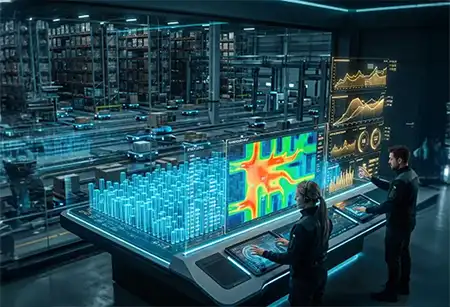
This helps reduce overstocking, prevent stockouts, and improve overall inventory efficiency.
Order Management & Fulfillment Systems
With customers buying across websites, marketplaces, and physical stores, order management has become increasingly complicated. Custom OMS platforms help businesses centralize order orchestration and fulfillment.
This includes:
- Omnichannel order processing
- Automated fulfillment workflows
- Smart order allocation
- Real-time order tracking
- Returns management
Enterprise Challenges in Legacy Supply Chain Platforms
While supply chains have evolved, many businesses are still operating with legacy systems that limit flexibility and visibility.
These systems often create more problems than they solve.
Limited Real-Time Visibility
Visibility is one of the biggest operational challenges in modern supply chains. When data is spread across ERP systems, WMS platforms, TMS tools, and supplier networks, decision-makers often lack a complete picture of operations.
This can result in:
- Inventory blind spots
- Delayed shipment updates
- Poor supplier communication
- Slow issue resolution
Monolithic Architecture Limits Scalability
Older supply chain platforms were built for a different era. Most are rigid, expensive to maintain, and difficult to scale.
As operations grow, businesses often face:
- Slow system upgrades
- Integration limitations
- High maintenance costs
- Poor user experience
- Limited customization
Modern operations demand flexibility that monolithic systems simply can’t provide.
Complex Integrations Across Multiple Systems
Today’s supply chains rely on multiple software ecosystems.
This includes:
- ERP systems like SAP, Oracle, NetSuite, Microsoft Dynamics, Odoo, Epicor, and Infor
- Carrier APIs
- EDI communication platforms
- Warehouse hardware
- IoT devices
Legacy systems often struggle to connect these environments effectively, creating data silos and operational gaps.
Manual Processes Still Slow Operations
Many supply chain teams still depend on spreadsheets and manual coordination for critical tasks.
This creates inefficiencies such as:
- Dispatch delays
- Inventory inaccuracies
- Slow warehouse workflows
- Increased operational errors

Automation helps remove these bottlenecks and improves process consistency.
Modern Technologies Powering Intelligent Supply Chain Platforms
The next generation of supply chain platforms is being driven by advanced technologies that improve speed, intelligence, and adaptability.
AI & Predictive Analytics
Artificial intelligence is transforming supply chain decision-making. Instead of relying solely on historical reporting, AI helps businesses predict and optimize future operations.
Common use cases include:- Demand forecasting
- Inventory planning
- Route optimization
- Exception detection
- Automated decision-making
IoT & Real-Time Asset Tracking
IoT has become essential for asset visibility and operational monitoring.
Connected devices allow businesses to track:- Fleet movement
- Container conditions
- Cold-chain temperature compliance
- Equipment health
- Warehouse activity
Cloud-Native Supply Chain Architecture
Cloud-native development has become the foundation of scalable supply chain software.
It offers benefits like:- Faster deployment cycles
- Better scalability
- Lower infrastructure costs
- Microservices architecture
- API-first connectivity
Supply Chain Control Towers
Control towers are becoming critical for enterprises seeking end-to-end visibility.
They provide:- Unified operational dashboards
- Real-time alerts
- Exception management
- Cross-network orchestration
- Predictive analytics insights
Industry-Specific Supply Chain Software Development
Different industries face unique supply chain challenges. Generic solutions often fail to address industry-specific needs. That’s why custom development matters.
Healthcare & Pharmaceutical
Healthcare supply chains require strict compliance and product integrity.
Custom platforms support:
- Cold-chain tracking
- Drug serialization
- Regulatory compliance
- Audit-ready reporting
- Product traceability
Food & Grocery
Managing fresh inventory requires precision.
Custom systems help with:
- Shelf-life tracking
- Supplier coordination
- Demand forecasting
- Delivery optimization
Manufacturing & Distribution
Manufacturers require synchronized workflows across production, warehousing, and vendor management.
Key capabilities include:
- Production planning integration
- Vendor coordination
- Warehouse synchronization
- Multi-site inventory visibility
Modernizing Legacy Supply Chain Software Platforms
Modernization has become a strategic priority for businesses looking to improve performance and reduce technical debt. Instead of replacing entire ecosystems at once, many organizations are taking phased modernization approaches.
This often includes:
- Migrating monolithic systems to cloud-native environments
- Rebuilding outdated WMS and TMS platforms
- Improving API connectivity
- Enhancing scalability and performance
- Modernizing UI/UX for operational teams
At Chetu, we help enterprises modernize legacy supply chain systems without disrupting operations.
Our approach focuses on improving system flexibility, integration capabilities, and long-term scalability.
Why Companies Choose Custom Supply Chain Software Development
Off-the-shelf software can solve basic problems, but supply chains are rarely “basic.” Custom platforms allow businesses to build around their exact operational needs.
The biggest advantages include:
- Better scalability for growing operations
- Greater integration flexibility
- Industry-specific workflow customization
- Real-time operational intelligence
- Reduced operational costs through automation
Most importantly, businesses gain full ownership over their technology roadmap.
Why Choose Chetu as Your Supply Chain Software Development Partner?
Choosing the right development partner is just as important as choosing the right technology.
At Chetu, we build enterprise-grade supply chain platforms designed to solve complex logistics, manufacturing, and distribution challenges.
Our expertise includes:
- Warehouse Management Software Development
- Transportation Management Systems
- Inventory Management Platforms
- Order Management Solutions
- ERP and API integrations
- AI-powered logistics automation
- Supply chain modernization services
From a new platform built from the ground up to an existing platform being upgraded, our engineering teams design scalable, high-performance solutions that meet your operational objectives.
Create a Smarter Supply Chain with Chetu
Business competitiveness is determined by efficiency in the supply chain. Organizations that invest in smart platforms now will be better equipped to deal with disruption, enhance customer satisfaction and grow more quickly. But Modernizing your supply chain is not simply a technology issue. It's also a resilience issue.
By leveraging custom supply chain software development services, companies can build smart, integrated, and forward-thinking supply chain networks.
Disclaimer:
This content has been made available for information purposes only. Views and opinions expressed in this content are those of the individual author only and do not necessarily represent the opinions and views of Chetu. Chetu, and its representatives, make no representation or warranty of any kind, express or implied, regarding the accuracy, adequacy, validity, reliability, availability, or completeness of any information of this content. Under no circumstances shall Chetu, or its representatives, have any liability to you or any loss or damage of any kind incurred as a result of the use of this content or reliance on any information provided in this content. Your use of this website and your reliance on any information on this content is solely at your own risk.
About Chetu:
Founded in 2000, Chetu empowers businesses with AI and digital transformation solutions, supporting startups, SMBs, and Fortune 5000 companies. We deliver end-to-end software solutions backed by global digital intelligence and industry expertise. Our customized software delivery model and one-stop-shop approach span the full technology spectrum. Headquartered in Sunrise, Florida, Chetu operates 13 locations across the U.S., Europe, and Asia.
See more at: Chetu Blogs
Share


Limited Time Offer for a Free E-Book

Suggested
Reading
Read our blogs on automation strategies, technology and business solutions.

BLOG: Evolving the Supply Chain Industry with RPA
Learn More > >

BLOG: SCM Automation Software Development for Cost Effective Reverse Logistics
Learn More > >

BLOG: What Supply Chain Leaders Can Learn from UPS’s AI Strategy: Driving Efficiency with AI Route Optimization Software
Learn More > >