Thank you!
Your blog has been successfully shared.


Let's Talk !  954 342 5676
  +44 137 243 2466
Vipin Panwar - Director of Operations | April 08, 2026
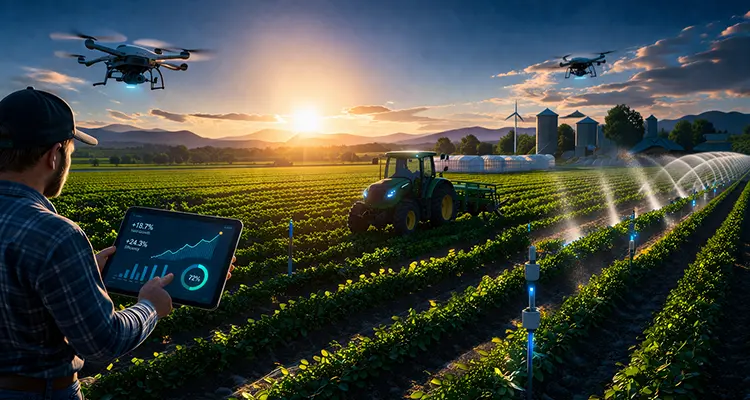
Farming has always been about observation and timing. But today, technology adds something farmers never had before. Real-time visibility into what is happening across every part of the field.
Precision agriculture, also called digital agriculture or smart farming, uses data and connected systems to manage crops with accuracy. Instead of treating every acre the same, you manage each zone based on its exact needs. It is the shift from assumption to measurable insight.
Technologies like UAV crop monitoring, digital soil mapping, remote sensing and GPS farming tools now work together in one connected ecosystem. These tools answer four practical questions:
When should you irrigate
Where are nutrients lacking
Why yields vary
What adjustments improve next season
Sensors create continuous data flow. What begins as a broad overview of your operation becomes sharper over time as more data layers are added. Precision improves season after season.
Precision farming is a collective effort between diverse IT systems, a data-excavating, real-time analytics providing, autonomously-driven force revitalizing archaic seed-to-sale processes. We're combining technologies like UAVs, soil mapping, remote sensing, and GPS integrations to forge a dialogue between them, a conversation we can tap into and decipher to better address the four w's—when, where, why, and what.
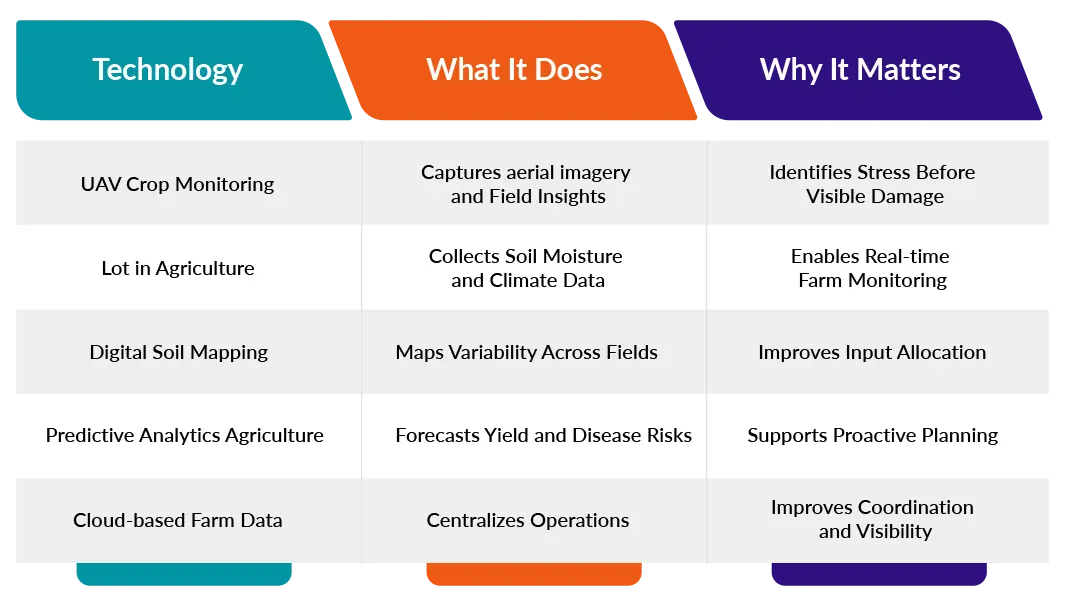
At its core, modern farming technology gathers data. Then analyzes it. Here is what that looks like in practice:
This might sound obvious. But visibility changes everything. When you can see patterns forming in real time, you do not guess. You adjust.
We have made remarkable advancements in agricultural technology, but we have reached a tipping point where the manual processes that sustained our produce and livestock supply for thousands of years aren't quite cutting it anymore. Unfortunately, relying on the Farmer's Almanac is a death sentence in a world with an explosive population with almost 8 billion mouths to feed and dinner tables to douse in organic, brightly colored fruits and grass-fed steaks.
Not only is there pressure to boost harvest volumes, but to disintegrate operational blinders obscuring the view of the public eye as consumers become increasingly sensitive to the environmental deficits fertilizers and additives exacerbate. The process of nurturing seeds for produce through controlled maturation is a human feat we've been exploring for at least 23,000 years; to give some perspective, scholars have traced organized farming back to the Paleolithic Era, to a civilization that existed 10,000 years before the first person set foot in North America. It makes sense that agriculture is as old as time, as there is one constant between all human beings—the need for nutrients and sustenance to sustain life.
So, this brings us back to the 8 billion people demanding a complicated array of livestock and produce options; how do we align production with market demands? To be frank, there is no way our current methodology accommodates those demands. Even though the boat is still afloat for now, we need to begin bracing for a rogue wave, the dangerous elixir of resource limitations and overpopulation.
By 2050, the world's population will teeter just below 10 billion, a population of that size requires tremendous changes in agricultural production. To conquer current and future agricultural needs, farms must leverage a network of professional IT solutions that drive sustainability, predictability, and profitability, a network that gives way to a new, precise generation of organized harvest currently referred to as precision agriculture.
Unpredictability is paradoxically, a constant for the agricultural industry and a strong adversary to production. As we need more and more food to sustain the population, predictive analytics present an opportunity to escape the repressive grip of chance—something we no longer need to subject crops to.
The idea is to forge a holistic picture of the land and the conditions influencing its composition that pivots in real-time using remote sensing technology. The sensors collect granular measurements related to salinity, moisture, fertilizer potency, weather, growth rate, and any other environmental variable impacting the lifecycle. Of course, if we want to tack onto broader trends, precision farming is a vertical offshoot of big data, a more niche version of the universal thirst for data-driven operations. To get the holistic picture of their land, many growers have already begun instrumenting precision techniques to obtain the qualitative and quantitative data they need to increase their yield and improve their approach to land management.
For a truly robust big data solution for precision agriculture, it is normally best practice to seek out assistance from a third-party developer who can guarantee a seamless integration of new technologies and software into a farmer's existing systems and deliver the best results so growers can achieve the highest possible return on investment.
Where do you go when your car is not as fast as you want or working the way it should? You have someone take a look at the moving parts. Soil is the engine of the agricultural machine, a power source, or at times, a disability to the rest of the moving parts. As demands rise, soil composition does what it always has, it fluctuates frenetically. Although we have conquered medical anomalies, forged dialogue between inanimate machinery, and mastered hydroponics, there is one mountain we cannot move—we cannot change the weather. Because we cannot control the weather, we cannot control the soil, along with other factors inherent to soil composition (salinity, pH, textures, organic matter, etc.).
Farmers have always scouted samples manually, and shipped them off to a third-party for analysis. Not only is this process skewed, considering it paints a very one-dimensional picture, but it also takes too long to process. Defining land by one or two soil samples is like defining the world by the perspective of one or two human beings—soil is highly complex and a dynamic facet of the environment, impossibly captured in a single sample.
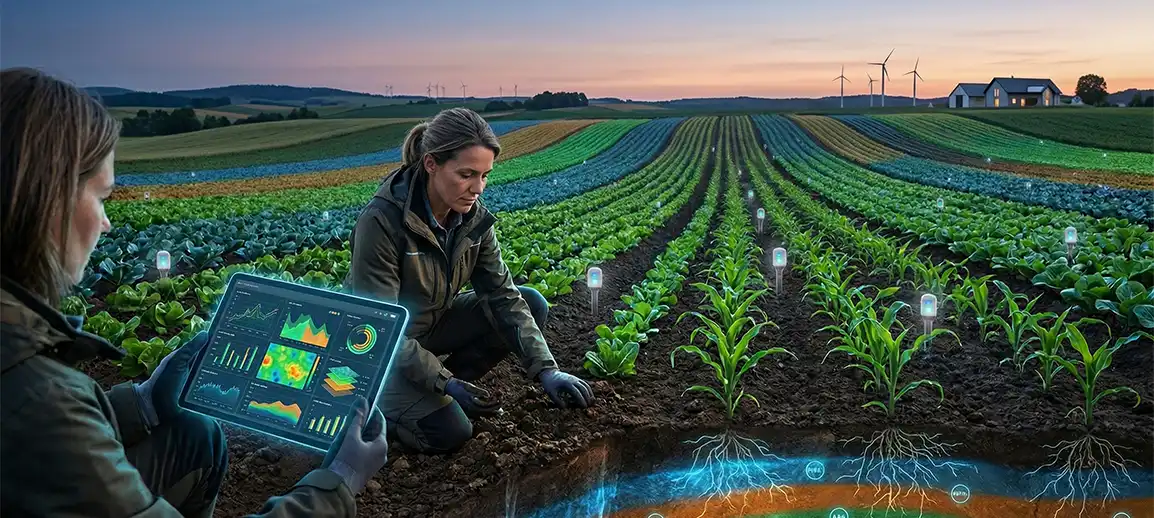
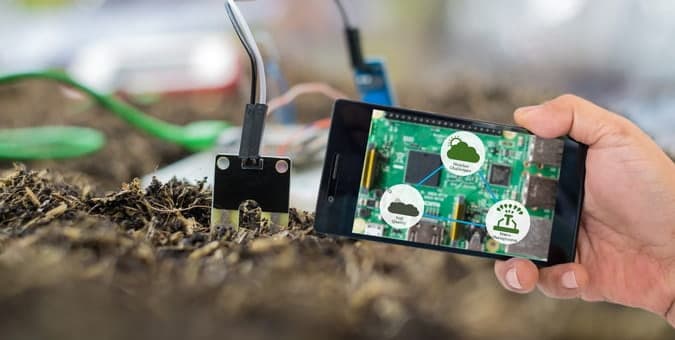
Digital soil mapping is a component of precision agriculture, and defined as a geographical representation of soil composition through extensive data collection. In other words, we are recreating the soil digitally through the use of sensors placed throughout the viable land. In collecting real-time analytics on soil attributes, farmers can better understand what additives will induce optimal growing conditions. These sensors inhabit a wide spectrum, meaning there is a significant gap between the functionality of the simplest sensor and the most sophisticated one, levels dictated by the IT intelligence driving the actual mechanism. Sensor software has the ability to funnel data from the device to the database, self-adjusting variables according to the analytics.
Crop sensors are essentially accomplishing the same as soil sensors, but instead collect data related to crop lifecycle. Here we are trying to be more precise with our allocation of additives and resources—giving the crops or livestock just enough sustenance to maintain homeostasis. In monitoring conditions in real-time, farmers reduce waste and reap greater harvests, as their lifecycle becomes more predictable and less prone to unexpected loss. Yes, crop and soil analytics give way to profound changes on a micro level, but also compound to form a storyline growers can access for the next harvest. So as the macro form over time, agriculture becomes increasingly precise, especially since sensors create continuous data flow—starting with a grainy image of the operation that focuses as we add layers. Sensors leverage qualitative and quantitative relationships to refine agricultural processes, bringing environmental variables from dirt to database.
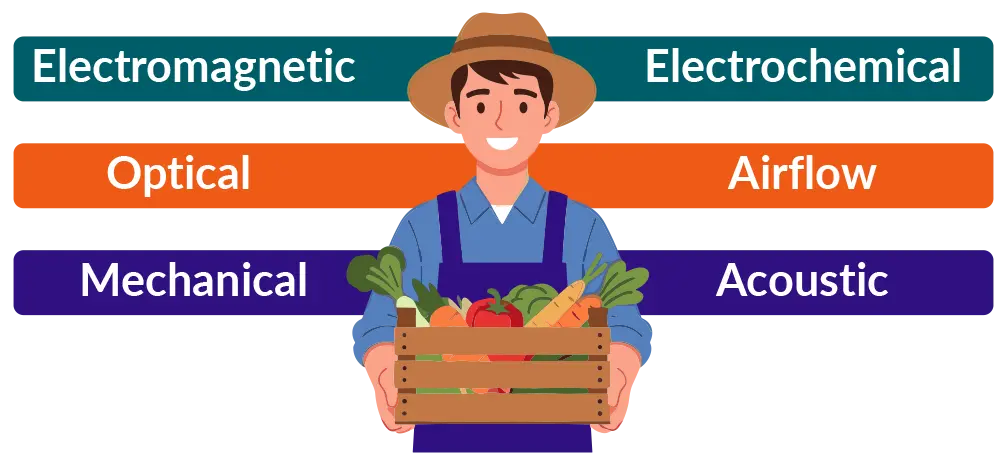
Generally, these are the sensors growers are toying with:
UAVs can be used not only as a data collection device, but also as machinery. Growers can utilize UAV technology to spread seed pods over the fields they manage through a network of sensors. The seed pods contain all the necessary nutrients for the preliminary stages of life, alleviating the stress and manpower required to distribute those additives manually. The same UAVs can be programmed to perform aerial spraying—a fertilizer technique that maximizes crop absorption and prevents excessive ground absorption.
Drones can be engineered with sensors as well, calculating thermal conditions to deliver heat maps that bring visuals to soil mapping sensors. As the technologies collaborate, growers are rewarded with a comprehensive health assessment of their current field conditions, as well as a prediction of how they may look in a few hours, days, and months. The UAV flies overhead, emitting visible and near-infrared light to record green light and NIR light levels within the field. All of this is done through an interconnected, automation system operated and monitored remotely, which brings us to our final topic, remote monitoring.
In today's IT landscape, there is one word we keep hearing (besides big data), interoperability. We want our systems to be able to forge their own conversations and support cross-channel relationships. Inevitably collaboration yields more comprehensive results. Precision agriculture is no exception. In order to manage their land remotely, the UAVs must coexist with the crop sensors, and the crop sensors should carry an amiable back-and-forth with the soil mapping sensors. By nurturing interoperability, growers can wave goodbye to archaic farming practices, getting out of the heat to understand their land in a more robust way remotely.
Remote monitoring is the hallmark of a successful precision agricultural system. No longer are growers indebted to weather patterns or manual scouting. By implementing these technologies, they will confidently answer the dreaded what, why, when, and where with no trepidation. Precision agriculture is planting with purpose, recreating your farm digitally to know it inside and out, and remaining environmentally conscious as a secondary benefit. Although we have historically paired hard, manual labor with the agricultural industry, it is time to loosen up. IT software solutions give way to an enlightened era, where the farmer retires the Farmer's Almanac for unmanned aerial vehicles seeding the land and sensors that tell you when the seeds need to be nurtured. By bringing dirt to databases, we finally push past the supply and demand tipping point.
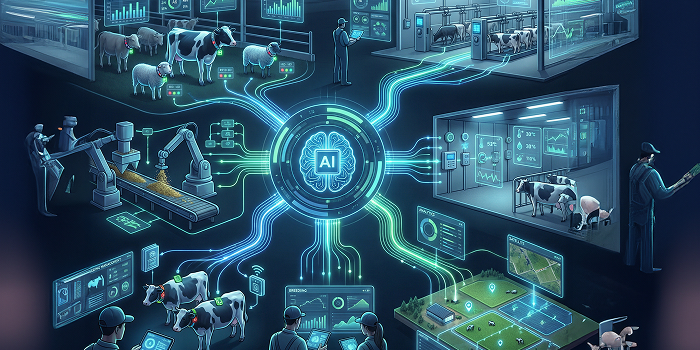
Traditional farming relied heavily on experience. And that experience still matters. But today, combining instinct with data creates an edge. AI models now analyze crop forecasting trends using weather history, soil conditions and equipment performance. With precision farming insights, growers can adjust irrigation cycles or fertilizer application before stress impacts yield.
And yes, UAVs can be used not only as data collection devices but also as machinery. Growers can utilize UAV technology to distribute seed pods over hard-to-reach areas or monitor growth stages from above. The result? Less waste. Better timing. Stronger returns.
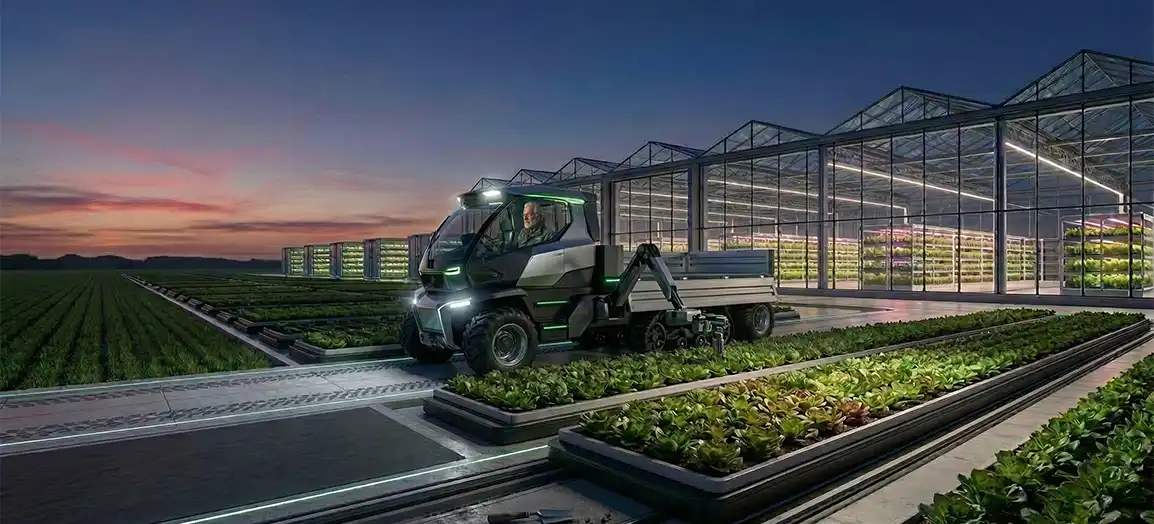
Emerging technologies are quietly transforming how farms operate, turning raw field data into practical insights that support smarter crop management.
Predictive analytics agriculture tools do more than estimate yield. They forecast disease risks, model irrigation needs and identify crop stress before it becomes visible.
If you have ever wished you could see next month’s problems today, this is the closest you will get. It is not about replacing decision-making. It is about making it more informed.
Real-time farm monitoring changes how quickly you respond. IoT agriculture sensors capture soil conditions. Edge computing agriculture devices process data instantly. Cloud-based farm data platforms unify everything into one dashboard.
So whether you oversee one property or multiple sites, you maintain visibility without physically walking every acre. Speed matters. And insight delivered late is often insight wasted.
There is a belief that smart farming only benefits enterprise operations. That is outdated. Scalable precision agriculture systems now support mid-size farm precision farming models.
Subscription-based platforms integrate GPS farming tools and analytics without heavy upfront infrastructure. Adoption is becoming incremental. Strategic. Practical. And that makes it sustainable.
Technology alone is not the solution. Integration is. When disconnected systems operate in silos, adoption slows and returns diminish. But when platforms communicate seamlessly, data becomes actionable.
This is where experienced software teams make a difference. Custom-built agricultural platforms align with your workflows, machinery and reporting needs. Not the other way around. And honestly, integration determines success more than the tools themselves.
If you are exploring digital agriculture initiatives, start by evaluating interoperability. Can your drone data feed into your irrigation analytics. Does your soil map sync with yield forecasting software? If not, it may be time to rethink the architecture behind your AgTech solutions.
Agriculture is becoming increasingly precise. Over time, as more layers of data accumulate, decisions sharpen. What began as broad satellite imagery evolved into targeted, zone-specific action.
We are witnessing a shift from reactive farming to predictive farming. And not everyone agrees on the pace of change. That is okay. Adoption varies by region and crop type. But momentum is clear.
Digital agriculture is not replacing farmers. It is equipping them. The question is no longer whether technology belongs on the farm. It is how strategically you deploy it.
If you are evaluating precision farming initiatives or upgrading legacy systems, the right development partner can help design scalable, secure agricultural platforms built around your operation.
Disclaimer:
This content has been made available for information purposes only. Views and opinions expressed in this content are those of the individual author only and do not necessarily represent the opinions and views of Chetu. Chetu, and its representatives, make no representation or warranty of any kind, express or implied, regarding the accuracy, adequacy, validity, reliability, availability, or completeness of any information of this content. Under no circumstances shall Chetu, or its representatives, have any liability to you or any loss or damage of any kind incurred as a result of the use of this content or reliance on any information provided in this content. Your use of this website and your reliance on any information on this content is solely at your own risk.
About Chetu:
Founded in 2000, Chetu empowers businesses with AI and digital transformation solutions, supporting startups, SMBs, and Fortune 5000 companies. We deliver end-to-end software solutions backed by global digital intelligence and industry expertise. Our customized software delivery model and one-stop-shop approach span the full technology spectrum. Headquartered in Sunrise, Florida, Chetu operates 13 locations across the U.S., Europe, and Asia.
See more at: Chetu Blogs
Share


Limited Time Offer for a Free E-Book
Privacy Policy | Legal Policy | Careers | Sitemap | Referral | Contact Us
Copyright © 2000- 2026 Chetu Inc. All Rights Reserved.