Thank you!
Your blog has been successfully shared.
Let's Talk !  954 342 5676
  +44 137 243 2466
Modern mortgage operations run on speed, accuracy, transparency, and strict regulatory compliance. Yet for many lenders, the loan origination process is still slowed by manual reviews, repeated data entry, and disconnected systems. This is precisely where mortgage workflow automation engines step in—removing bottlenecks, improving visibility, and ensuring that every step in the mortgage lifecycle follows a consistent, compliant path.
This refreshed guide walks through what workflow automation engines actually do, why they matter, and how lenders can use them to create a more efficient, scalable loan processing environment.
A workflow engine automates the sequence of steps required to complete a mortgage process. It governs how information moves, how decisions are made, and how tasks are assigned—all based on predefined rules and business logic.
At its core, a workflow engine helps mortgage teams:
Reduce manual work
Ensure every file follows the proper process
Maintain compliance and auditability
Improve turnaround time and borrower experience
It operates on a database-backed system that tracks the status of every activity—from loan application intake to underwriting, processing, and approval. As soon as the task finishes, the engine determines the next step and automatically triggers it.
Manual mortgage workflows often lead to:
Delays caused by human handoffs
Missing or inconsistent documentation
Unclear file ownership
Compliance gaps
High origination costs
Automation engines resolve these challenges by:
Orchestrating the entire lending lifecycle
Reducing repetitive work
Ensuring accuracy in data collection
Enforcing regulatory requirements through rules
Keeping stakeholders informed without manual intervention
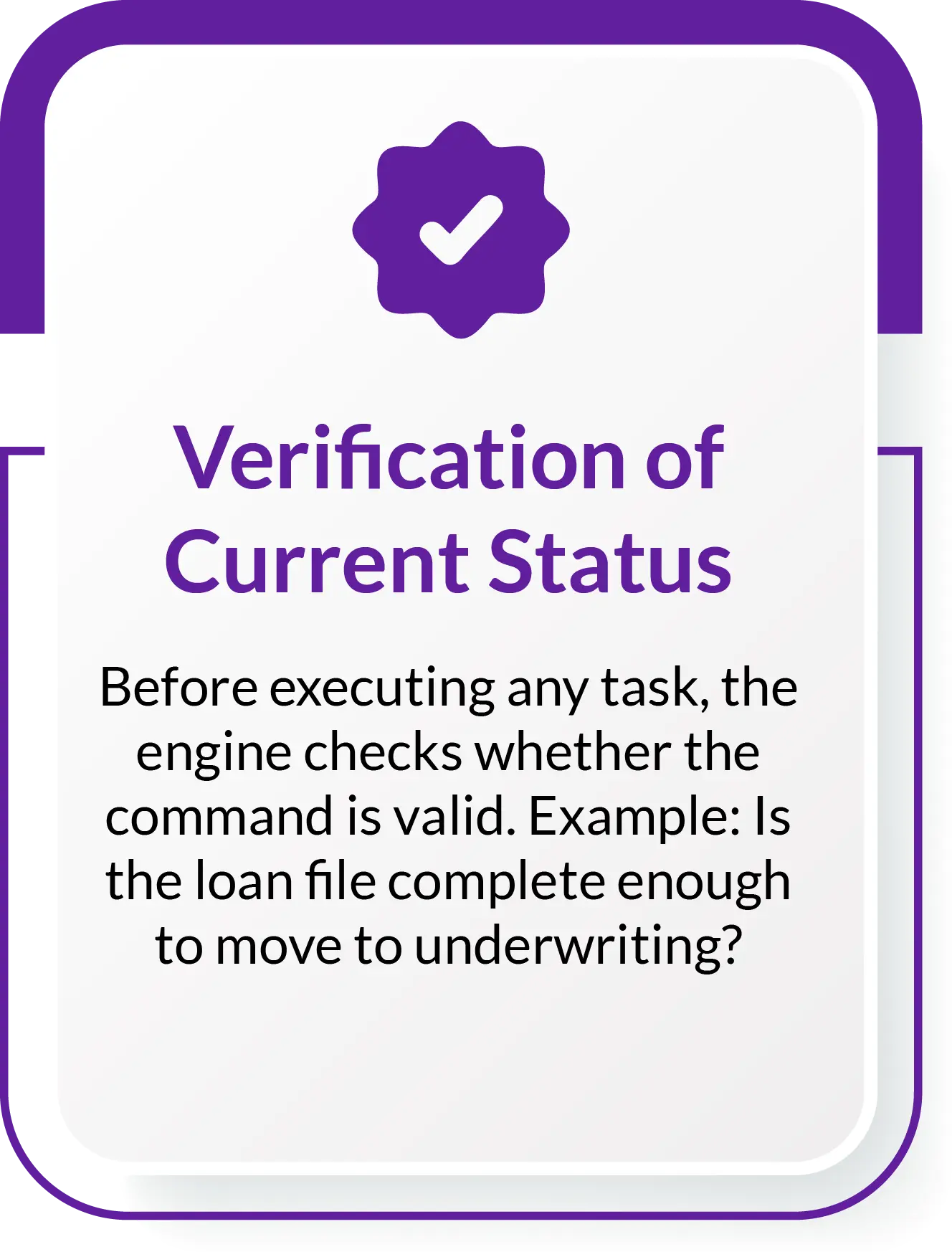
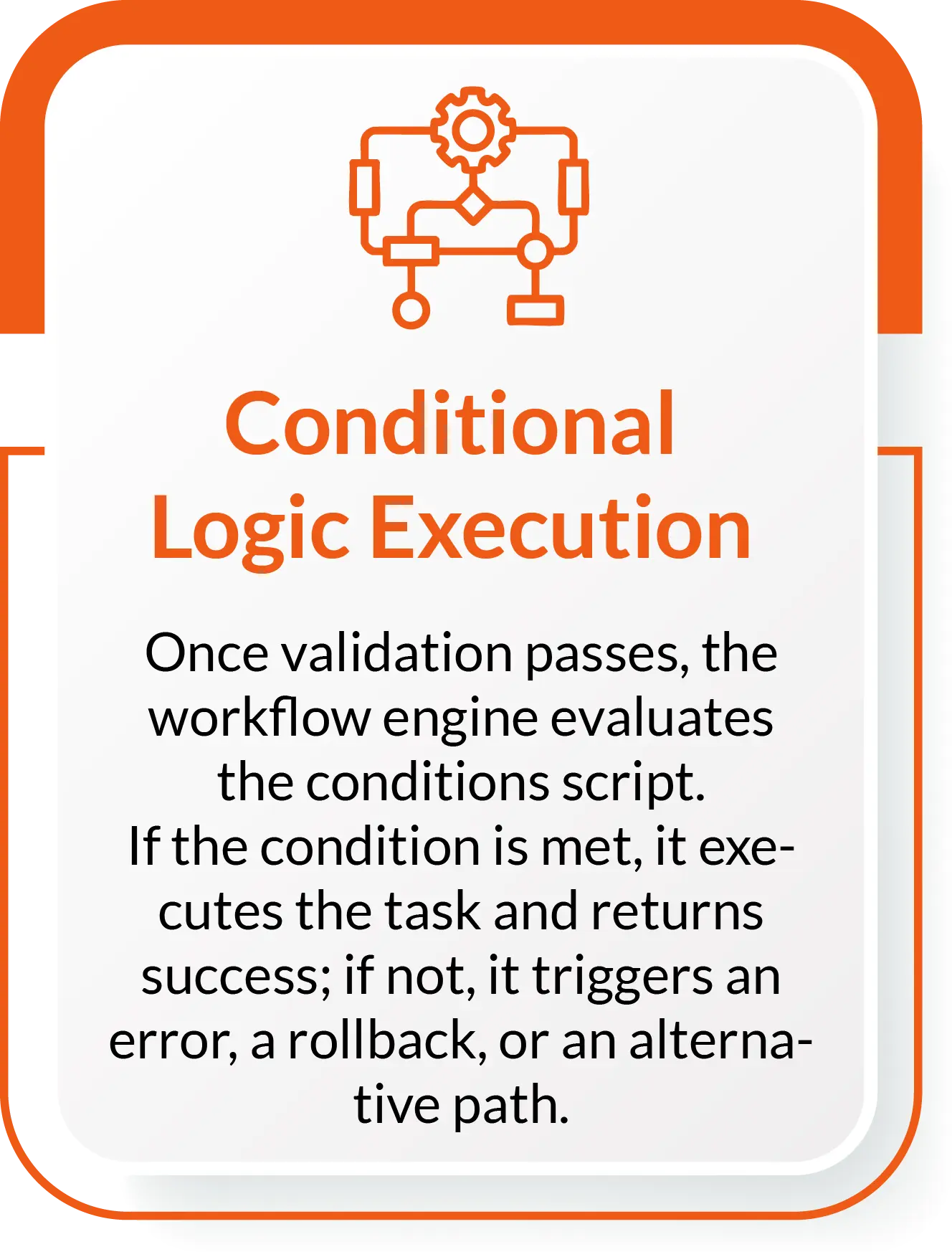
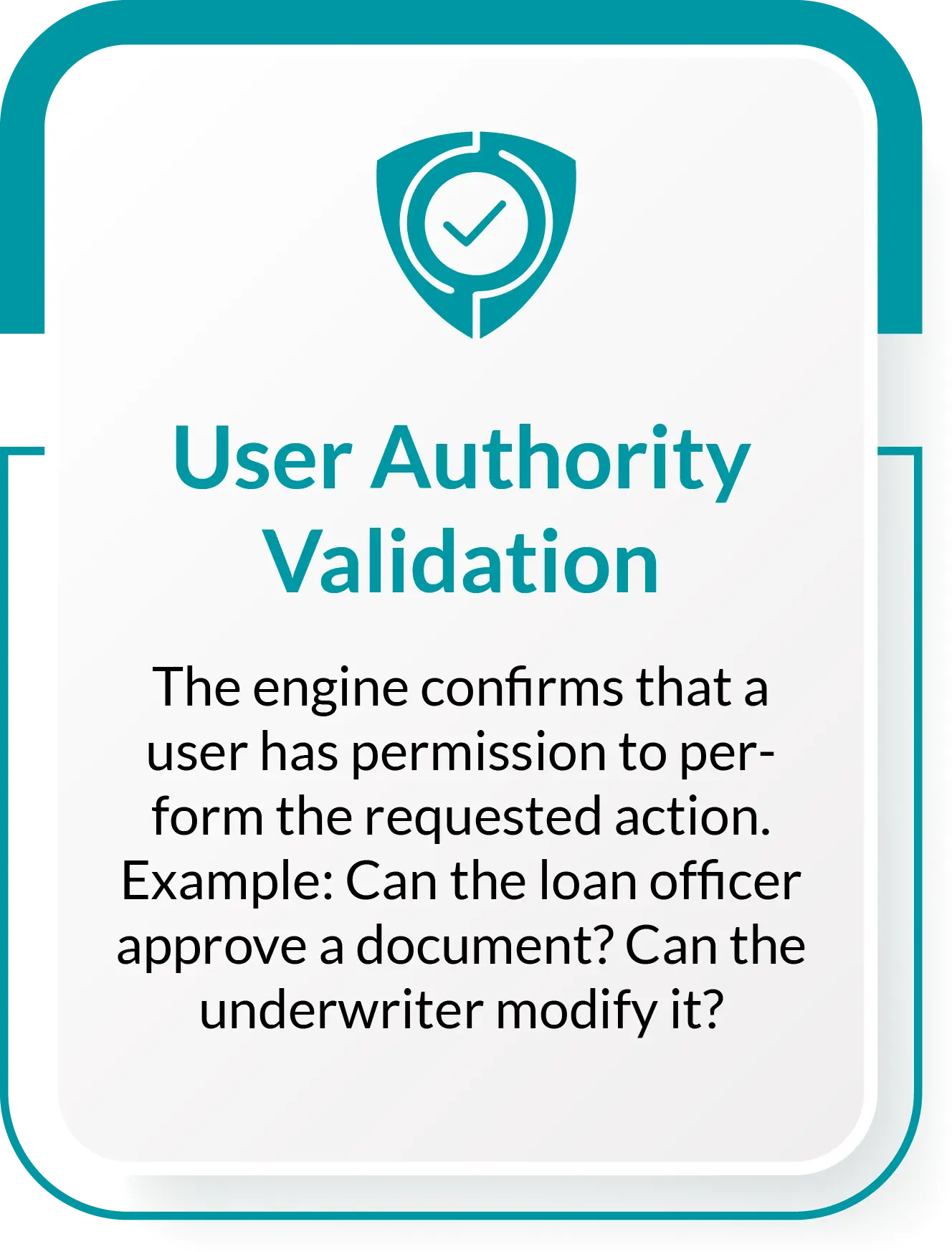
Workflow engines are not just task routers—they're decision engines that validate, authorize, and automate key steps. Their critical capabilities include:
Beyond the core engine, practical automation capabilities deliver tangible operational improvements:
Loan documents automatically route to the correct officer
Auto-alerts trigger when documentation is missing or incorrect
Borrowers and agents receive instant notifications when revisions are needed
Files can be exported as PDFs and emailed automatically
Documents become retrievable on any device for officers, agents, or regulators
These automations eliminate repetitive work and create a smoother, error-free experience for everyone involved.
Workflow automation becomes truly powerful when paired with a business rule engine (BRE).
A BRE allows non-technical users to configure the logic that governs mortgage decisions—without writing code.
Types of rule structures commonly used include:Decision trees
Statement rules
Logical expressions
Truth tables
Sequential rules
BREs help lenders adapt quickly to new regulations, underwriting guidelines, or investor requirements by letting teams update rules without engineering support.
Workflow engines and rule engines rely on timely data from multiple systems. Modern platforms simplify this with:
AI brings clarity by analyzing:Click-through wizards for API integrations
Built-in connectors to loan origination systems
Database-level connections for compliance checks
Event-driven triggers for document, credit, and appraisal systems
This ensures that all tools—CRM, LOS, compliance platforms, document management systems—communicate in real time.
As lenders continue shifting toward automated, rules-driven mortgage processes, many teams find that off-the-shelf workflow tools only solve part of the challenge. Actual efficiency often comes from tailoring automation to the lender's exact lending model, compliance needs, and integrations with LOS, CRM, and document systems.
This is where experienced development partners can make a meaningful difference. For example, teams like Chetu, who regularly support lenders with workflow optimization and system integrations, help fill the gaps that generic platforms can't always address. Their work typically includes integrating automation engines with existing systems, refining business rules, implementing AI-based document intelligence, and ensuring the overall workflow remains compliant and scalable.
The goal isn't to add more technology—it's to make the technology already in place work smarter, faster, and with fewer manual touchpoints. With the right expertise guiding the implementation, lenders can move from simply adopting workflow tools to truly transforming their origination processes end-to-end.
Disclaimer:
This content has been made available for information purposes only. Views and opinions expressed in this content are those of the individual author only and do not necessarily represent the opinions and views of Chetu. Chetu, and its representatives, make no representation or warranty of any kind, express or implied, regarding the accuracy, adequacy, validity, reliability, availability, or completeness of any information of this content. Under no circumstances shall Chetu, or its representatives, have any liability to you or any loss or damage of any kind incurred as a result of the use of this content or reliance on any information provided in this content. Your use of this website and your reliance on any information on this content is solely at your own risk.
About Chetu:
Founded in 2000, Chetu empowers businesses with AI and digital transformation solutions, supporting startups, SMBs, and Fortune 5000 companies. We deliver end-to-end software solutions backed by global digital intelligence and industry expertise. Our customized software delivery model and one-stop-shop approach span the full technology spectrum. Headquartered in Sunrise, Florida, Chetu operates 13 locations across the U.S., Europe, and Asia.
See more at: Chetu Blogs
Share


Limited Time Offer for a Free E-Book
Privacy Policy | Legal Policy | Careers | Sitemap | Referral | Contact Us
Copyright © 2000- 2026 Chetu Inc. All Rights Reserved.