Thank you!
Your blog has been successfully shared.


Let's Talk !  954 342 5676
  +44 137 243 2466
Atit Shah - Director of Operations | March 27, 2026
If you’ve ever tracked a late shipment and thought, “There has to be a smarter way,” you’re not alone. The transportation and logistics world has changed fast. Expectations are higher and margins are tighter. Customers do not expect excuses, they want real-time updates.
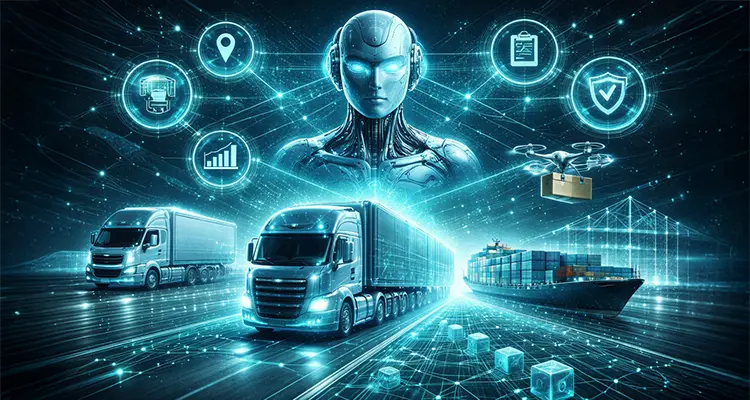
This is where AI in transportation and logistics stops being a buzzword and becomes a competitive advantage. Not futuristic, not theoretical, practical and honestly, overdue.
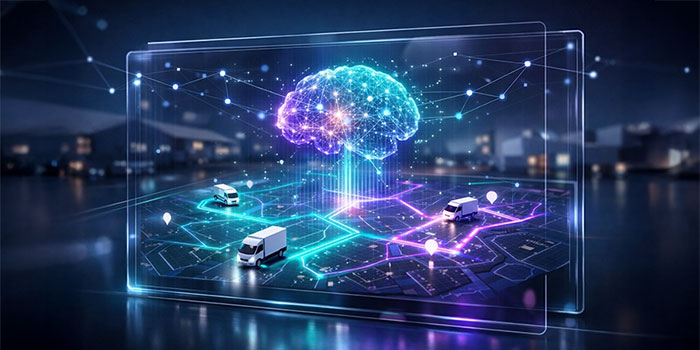
The transportation and logistics market is quickly embracing AI in order to streamline fleets, route planning and inventory control. Geographic Information System (GIS) mapping and predictive analytics with intelligent dispatching minimize delays, reduce cost of operation and enhance reliability of the services. The supply chain sector is becoming more sustainable and technology-driven, supported by infrastructure investment and deeper system integration.
This might surprise you. Blockchain is no longer just about digital coins. In logistics, it supports secure documentation, shipment tracking and contract visibility. Consider electronic bills of lading, computerized compliance verifications, immutable audit trails.
AI analyzes operational data and blockchain secures it. Together, they create trusted, automated workflows that reduce fraud and speed up approvals. Beyond cryptocurrency, digital ledger innovation strengthens vendor relationships and improves accountability across the entire supply chain. So instead of chasing paperwork, your team focuses on performance.
Fleet management used to be reactive. A vehicle breaks down, fuel costs spike, deliveries fall behind and then, it’s predictive.
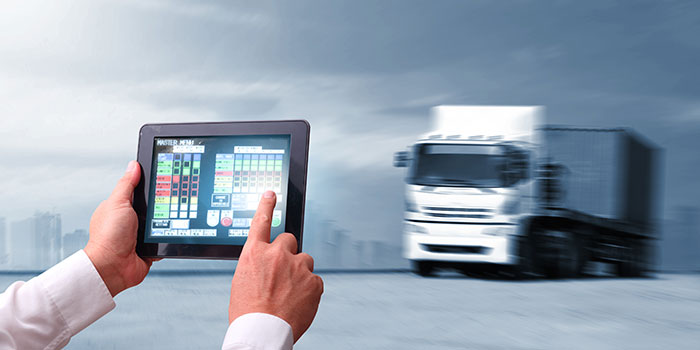
AI-powered fleet optimization uses real-time telematics, behavioral data and machine learning models to:
Predict maintenance before breakdowns happen
Optimize fuel efficiency
Improve driver safety
Reduce idle time
Enhance route efficiency
And yes, this means fewer disruptions. By utilizing technology like IoT sensors and Geographic Information System (GIS) mapping tools, transportation companies gain full visibility across vehicles, routes and driver performance.
We used to think optimization was just about shorter routes. But it’s bigger than that, it’s about smarter decisions at every mile. If you manage a fleet, ask yourself: Are you making decisions based on data or habit? Because AI thrives on data.
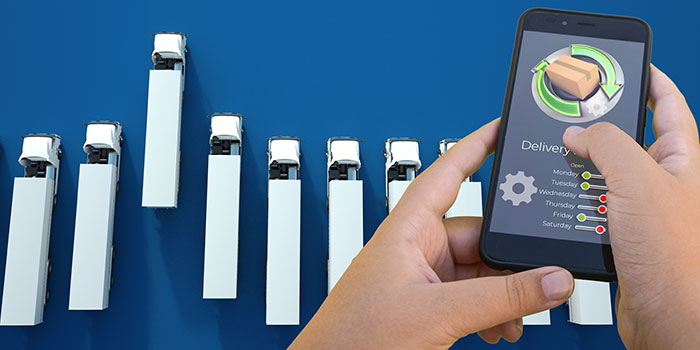
Here’s the thing, manual dispatching works until it doesn’t. Weather shifts, traffic builds, a delivery window moves and suddenly your schedule collapses. AI-driven dispatch software solutions adapt instantly. They analyze live traffic feeds, weather patterns, delivery constraints and vehicle capacity in seconds.
A simple comparison makes it clear:
Businesses typically see:
Real-time routing also improves delivery optimization by identifying bottlenecks before they become expensive problems. Instead of reacting to delays, you prevent them.
But not everyone agrees automation should handle dispatching. Some worry about losing control. The reality is AI supports your dispatch team. It does not replace it. Human oversight plus automation equals smarter logistics.
Inventory visibility used to mean periodic checks and warehouse audits. Now it means continuous monitoring. Remote inventory monitoring powered by AI and IoT sensors tracks stock levels, movement patterns, temperature conditions and reorder thresholds in real time.
And when integrated with predictive analytics, companies can:
Forecast demand
fluctuations
Prevent
stockouts
Reduce
overstock
Improve warehouse
layout planning
Automate
replenishment cycles
This level of insight strengthens overall supply chain efficiency. For logistics leaders, that translates to fewer surprises and tighter operational control. If your inventory system only updates once per day, you’re already behind.
Infrastructure modernization is accelerating nationwide. Smart highways, connected freight corridors, digitized port operations, electrified fleet initiatives and government infrastructure investments are creating new opportunities for AI integration across transportation networks.
Forward-looking logistics organizations are leveraging AI to integrate:
Smart compliance monitoring
Electrified fleet performance analytics
Digital freight coordination systems
Real-time public infrastructure data
Not everyone moves at the same pace and that is understandable. Change carries risk but resisting modernization carries a different kind of risk. One that compounds quietly over time.
The logistics landscape in 2026 is different. Customers expect transparency, regulators expect compliance and executives expect measurable ROI. AI for transportation and logistics supports all three. It enhances forecasting accuracy and improves route performance. It strengthens resilience across the supply chain industry while reducing costs.
It is difficult to deny that combination and hard to ignore. In case you are planning on next steps, collaborating with seasoned software engineers with knowledge of transportation workflows may speed up the implementation and mitigate risk. Because strategy matters but execution matters more.
This may sound rather obvious, yet technology by itself does not make operations transform. Strategy does. AI-driven transportation optimization, predictive analytics, blockchain integration and smart dispatching are not single upgrades. They are systems that are related to each other.
When aligned properly, they create:
End-to-end supply chain visibility
Data-driven operational discipline
Stronger delivery reliability
Long-term competitive resilience
If you are evaluating intelligent fleet solutions, predictive dispatch platforms or AI-based inventory management, now is the time to integrate technology into your broader logistics strategy. The companies that succeed in transportation will not be the ones reacting faster. They will be the ones predicting first.
If you are assessing smart fleet solutions, predictive dispatch platforms or AI-powered inventory visibility, it is time to align technology with long-term strategy.
Disclaimer:
This content has been made available for information purposes only. Views and opinions expressed in this content are those of the individual author only and do not necessarily represent the opinions and views of Chetu. Chetu, and its representatives, make no representation or warranty of any kind, express or implied, regarding the accuracy, adequacy, validity, reliability, availability, or completeness of any information of this content. Under no circumstances shall Chetu, or its representatives, have any liability to you or any loss or damage of any kind incurred as a result of the use of this content or reliance on any information provided in this content. Your use of this website and your reliance on any information on this content is solely at your own risk.
About Chetu:
Founded in 2000, Chetu empowers businesses with AI and digital transformation solutions, supporting startups, SMBs, and Fortune 5000 companies. We deliver end-to-end software solutions backed by global digital intelligence and industry expertise. Our customized software delivery model and one-stop-shop approach span the full technology spectrum. Headquartered in Sunrise, Florida, Chetu operates 13 locations across the U.S., Europe, and Asia.
See more at: Chetu Blogs
Share


Limited Time Offer for a Free E-Book
Privacy Policy | Legal Policy | Careers | Sitemap | Referral | Contact Us
Copyright © 2000- 2026 Chetu Inc. All Rights Reserved.